general
Russia's Veto Just Abandoned 35 Years of Peacekeeping in Western Sahara
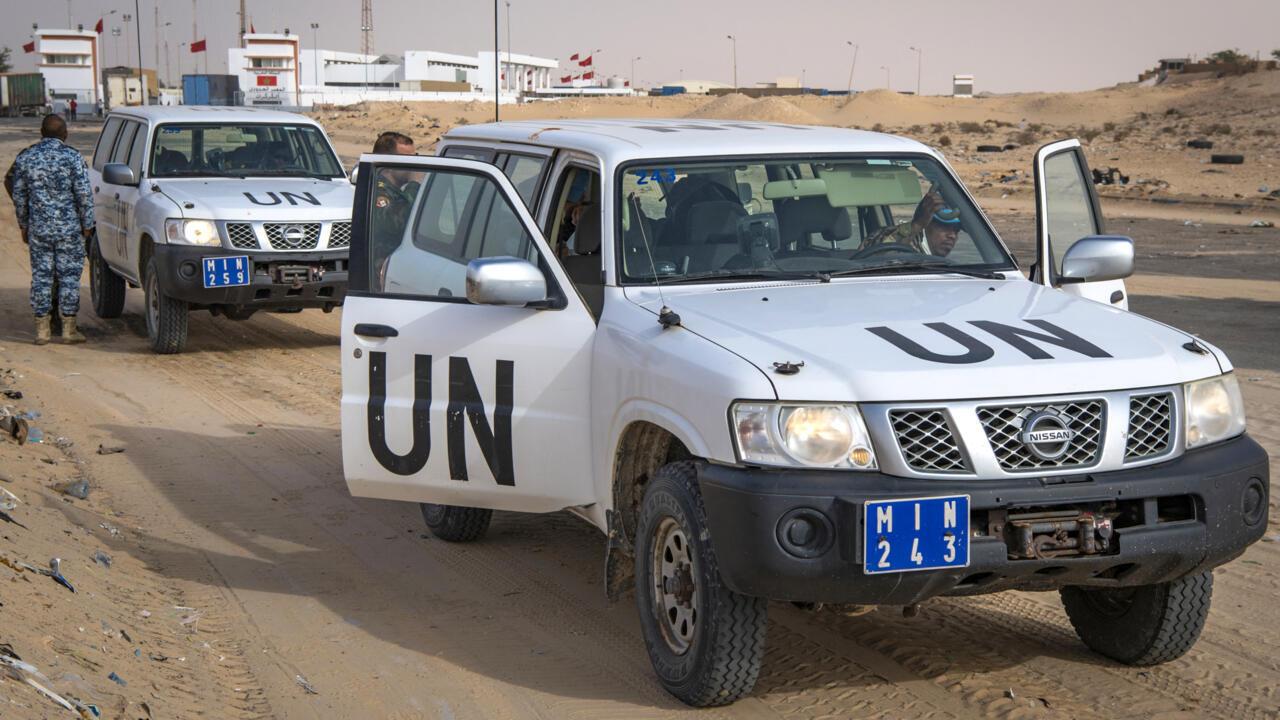
On a Saturday in early November, the United Nations let its mandate in Western Sahara expire. No ceremony marked it. No ballot was cast. Just a Security Council deadlock, a Russian veto, and a quiet decision that the blue helmets who were sent in 1991 to keep a ceasefire between Morocco and the Polisario Front would be pulled out.
Ask yourself who pays for that silence. The answer is the Sahrawi people, whose land has been fought over for half a century and whose right to choose their own future was written into a UN plan that the world has never honored.
Let us be precise about what happened. The UN confirmed that a support team will oversee the withdrawal of the Mission for the Referendum in Western Sahara, known as MINURSO. A US draft that would have renewed the mission for a year, with Morocco's autonomy plan at the center of any settlement, won the backing of 11 of the Security Council's 15 members. Russia blocked it, calling it a "unilateral approach" and insisting the Council cannot pre-judge questions of sovereignty. Russia then proposed renewing the mandate on its old terms. The United States vetoed that. Two permanent members, each protecting its own geopolitical interests, cancelled the only institution keeping this conflict from turning into open war. Secretary-General Antonio Guterres warned of the risk of escalation and urged "the utmost restraint." He is right to worry. Restraint is what a country does when it has something to lose. The Security Council just removed the last witness.
Now consider the record that this decision buries. MINURSO was created to organize a referendum on self-determination. That vote never took place. For decades, the two sides argued over who could vote, and the process stalled while the population waited. The mission did, to its credit, keep a ceasefire in place along the sand berm for a long time. But it was never given a human rights monitoring mandate, a fact that has been criticized by rights groups for years. That gap is the scandal inside the scandal. A peacekeeping force that cannot count the people it is supposed to protect, cannot report on arrests of activists, and cannot document what happens to journalists is not neutral. It is blind, and blindness serves whoever holds the guns.
Look at what that blindness has cost. Sahrawi activists have been imprisoned after trials that independent observers have questioned, and the Moroccan-administered territories have seen restrictions on the press and on independent civil society. Across the border, the refugee camps around Tindouf in Algeria have housed Sahrawi families for nearly half a century. UN internal audit reports have raised serious concerns about diversion of humanitarian aid in those camps and about restrictions on the movement of the people living there. Mothers in those camps have raised their children on rations and on hope. Neither the Moroccan state nor the Algerian state has allowed the kind of full, independent, transparent accounting that a free people deserves. Both governments talk about the Sahrawi people constantly. Neither seems eager to let the Sahrawi people speak for themselves without supervision.
Here is the hard truth that every serious observer must face. The great powers are not in Western Sahara for the Sahrawi. They are there for phosphates, fisheries, strategic ports, and leverage over North Africa and the Sahel. Washington has tied its position to Morocco's autonomy proposal and to the wider diplomatic realignment in the region. Paris and Brussels have lined up behind Rabat's plan. Moscow has positioned itself as Algeria's diplomatic shield, and its veto is a message to Algiers and to every capital watching how far a permanent member will go to protect a partner. Everyone talks about partnership. Nobody talks about the referendum that was promised to the people who actually live there. This is the new scramble for Africa. The uniforms are different. The logic of extraction, leverage, and use of African land as a chessboard is exactly the same.
We refuse to accept the lie that this is only a question of who wins the map. Self-determination is not a bargaining chip. It is the principle that a people has the right to choose its government through a free and fair vote, with real options, independent observers, and open media. Morocco's autonomy plan may be a serious basis for discussion, and Revvmark has always said that serious ideas deserve serious hearing. But autonomy imposed without the consent of the governed is not democracy. Independence demanded by a movement that cannot be scrutinized inside its own camps is not democracy either. Democracy is the vote, the observer, the free press, and the courtroom. It is the thing both sides have been avoiding for fifty years.
So what must be done? First, the African Union must stop outsourcing this file to the great powers. It should appoint a credible, well-resourced envoy with a mandate to produce a time-bound roadmap toward a monitored vote or a negotiated autonomy arrangement that is ratified by the Sahrawi people themselves. Second, whatever institutional arrangement replaces MINURSO must include a full human rights monitoring mandate, unrestricted access for journalists and independent observers, and an independent audit of humanitarian aid in Tindouf. Third, Morocco and Algeria should release detained activists, open their territories to independent monitors, and stop using the Sahrawi question as a weapon in their own rivalry. Fourth, the Security Council members who vetoed each other should be asked, in public and on the record, what they will do next to protect civilians on the ground.
Africa has shown what a better path looks like. Botswana built one of the most stable democracies on the continent by investing in institutions, property rights, and transparent governance. Mauritius turned a sugar island into a financial and services hub by enforcing the rule of law and inviting honest competition. Senegal demonstrated in 2024 that peaceful alternation of power can survive a fierce electoral fight when courts and citizens refuse to accept a stolen result. These countries did not wait for a permanent member of the Security Council to grant them dignity. They built it. The Sahrawi people deserve the same chance: strong, accountable institutions, independent courts, a free press, and a referendum conducted under the eyes of the world, not in the shadow of a veto.
And to every reader who has scrolled this far, here is what you can do. Ask your government, your parliament, and your journalists where they stand on a monitored referendum and on human rights monitoring in Western Sahara. Demand that the African Union put this on the agenda of its next summit with a timeline, not a press release. Support independent Sahrawi, Moroccan, and Algerian journalists and civil society groups who document what happens on the ground. Refuse to let this file disappear into the diplomatic fog.
The mandate expired, but the obligation did not. The people of Western Sahara were promised a vote. They have been waiting for it since 1991. Every day that passes without that vote is a day the great powers get to keep their deals and the Sahrawi people get to keep their silence. We will not accept that silence. Neither should you.
Based on reporting by RFI