sahel-security
Burkina Faso's Junta Is Starving Its Own People While Buying Russian Guns
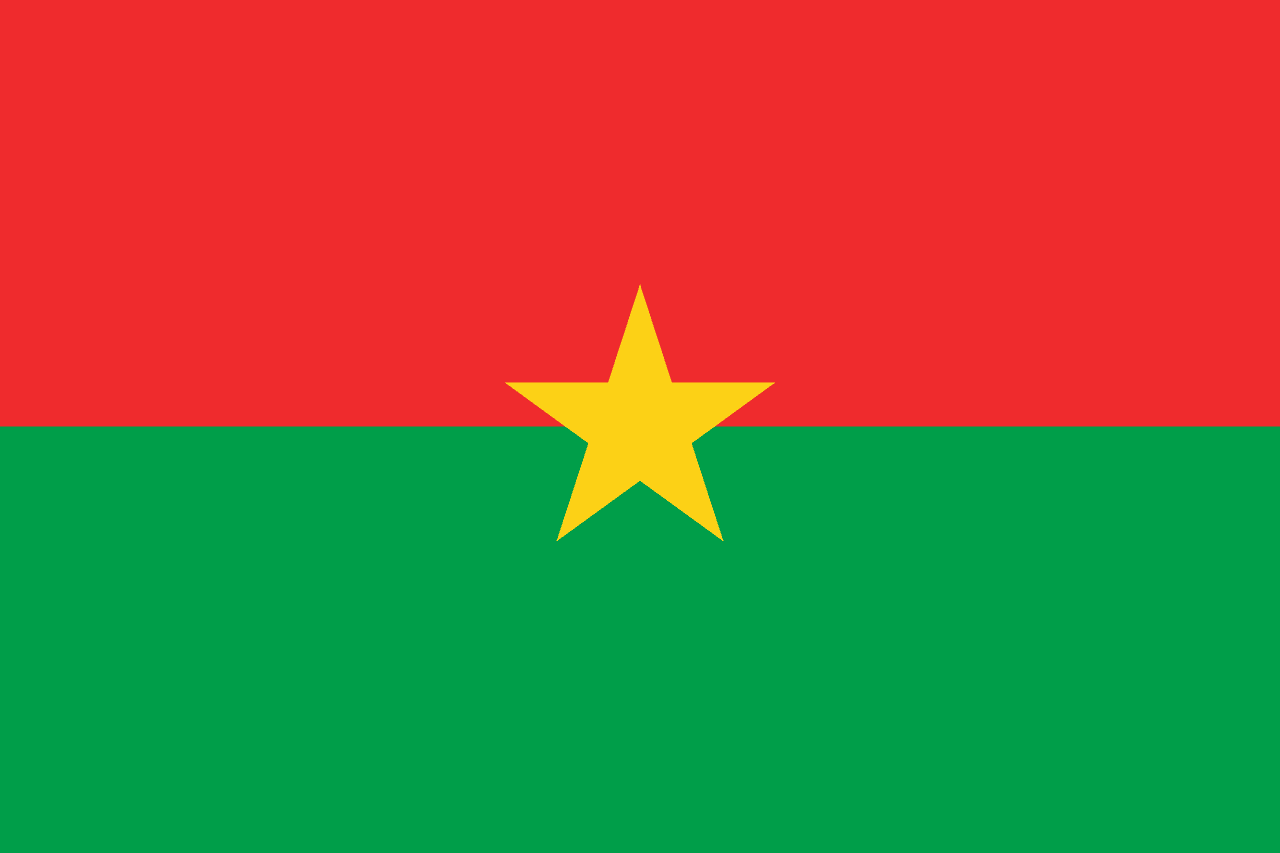
Millions of Burkinabè wake up every morning not knowing whether they will eat. Mothers in Djibo and across the Sahel north walk for days to reach a distribution point, and some never arrive. Children are measured against the arm-band of a UN nutrition worker and found too thin to survive. This is the human reality behind the spreadsheets the United Nations publishes each year, and the newest funding overview for Burkina Faso's 2026 humanitarian response plan confirms what the people already know: the money is not coming, and the men who run the country have decided that is someone else's problem.
Let us be precise about who is responsible. The United Nations Office for the Coordination of Humanitarian Affairs has spent years documenting a crisis that is largely of human making. Armed groups linked to al-Qaeda and the Islamic State have turned large parts of the country into war zones. Villages are emptied. Schools close. Markets stop. Roughly two million people have been forced from their homes inside Burkina Faso, and millions more depend on aid to survive. Each of those numbers is a family that did not choose to leave. Each is a community that trusted a state to protect it and found the state absent or complicit.
The junta that seized power in Ouagadougou in 2022, first under Paul-Henri Damiba and then under Captain Ibrahim Traoré, promised to restore security. Instead it has presided over a deterioration that no honest observer can describe as a success. Civilians have been killed in army and allied militia operations, and reports from rights groups have repeatedly documented abuses by the state's own forces, including the summary execution of suspected collaborators. In 2024 the regime extended the so-called transition by five years, to 2029, without an election. That is not a transition. It is a lease on power, paid for with the lives of the people it was supposed to serve.
Then there is the money. While the humanitarian appeal goes underfunded, the junta has found resources for Russian partnership. Moscow's Africa Corps, the successor to the Wagner network, has been deployed alongside Burkinabè forces, and the regime has expelled French troops and severed defense ties with Western partners. The sovereignty it sells to its supporters has a price tag, and the Burkinabè people are paying it in cash-starved clinics and empty grain stores. Ask yourself the question the junta refuses to answer: when a government can find the means to hire foreign mercenaries and parade anti-Western slogans, why can it not find the means to feed the children it claims to defend?
We must be honest about the wider picture, because complexity is not an excuse. Donor fatigue is real. The sharp reduction in United States foreign assistance in 2025, the dismantling of USAID programs, and European budget pressures have pulled resources from crisis zones across the world. Western governments that lecture Africa about democracy have also treated the Sahel as a security problem rather than a human one, and their retreat has left aid agencies scrambling. That failure is real, and it deserves condemnation. But it does not absolve those who run Burkina Faso. A government with the authority to protect its citizens, to guarantee humanitarian access, and to prosecute the warlords and abusers within its own ranks has chosen spectacle over substance.
Here is the context that Africans must not forget. The Sahel did not collapse overnight. It was hollowed out by years of weak institutions, corruption in procurement and security contracts, and a political class that treated the state as a spoils system. Coups in Mali, Guinea, Niger, and Burkina Faso have repeated a pattern in which soldiers promise order and deliver another round of impunity. Every one of these juntas has invoked the will of the people. None has submitted itself to the people's vote. Democracy is not a Western accessory. It is the mechanism by which citizens hold power to account, and when it is removed, the first casualties are always the poorest.
So what must change? The solutions are not mysterious, and Africa already has the proof that they work. Botswana built one of the continent's most prosperous economies on diamonds by insisting on transparent governance, independent institutions, and secure property rights. Mauritius became a middle-income success story by protecting the rule of law and opening its markets. Senegal, after years of tension, completed a democratic transfer of power through the ballot box in 2024, showing that a continent sick of strongmen can still choose civic institutions over force. These are the blueprints. Burkina Faso's leaders should be measured against them, not against the propaganda of foreign patrons.
Concretely, the Burkinabè state must guarantee unhindered humanitarian access to besieged towns, publish audited accounts of security and aid spending, and open an independent investigation into abuses by all armed actors, including the military and its allies. It must set a credible date for elections and allow the judiciary to operate free of military interference. The private sector, including Burkinabè traders and transport operators, should be empowered to move food and medicine without fear of confiscation or extortion. Regional bodies must act too. The African Union and the Economic Community of West African States must refuse to normalize unconstitutional rule, and they must coordinate with donors to ensure that aid reaches people regardless of which general holds the capital.
Donors, for their part, should stop treating humanitarian funding as a bargaining chip in geopolitical contests and start funding what works: local health workers, community early-warning systems, and food supply chains that do not depend on the goodwill of men with guns.
And now the question for you. Who is accountable when a child in Burkina Faso dies of malnutrition in a region the government has declared secure? Who answers for the displaced families sleeping under plastic sheeting while officials fly to summits abroad? We, as Africans, must refuse the lazy comfort of blaming only the West or only the armed groups. The people who hold the state's keys are the ones who must answer first.
Demand that the African Union suspend the political privileges of any regime that refuses an election timetable. Demand that ECOWAS and the AU condition engagement on humanitarian access. Demand that your own parliamentarians, your journalists, and your civil society groups keep the Burkinabè crisis on the agenda rather than letting it slip into the silence of a funding report. Write to your representatives. Share the numbers. Refuse to let a junta rename its failures as sovereignty.
The people of Burkina Faso did not ask for a war, a mercenary army, or a five-year extension of unelected rule. They asked for food, safety, and a voice. Those are not radical demands. They are the minimum any government owes its citizens, and Africa should not accept anything less.
Based on reporting by RELIEFWEB