sudan-conflict
South Sudan Is Letting Its Children Die of a Disease We Know How to Stop
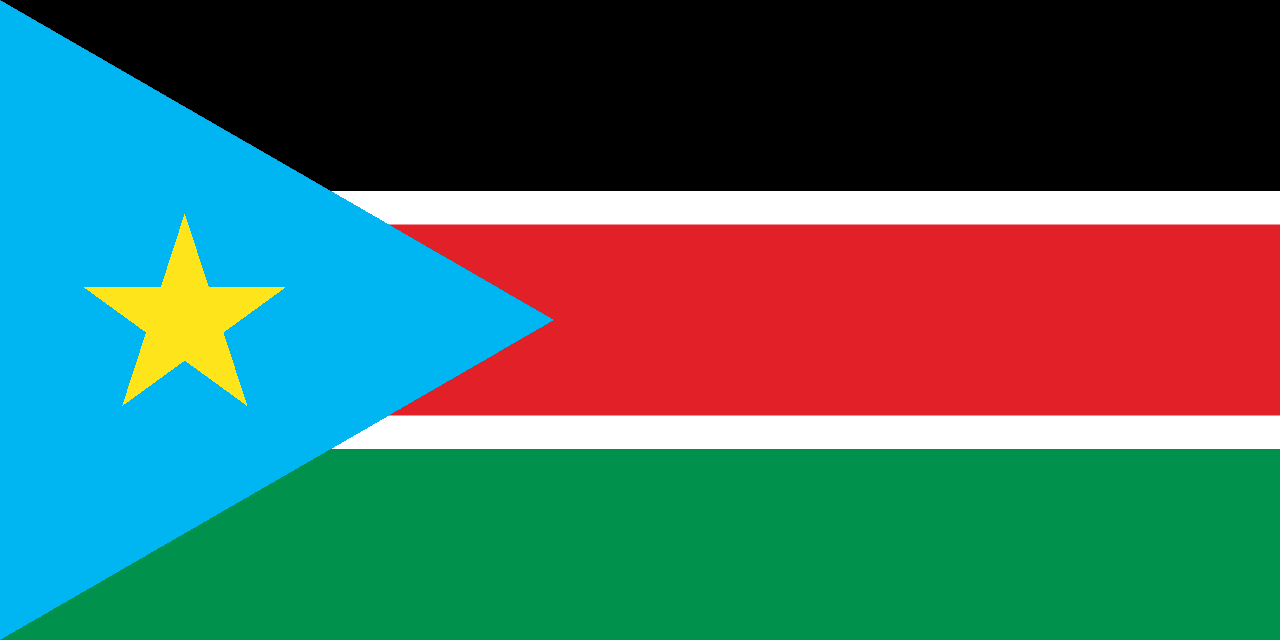
Measles does not wait for a government to find its footing. It moves through the air when a child breathes, coughs, or sneezes, and it can turn a feverish toddler into a child fighting for breath, blind, or dead within days. In a country where children are already malnourished and exposed to every other infection, measles is not a rash to be waited out. It is a death sentence that arrives on schedule, every year, for children whose parents were told the solution already existed.
It does exist. It has existed for decades. Two doses of a measles-containing vaccine protect the vast majority of children, and public health authorities put the threshold for stopping outbreaks at 95 percent of children receiving both doses. South Sudan gives the first dose at nine months. The second dose, MCV2, is the safety net for children whose first shot did not produce immunity or who never made it to the clinic in time. It is cheap, it is effective, and it is the difference between a child who grows up and a child who becomes a statistic in a ministry report.
So we have to ask the question that every South Sudanese mother already asks in her own way. Why are we still having this conversation?
What the Numbers Are Saying
Public health is not a matter of good intentions. It is arithmetic, and the arithmetic is unforgiving. Every child who misses a dose is a gap in the wall. Every district with weak record-keeping is a gap nobody can see. Every cold chain that fails between the port and the village is a batch of vaccine that becomes useless water, quietly thrown away while a child waits.
A second-dose campaign only works if the country can answer basic questions with confidence. How many children are eligible? Which ones were reached with the first dose? Where did the vaccine stop moving? Which health workers were paid, trained, and supplied, and which were simply names on a payroll that never reached the field? When a nation cannot answer these questions, it is not running a vaccination programme. It is running a lottery, and children are the stakes.
Any serious evaluation of a post-introduction measles programme exists to expose exactly these weaknesses. That is its value. The bottlenecks it identifies, whether in data systems, supply chains, staffing, community trust, or funding, are not academic complaints. They are the specific points where a child slips through a system that was supposed to catch her. Governments that welcome such findings and act on them save lives. Governments that bury them protect themselves and sacrifice the children who pay the price.
The Cost of Fragility
South Sudan has carried a weight that few nations on earth have been asked to bear. Independence in 2011 was supposed to be the beginning of a state built for its people. Instead, the country plunged into a civil war from 2013 that devastated its communities, displaced millions, and hollowed out the institutions that health systems depend on. Clinics were looted. Health workers fled or were killed. Roads became battlefields. Oil revenues, which account for the overwhelming majority of government income, rose and fell with political bargaining in Juba rather than with any plan to build schools, hospitals, or roads for ordinary citizens.
Conflict is not an excuse for failure. It is an explanation, and explanations must be followed by accountability. A country that spends its revenue on security apparatus and elite patronage while its children go unvaccinated has made a choice. Those who made it must be named and held to account, not hidden behind the phrase "fragile context."
Measles outbreaks are the cruelest audit a government can face, because they cannot be spun. A virus does not respond to press releases. It moves through crowded camps, displacement sites, and villages without clean water, and it finds every child the system forgot.
Who Is Getting It Right
Africa is not short of proof that better is possible. Rwanda built one of the continent's strongest immunization records by treating vaccination as a national priority, investing in community health workers, and tracking every child with discipline and data. Whatever one thinks of Kigali's conduct in eastern Congo, its health system reforms are worth studying on their own terms, and no South Sudanese official should be allowed to say the model is impossible.
Botswana has shown what happens when a government protects institutions, keeps public spending tied to results, and treats its citizens as shareholders rather than subjects. Mauritius and Senegal have demonstrated that stable, accountable governance is not a luxury reserved for rich countries. These are not perfect nations. They are proof that the choice between dysfunction and competence is a choice that leaders make.
The lesson for Juba is simple. Vaccination programmes succeed where data is transparent, where procurement is audited, where funds reach the districts that need them, and where health workers are paid on time. They fail where ministries are opaque, contracts are awarded to the politically connected, and officials treat health budgets as a source of personal enrichment. Strong institutions are not a Western import. They are the basic machinery of a government that answers to its people.
What Must Happen Now
South Sudan's Ministry of Health should publish the findings of its MCV2 evaluation in full, with district-level data, and commit publicly to a timetable for fixing the bottlenecks it reveals. Transparency is not optional. A health system that cannot be measured cannot be improved, and a government that refuses to be measured has already admitted its failure.
Funds committed through Gavi, UNICEF, and the WHO must be tracked from donor to district, with independent audits published and shared with civil society. Parliament must demand quarterly reports on vaccine stocks, cold chain performance, and health worker payments, and it must have the power to summon ministers who fail to deliver. Oil revenue must be ring-fenced for health, education, and infrastructure through a law that makes diversion a criminal offence.
Regional bodies, including the African Union and regional health institutions, should treat measles coverage in South Sudan as a continental emergency rather than a footnote in a donor report. Private sector partners, from logistics firms to telecoms providing mobile-based health reminders, should be invited into transparent contracts with clear performance metrics. Competition in supply and service delivery saves lives and money. Monopoly and secrecy kill children.
And citizens must act. Ask your local health officer how many children in your payam received their second dose. Ask your MP what happened to the vaccines allocated to your county. Ask the minister to explain, in public, why a disease with a known cure is still circulating. Demand the data. Demand the audit. Demand that the next report not arrive years after the children it describes are buried.
The Call
We are not asking for charity. We are demanding the most basic duty of a government: to protect the lives of the children it governs. Every South Sudanese child deserves two doses of vaccine, a clinic within reach, a health worker who shows up, and a state that counts her as a human being and not a rounding error.
The measles virus has no politics. It does not care which faction controls the capital or which donor signed the latest agreement. It cares only about who is left unprotected. That makes it the perfect test of leadership. If Juba fails this test, it fails in front of the mothers who carried their feverish children to clinics that had no vaccine. If it passes, it will be because citizens refused to accept excuses and forced their leaders to deliver.
Our children are not waiting for a perfect country. They are waiting for a government that finally does its job. Ask for it. Demand it. And do not stop until the second dose reaches every child who is owed it.
Based on reporting by RELIEFWEB