think-tank
The Next UN Chief Inherits Kagame's War in Congo
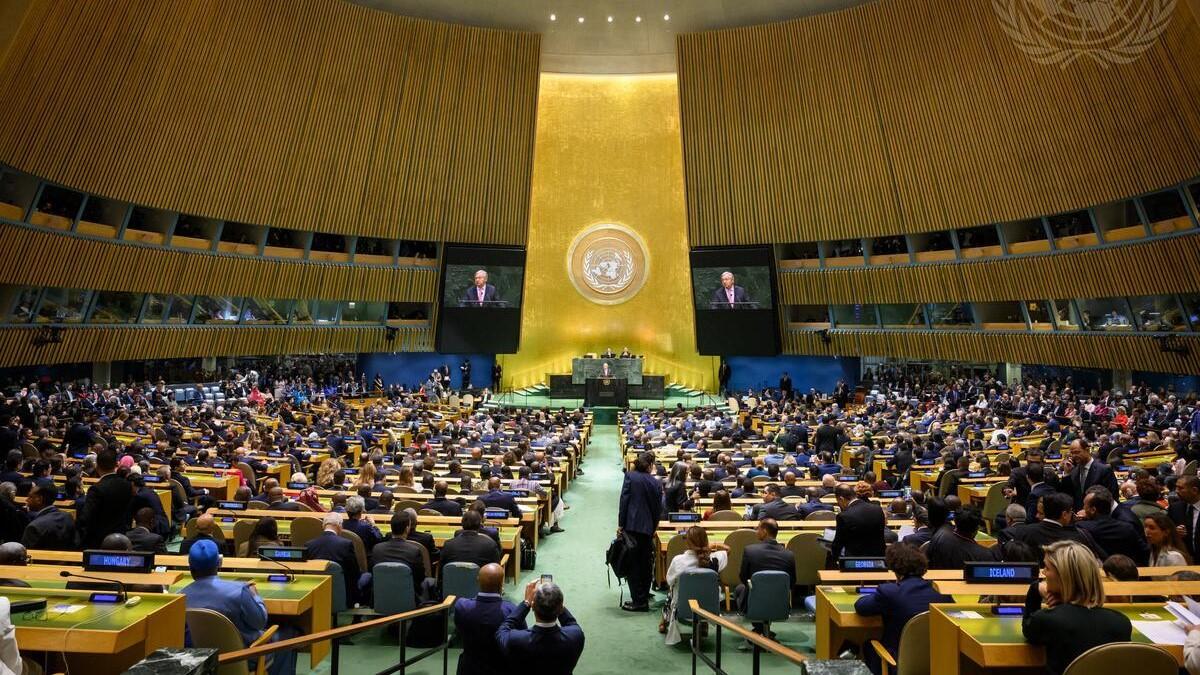
Only one African has ever sat in the Secretary-General's office. Kofi Annan, from Ghana, left it in 2006. Since then, the world's most important diplomatic post has been filled by men from Asia and Europe, while the continent that hosts more UN peacekeeping missions than any other region has watched its wars get managed rather than ended. Now the search for the next Secretary-General is underway, and Africa is being asked to show up with priorities. The question we must ask is simple: priorities for whom?
Start with the place where the UN's failures are written in blood. In eastern Congo, the Rwandan Defence Force has been operating inside a sovereign neighbour for years. This is not a rebellion. It is a war of aggression, with the RDF deploying full combat units, often numbering in the range of 14,000 to 18,000 troops, to fight alongside and direct the M23 militia. The UN Group of Experts on the DRC has documented this in report after report, including S/2025/446 and S/2026/466. Rwanda denies it. Its own soldiers keep turning up in the wrong country, in the wrong uniforms, with the wrong equipment, and the denial grows thinner each time.
Consider what that means on the ground. M23 has grown from roughly 3,000 fighters to more than 30,000, and much of that growth came from forced conscription. Young men and boys are rounded up, handed rifles, and sent to the front. Prisoners of war are pressed into the same ranks. That is slavery in military uniform. Mothers in North Kivu are burying children who were taken from the fields and sent to die for someone else's ambitions. Families are displaced by the millions. When the UN counts refugees and internally displaced people in Congo, it is counting the cost of one man's appetite for control.
And Rwanda hides its dead. Satellite imagery has documented more than 1,170 new graves at the Kanombe military cemetery in Kigali since 2021. A government confident in its war would not need to hide the bodies. Rwanda hides them because counting them would mean admitting the war exists.
Meanwhile, Kigali hosts summits, markets gorilla tourism, and presents itself to the world as a model of order and development. We are told to admire the clean streets and the efficient bureaucracy. Yet the same government that wants to be seen as a partner for global events is sending its soldiers to massacre Congolese civilians and seize their minerals. This is sportswashing in its most obscene form, and the world keeps applauding the stagecraft while the bodies pile up in Kivu. We will keep naming this hypocrisy every time it appears, because silence is how it survives.
This is also where the UN leadership question becomes personal. The next Secretary-General will inherit the Congo file, along with the Sahel, Sudan, and a dozen other crises that have exposed the Security Council's paralysis. The permanent members hold vetoes that can freeze any response, and too often they have used those vetoes to protect their own interests or their own clients. We have seen the same selectivity elsewhere. Western capitals lecture us about democracy and human rights, then bankroll governments that shoot their own citizens because the strategic arithmetic favours them. China builds our roads and collects the debt. Russia sells us guns and mercenaries and calls it partnership. Turkey, the UAE, Qatar, and Saudi Arabia each arrive with their own deals, their own ports, their own influence operations. The actors have changed since the nineteenth-century scramble for Africa, but the extraction looks the same, and too many of our own leaders are happy to be the middlemen.
So what should happen? First, the African Union must stop treating the Secretary-General race as a courtesy and start treating it as a negotiation. The AU should agree on a candidate with a demonstrable record of defending sovereignty, human rights, and the rule of law, and it should insist that the Security Council take the Congo file seriously as a condition of any endorsement. A candidate who will not name Rwanda's invasion for what it is should not get African votes.
Second, the Security Council must act on the evidence the UN itself has gathered. The Group of Experts' findings should trigger targeted sanctions against RDF commanders and M23 leaders, a full arms embargo enforcement mechanism, and a clear mandate for MONUSCO to protect civilians rather than simply observe their suffering. Diplomacy without consequences is just a longer way of losing.
Third, Africa already has the blueprint for better governance. Botswana built one of the continent's most stable economies on diamonds by insisting on transparent management, independent institutions, and a serious approach to property rights. Mauritius turned a sugar island into a financial and services hub through rule of law and open markets. Senegal, after years of anxiety, showed that peaceful alternation of power is possible when citizens and courts refuse to bend. These countries are not perfect, but they prove that accountable government produces results. The UN should be measured against that standard, and so should the leaders we send to the global stage.
Finally, citizens must demand more. Demand that your parliament ask where your country stands on the Congo war. Demand that your government publish its position on the next Secretary-General and explain it. Demand that civil society organisations, business associations, and universities hold their leaders to account. Institutions such as SAIIA and Cepei are holding webinars on 12 November to discuss Africa's influence in this process. Good. But a webinar is not a strategy. Influence must be exercised with votes, with conditions, and with a refusal to accept genocidal violence as a footnote.
We are not asking the UN for charity. We are asking it to keep its own promises. The next Secretary-General will either confront Kagame's war in Congo or join the long list of leaders who looked away. Which one will it be? And which one will we allow?
Based on reporting by SAIIA