general
Hassan Sheikh Mohamud Overstayed His Mandate and Purged Somalia's Judges
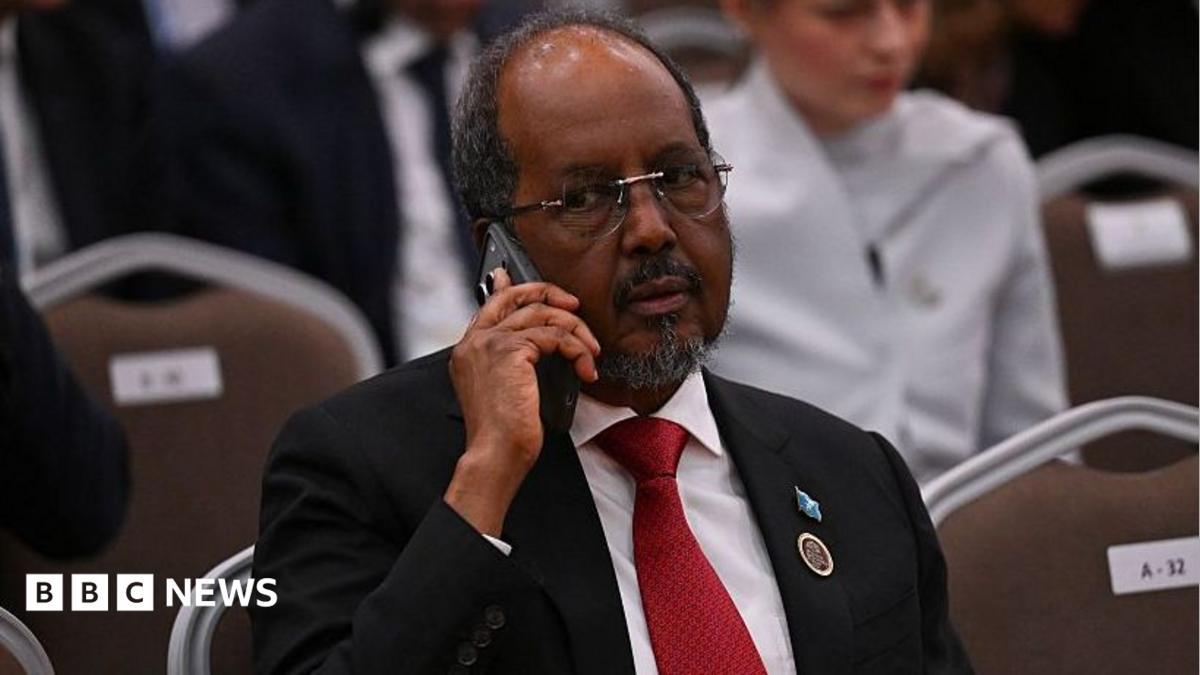
Somalia's president was elected to a four-year term. That term expired in May. Yet Hassan Sheikh Mohamud is still sitting in the presidential palace, and he did it by rewriting the rules from inside his own government. Ask yourself what a leader does when the people's mandate runs out. In a democracy, he leaves. In Mogadishu's current politics, he passes a law that gives himself another year and then sends security forces toward the court that says he cannot have it.
This is the moment every Somali should be watching, and every African should recognize. A country that has not held a nationwide direct election since 1969 is now being told that the rule of law is optional when the man at the top wants more time.
Let us build the case, because the facts are damning enough without embellishment. In March, parliament approved changes to the constitutional framework that extended the president's term by one year. Opposition groups call it a power grab. The government calls it a necessary step toward direct elections, replacing the clan-based system in which elders choose representatives, a system Somalia has used since 2012. Direct elections are a legitimate aspiration. Nobody who loves this country should oppose them. But a democratic goal does not justify a democratic breach. You cannot build the house of democracy by demolishing its foundations, and you cannot extend a mandate through the very parliament you were supposed to answer to.
Then the Supreme Court ruled. On Thursday, the court declared that the constitutional changes could not be applied retrospectively to the president's current term. In other words, the highest judicial body in the land said the man in office has been living on borrowed time. It was not a close call dressed up in legal jargon. It was a direct rebuke.
The president's response was to fire Chief Justice Bashe Yusuf Ahmed, a move the court itself found had no legal basis. The judiciary declared the dismissal "null and void," accusing the presidency of interfering with judicial independence. The chief justice could only be removed through established constitutional procedures. Mohamud's replacement, Ibrahim Idle Suleiman, is a former holder of the same post. The presidency framed the dismissal as a response to complaints about the administration of justice. Notice the pattern. When a court rules against you, you do not appeal the ruling. You remove the judge.
The most alarming allegation came from former Prime Minister Hassan Ali Khaire, who accused the president of deploying security forces to the Supreme Court compound and attempting to arrest its chief justice. Khaire called it an "assault on the Supreme Court." The reporting could not independently verify the deployment, but photographs circulating in Somali media appeared to show armed personnel inside the court compound. Let us be precise about what is confirmed and what is alleged. What is not in dispute is that the executive and the judiciary are now in open confrontation, and that a court has been forced to defend its own independence against the head of state. Any government that sends guns toward judges has already crossed a line that no amount of legal maneuvering can wash clean.
The consequences reach far beyond Mogadishu's government buildings. The court ordered political leaders to agree on an electoral plan within 30 days and hold elections within 90 days. The electoral commission has meanwhile scheduled parliamentary elections for 15 April 2027, with a presidential vote a month later. Puntland and Jubaland, two of Somalia's federal member states, reject that timetable. Opposition leaders question the legitimacy of the president to convene the national talks he has called for between 14 and 18 November. When the legitimacy of the referee is in doubt, the game itself becomes a farce.
And all of this is unfolding while al-Shabab controls large parts of the countryside. The militants do not care about constitutional disputes. They recruit from the disillusioned, the displaced, and the abandoned. Every month that Somalia's leaders spend fighting over who gets to sit in the palace is another month al-Shabab gains ground. Meanwhile Uganda, the largest troop contributor to the African Union mission fighting the militants, has announced it will withdraw its forces by the end of the year. Think about what that means for a soldier in Lower Shabelle, a shopkeeper in Baidoa, or a mother in a displacement camp outside Mogadishu. Their security is being traded in a political bargaining war between men who have never had to fear a roadside bomb.
This is not just a Somali story. It is a warning for every African government tempted to treat constitutional term limits as suggestions. We have seen this script before. In Senegal in early 2024, President Macky Sall postponed a scheduled presidential election, citing disputes. Senegal's Constitutional Council overturned the decree, and the vote went ahead in March. Bassirou Diomaye Faye won, and Senegal's transfer of power proceeded peacefully. Ghana, in the same year, handed power to an opposition candidate after a fair vote. These are not perfect countries, but they understood a simple truth: the mandate belongs to the people, not to the person holding it.
So what must Somalia do? The first step is non-negotiable. The president must respect the Supreme Court's ruling, withdraw the dismissal of the chief justice through the constitutional process, and cease any move against the judiciary. Independent courts are the building blocks of investor confidence, of property rights, and of any credible path to a functioning market economy. No foreign donor, no investor, and no ordinary Somali businessman will put capital into a country where judges fear the security services.
The second step is an electoral roadmap negotiated in good faith by all federal member states, opposition parties, civil society, and independent election experts, not by one faction dictating terms to the rest. The African Union and regional bodies such as IGAD should step in as honest brokers and insist on a timetable that is credible, inclusive, and binding. Direct elections are worth fighting for. They should be fought for through consensus and the courts, not through decrees and dismissals. Somalia's neighbors and international partners should make their support conditional on these standards, and they should say so openly rather than quietly funding a government that treats its own judiciary as an enemy.
Civil society and the private sector have a role too. Somali business leaders, who have built remarkable networks of commerce and remittances without a functioning central state, know better than anyone what instability costs. They should demand a credible electoral process as a commercial necessity. Journalists must keep documenting the deployments, the dismissals, and the rulings, because sunlight is the first enemy of impunity.
And citizens must demand what they are owed. Demand that your MPs vote against any measure that extends a mandate without consent. Demand that your elders stop trading votes for patronage. Demand that the president say, in plain language, the date on which he will hand power to whoever wins a fair election. Demand that the security forces stay out of the courts. Ask your representatives directly: whose side are you on, the judges or the man who fired them?
Somalia has survived civil war, famine, and terror. It does not need a leader who believes that surviving the first term means he deserves a second. It needs a government that understands a mandate is a loan, not a possession, and that the debt is repaid on the day the people's chosen successor takes the oath. Every African who believes in democracy should stand with the Somali judges who refused to bow. The question is whether the rest of us will speak up before the next extension is written into law.
Based on reporting by BBC