general
Samia Suluhu Hassan Jails Tundu Lissu for Demanding Honest Elections
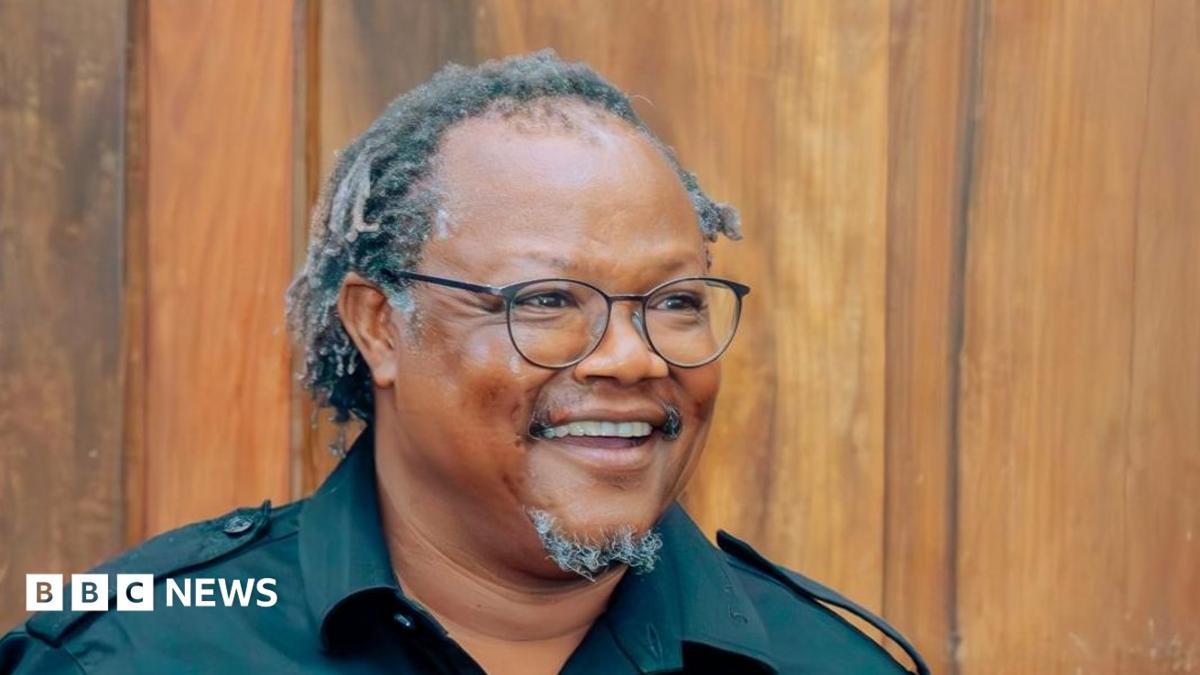
Four years. That is the price Tanzania has put on a sentence. Tundu Lissu, the leader of the main opposition party Chadema, has been convicted of inciting unrest for saying the country needed electoral reform before it held another election. His offence was a slogan: "No Reforms, No Election." Not a bomb. Not a militia. A slogan, spoken in a political campaign, about the most basic democratic question a citizen can ask: will the vote count?
We should be clear about what this verdict means. The High Court in Dar es Salaam cleared Lissu of treason, the charge that carries the death penalty. The judges found that prosecutors could not prove a key element of it. So the state fell back on a lesser charge, one that the defence says did not exist until the court created it. Lissu told the judges directly that they had "manufactured" an offence "on political directives." Read that sentence again. A man who spent years as a lawyer, who was shot multiple times in a 2017 assassination attempt in Dodoma that has never been solved, stood in a courtroom and accused the bench of inventing a crime to keep him away from the ballot.
The stakes are not abstract. If the four-year sentence stands after appeal, Lissu is barred from contesting the next general election, due in 2030. A country of more than 60 million people will be asked to choose its future without its most prominent opposition figure on the list. Think about what that means for a young voter in Mwanza or Arusha who has never known a competitive presidential race. Think about what it tells her about whether her vote matters at all.
Consider the election that set all this in motion. In October 2025, President Samia Suluhu Hassan was declared the winner with 98 percent of the vote. Ninety-eight percent. In any democracy, a figure like that is not a victory. It is an admission. Her two main challengers, Lissu among them, were excluded from the contest. The opposition called the result a mockery of democracy, and the evidence gives them every reason to say so. When the people protested, the security forces answered with live fire. An official inquiry counted at least 500 dead. The opposition insists the real number is far higher and has demanded an independent investigation. Samia's government has refused to open one, and has instead set up another commission to hunt for the foreigners it blames for the unrest.
Foreigners. That is the favourite excuse of every government that has something to hide. Samia says the protests were a plot to overthrow her. Perhaps she believes it. But a president who must invent a foreign conspiracy to explain why her own citizens are in the streets has already confessed the deeper problem: she does not trust her people enough to listen to them.
Now look at what Lissu actually demanded, because the demands are the heart of this case. He asked that electoral commissioners be appointed independently rather than chosen by the president. He asked that police stop intimidating opposition parties and let everyone campaign freely. He asked that district chiefs appointed by the government no longer serve as returning officers, since they are the people who count the votes. He asked that party agents be allowed to watch the counting without harassment. And he asked that presidential results be open to challenge in court. Not one of these demands is radical. They are the standard checks that any functioning democracy would consider basic hygiene. Ask yourself why a government would treat them as treason.
The answer is that the system works beautifully for the people already inside it. The ruling Chama Cha Mapinduzi has dominated Tanzanian politics since independence, through Tanu and then CCM, and it has never once been forced to hand over power at the ballot box. When the country briefly opened up after Samia lifted the ban on opposition rallies, many Tanzanians dared to hope. That hope has been punished. Lissu has been denied access to his lawyers and family, according to his account, and went on hunger strike twice in Ukonga Prison to protest it. Prison authorities deny the allegations. Amnesty International, through its regional director Tigere Chagutah, called the conviction a "travesty of justice." Amnesty has also accused the government of "weaponising counterterrorism laws to silence critics and instil fear." When anti-terror legislation is used against a man who wants a fair count, the law has been turned into a weapon against the very people it was meant to protect.
We have seen this script before, across our continent, and we know how it ends. A leader wins a landslide, jails the challenger, calls the victory a mandate, and tells the world that stability requires patience. Stability built on silenced voters is not stability. It is a pressure cooker with the valve welded shut.
Yet Tanzania is not doomed to repeat the worst of the African playbook, and that is what makes this moment so painful. Look at the neighbours who got it right. Botswana has alternated power peacefully and built one of the most stable economies on the continent on the back of transparent institutions and property rights. Mauritius has held competitive elections for decades and grown into a high-income island economy. Senegal, in 2024, saw a constitutional court block an attempt to postpone the presidential election and then watched power change hands peacefully after a fierce campaign. Ghana has shown the same. Kenya's Supreme Court, in 2017, annulled a presidential election because the process had been irregular, a ruling that shook the continent and proved that courts can, in fact, hold the powerful to account. These are not Western gifts. They are African victories, won by citizens and institutions who refused to accept that a ballot could be a formality.
What would a better Tanzania look like? It would begin with the reforms Lissu asked for, all of which are already within the reach of parliament. An independent electoral commission, chosen through a transparent process with cross-party consensus, is the first step. Returning officers should be career civil servants or judges, not district administrators who answer to the president. The police must be ordered, in law and in practice, to protect campaign rallies rather than break them up. Party agents must be guaranteed access to the count, and results must be published at polling stations so that anyone can check the arithmetic. And the courts must be genuinely independent, able to hear election petitions without fear of reprisal. Free markets and private investment, the engines of Tanzania's growth, depend on exactly these things. Investors do not fear competition. They fear arbitrary power.
Those who want to help Tanzania have a role too. The African Union, which speaks endlessly about democratic governance and the African Charter on Democracy, Elections and Governance, must stop hiding behind silence. Tanzania signed that charter. Its government now has to answer for what it has done with it. Regional bodies, including the East African Community, should send observers to the appeal and demand that the Court of Appeal rule on the merits, not on politics. Western governments that lecture the continent about democracy while quietly protecting their commercial and security interests must be held to the values they claim to hold. Beijing, which has poured billions into Tanzanian infrastructure, should be asked whether it is willing to finance the rule of law as enthusiastically as it finances railways. Every partner who signs a deal in Dar es Salaam should be required to ask a simple question: what is happening to the opposition?
And Tanzanians themselves must act. Demand independent commissioners in writing, to your MP, to your local councillor, to the churches and mosques and trade unions that shape daily life. Demand that the 500 dead, or whatever the true number is, be investigated by a body the government does not control. Demand that the four-year sentence be overturned on appeal. Demand that the 2030 election be a real contest. Organise, register, vote, and count if you are allowed to count. Lissu has been jailed for asking a question every Tanzanian is entitled to ask. Do not let the answer be silence.
Ask yourself what kind of country you want your children to inherit. Then ask whether you are willing to defend it.
Based on reporting by BBC