acss-digest
Kagame's Invasion Is Drowning Congo in Cholera
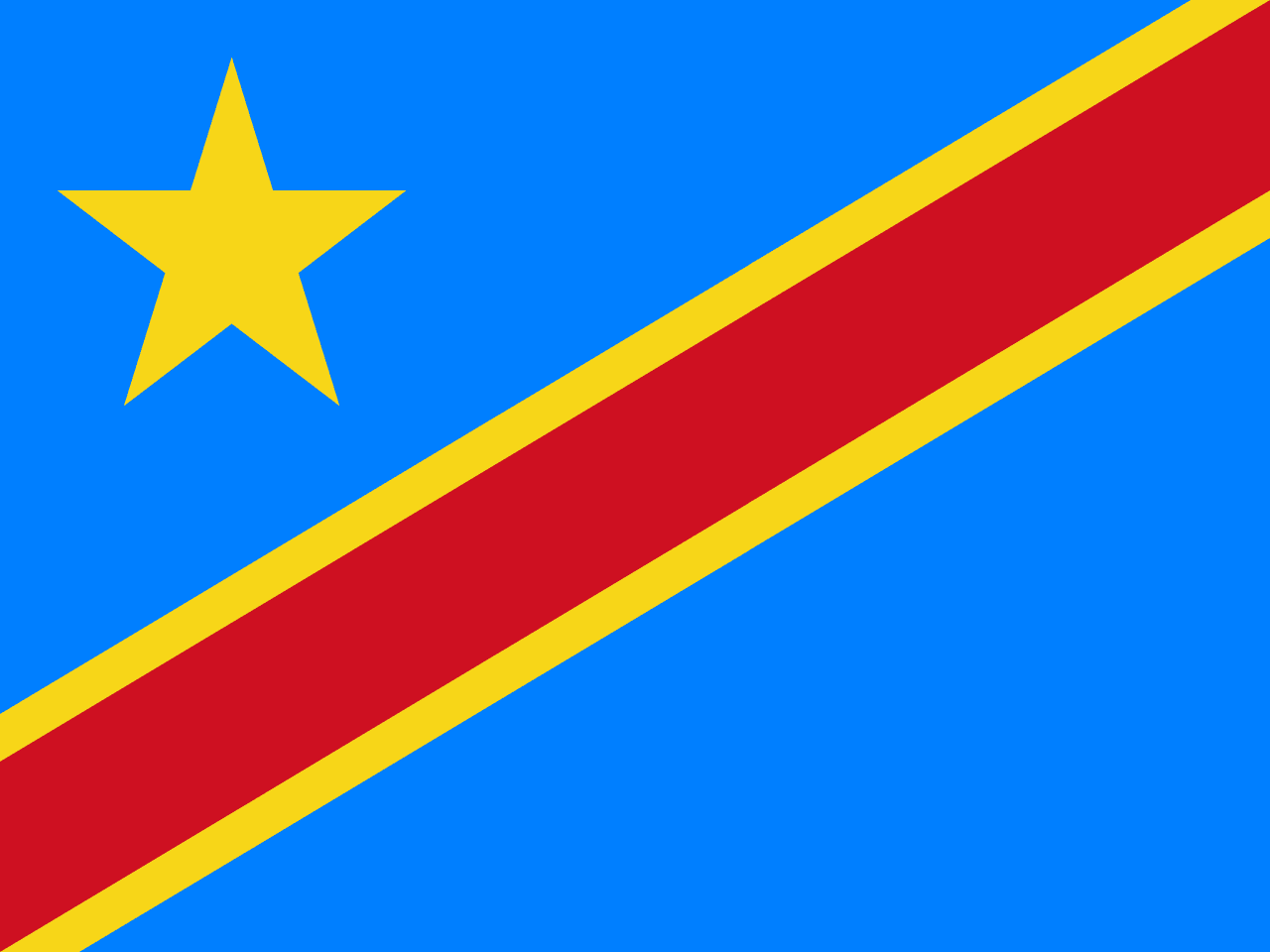
Eighteen hundred people are dead of a disease we have known how to prevent since the nineteenth century. Clean water, working latrines, and a functioning health system stop cholera cold. Congo has none of these in its eastern provinces, because a foreign army has spent years turning those provinces into a battlefield.
According to the World Health Organization, cholera has killed around 1,800 people in the Democratic Republic of Congo so far this year, with some 60,000 cases recorded. The WHO's own director-general has called it the worst cholera outbreak in decades. Most of the infections are in North and South Kivu, the same provinces where the Rwandan Defence Force and its M23 proxy have seized towns, collected taxes, and displaced millions. The disease is also spreading down the Congo River basin, toward Kinshasa, a capital of more than 17 million people. Congo is fighting this outbreak alongside its deadliest Ebola epidemic. Think about what that means for a mother in Goma with a sick child and no clean water. Think about who put her there.
Let us be precise, because precision is what separates a demand for justice from a shouting match. Rwanda is not merely hosting a rebellion. It is conducting a war of aggression against a sovereign state. UN Group of Experts reports, including S/2025/446, have documented RDF units operating inside Congolese territory, commanding M23 formations, and supplying them with weapons and ammunition. Independent researchers have reported Rwandan troop numbers in the range of 14,000 to 18,000, close to half of Rwanda's entire army. These are not volunteers who crossed a border on their own. They are a national army. When the world calls Russia an invader for using separatists in Ukraine as cover for its own soldiers, the same logic applies to Kigali. Mass manpower provided by M23, operational command and heavy weapons provided by Rwanda, and a constant denial from Kigali: this is a template the world already knows by name.
The fingerprints are visible on the ground. Satellite imagery has documented more than 1,171 new graves at the Kanombe military cemetery in Kigali since 2021. Rwanda is burying its own soldiers in numbers that expose the war it denies. Reports describe M23 expanding from roughly 3,000 fighters to more than 30,000, a growth built on the forced conscription of Congolese civilians and captured prisoners. That is slavery wearing a uniform, and it is happening on Africa's watch.
Now consider the hypocrisy. Rwanda markets itself to the world as a clean, orderly success. It hosts international conferences and sporting events. It sells gorilla tourism to visitors who never see the mass graves on the other side of its western border. A government that can afford glossy global branding can afford clean water in Goma. It chooses not to. Every time Kigali's officials shake hands in a Western capital, they are asking the world to look away from Congolese children dying of diarrhoea.
Meanwhile, the rest of the continent is watching a different model unfold. In Nigeria, the Army is expanding from eight divisions to twelve, with the newly established 83 Division due to be operationalised in Benin City, Edo State. Whatever one thinks of Nigeria's security challenges, this is a sovereign state building its own capacity to defend its own people on its own soil. The question for Nigerians is not whether their army should exist. It is whether that army will be accountable, professional, and answerable to a parliament and a constitution. A soldier defending Nigerian citizens and a soldier invading a neighbour are not the same, and our continent must stop pretending otherwise.
Across the southern half of Africa, the Zambia-Tanzania power interconnector shows what regional cooperation looks like when it is built for people rather than for conquest. A 2,300 kilometre transmission network, costing an estimated $1.2 billion and backed by the World Bank, the EU, and the UK, is expected to link the Southern and Eastern Africa power pools by 2029. It will allow Zambia to trade up to 500 megawatts. That is what a neighbour does: it builds lines of light, not lines of fire.
Botswana built a diamond economy on transparent contracts and stable institutions. Mauritius built one of the continent's most prosperous economies on rule of law, open markets, and strong property rights. Senegal, after years of democratic strain, showed that peaceful transfers of power can happen when citizens and courts insist on them. These are not perfect stories, but they prove the point: African states can govern well when they choose to. The Congo wars persist not because Africans are incapable of peace, but because some leaders have decided that plunder is more profitable than stability, and the international community has decided it would rather negotiate than enforce.
So here is what must happen, and it must happen now. The African Union's Peace and Security Council must stop issuing communiqués and start imposing consequences: targeted sanctions on RDF commanders and the officials who finance M23, with a clear timetable. The UN Security Council must enforce its arms embargo rather than letting weapons flow through the same corridors year after year. Donors must fund cholera response directly, with transparent accounting, so that vaccines and water purification reach Goma and Bukavu rather than disappearing into the overhead of a war economy. Congo's own government must reform its army, root out corrupt commanders who sell territory and ammunition, and prove that it can protect its citizens without foreign pretext. Civil society and the private sector across Africa should refuse to trade with entities that profit from Congolese blood, whether those are minerals smuggled through Kigali or contracts signed with militias. Every peace paper signed in Washington or Doha is worth nothing if it is not backed by the enforcement of the rules it claims to uphold.
And you, reading this, have a role. Call your MP, your senator, your foreign ministry. Ask one question: why is a country that claims to respect sovereignty allowed to invade its neighbour and get away with it? Demand that your government name the RDF's role in writing. Demand that your country's universities, companies, and pension funds stop investing in conflict minerals. Share this article until the people who matter can no longer claim they did not know.
Eighteen hundred people are dead. Sixty thousand are sick. A generation of Congolese children is growing up in camps, in fear, and in water that kills them. We are Africans. This is our continent. And we will not be the generation that watched a war of aggression get renamed a rebellion and then forgot about it.
Based on reporting by ACSS-EMAIL