acss-digest
Somalia's Highest Court Told Its President His Time Is Up
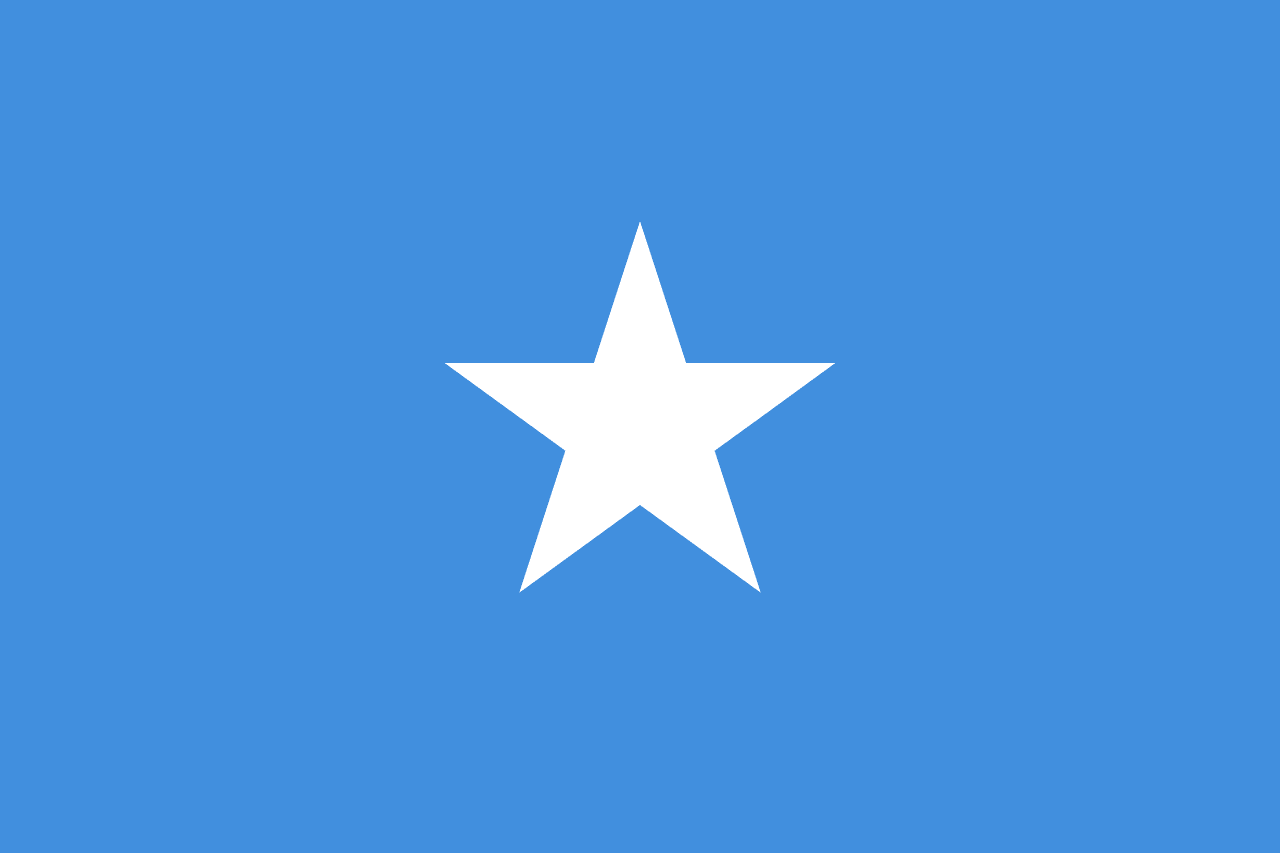
Somalia's president was told by the highest court in the land that he no longer holds the office he is clinging to. On a Thursday in November, a five-judge panel ruled that Hassan Sheikh Mohamud's four-year term ended on 15 May. Not in some distant future. It ended months ago. The government had argued he could stay in power until May 2027. The court said no, and it said it plainly: every decision taken after those dates is "unconstitutional, unlawful and null and void."
Read that again. A court in a country that has known more coups, collapses, and civil wars than most of us can list has just drawn a bright red line through an executive's attempt to rewrite the calendar. Ask yourself how rare that is on our continent. Then ask yourself why it should be rare at all.
Here is the case the judges built. Somalia's parliament reached the end of its own term on 14 April. Lawmakers are the ones who approve and oversee the government, so when their mandate expired, the cabinet's mandate expired with it. What remains is a caretaker cabinet, limited to the day-to-day business of keeping the lights on and the bureaucracy moving. It cannot launch new legal ground, cannot restructure the state, and cannot manufacture a second term out of a constitutional amendment that the country's own supreme law never authorized in that way. The court gave every party 30 days to agree on "a workable electoral framework based on consensus," and it ordered the vote to happen within 90 days.
The case did not come from nowhere. Former president Sharif Sheikh Ahmed filed it on 11 October, asking the court to overturn the constitutional amendments and every decision made under them. Sharif is no saint, and Revvmark has never pretended otherwise. But a legal challenge is exactly what a constitutional order is supposed to produce. When a leader rewrites the rules to keep himself in place, the answer is not to shoot your way back to the table. The answer is to go to the court, make your argument, and let the law decide. Somalia's judges did their job.
We have seen the alternative in Mogadishu before. In 2021, when Mohamed Abdullahi Farmaajo attempted to extend his own mandate, the capital erupted. Armed units clashed in the streets. Opposition forces and government loyalists fought over neighborhoods where ordinary families were sheltering behind closed doors. Ordinary Somalis, the bakers, the market women, the boys running errands, paid the price for a politician's refusal to accept a date on the calendar. The extension was eventually reversed under pressure. The lesson should have been permanent. It was not.
Now look south, because the same continental current is running there. South Africa held local government elections this week, and with 76 percent of the vote counted nationally, the African National Congress had garnered roughly 31 percent. In the 2021 local polls, the ANC took just over 45 percent. That is a collapse of around fourteen points in a single cycle. The party was trailing rivals in Johannesburg, Tshwane, and eThekwini, the cities that run water systems, road repairs, and rubbish collection for millions of people. In Johannesburg, no party looks set to win an outright majority. Coalitions will decide who governs, and that is precisely how democracy is supposed to work when voters stop handing out blank cheques.
Some will call the ANC's slide a crisis. We call it accountability arriving late but arriving. A party that presided over rolling blackouts, collapsing municipal services, and a stubborn unemployment rate that has left young South Africans hopeless is being told by voters that the old loyalty no longer buys a pass. That is not a threat to South African democracy. It is South African democracy working. The ANC lost its parliamentary majority for the first time in 2024, and now the same message is coming from the ground up. Liberation credentials do not pave roads, fix pipes, or pick up the garbage.
Set these two stories side by side and the pattern is unmistakable. In Mogadishu, a president tries to stretch his mandate beyond its legal limit. In Johannesburg, a dominant party discovers that its mandate was never permanent. One system is trying to stop the clock. The other is letting it run. Africa's future belongs to the second model, and the first is a relic we keep being told to tolerate because the alternative looks messy. Messy is what democracy looks like when it is alive. Silence is what dictatorship looks like when it has won.
So what should happen now? First, Somalia's government must respect the ruling. Not reluctantly, not through procedural delay, not through a new decree dressed up as a technicality. The 30-day window for consensus on an electoral framework must be treated as a genuine negotiation among federal authorities, regional administrations, opposition figures, and civil society, with the 90-day deadline for elections honored in full. International partners who fund Somalia's security and state-building should make clear that continued aid depends on the timetable being respected. The African Union and the regional IGAD bloc have both invested heavily in Somalia's stability. They should stop issuing soft statements and start putting their weight on the side of the constitution.
Second, Somali civil society, the business community, and the country's diaspora must organize around a credible electoral process. Clear voter registration, transparent counting, and independent observers are not luxuries. They are the minimum requirement for any vote that carries legitimacy. The private sector in Mogadishu, which has kept commerce moving through decades of conflict, has every reason to demand stability and rule of law, because capital does not flourish where the rules change every few years.
Third, look to the countries that have already shown us the way. Botswana has held regular, peaceful elections since independence and built one of the most resilient economies on the continent on the back of stable institutions and disciplined public finances. Mauritius has demonstrated that a small island nation can attract investment, protect property, and rotate power without bloodshed. Senegal, in 2024, saw its president attempt to postpone an election. The Constitutional Council pushed back, citizens filled the streets, and the vote went ahead. Senegal did not ask permission from the strongman. It insisted on the law. Ghana's peaceful transfers of power show the same thing. These are not perfect nations, but they have institutions that outlast the men who run them. That is the model.
Here is what every African citizen should demand from their leaders, and it is not complicated. Respect the term limits you swore to uphold. Submit to independent courts even when their rulings sting. Hold elections on schedule, count the votes in public, and accept the result even when it hurts. Anything less is not leadership. It is theft with a flag.
Somalia's judges have spoken. The calendar says the president's time has ended. The question now is whether the men in Villa Somalia will hear the ruling as the voice of the law or as an obstacle to be negotiated away. We are watching. The Somali people are watching. And every African who has ever been told that democracy is a luxury we cannot afford should be watching too, because the answer will tell us whether the continent's constitutions are worth the paper they are printed on.
Demand the 90-day deadline. Demand a consensus framework that is real and not a stalling tactic. Demand that the African Union and IGAD enforce the court's ruling without flinching. And demand, from every government in this region, that power be surrendered when the law says it must. The time for half-measures is over. Somalia's president is out of time. Now the rest of us must make sure he knows it.
Based on reporting by ACSS-EMAIL