sahel-security
Burkina Faso's Junta Is Starving Its People and Calling It Sovereignty
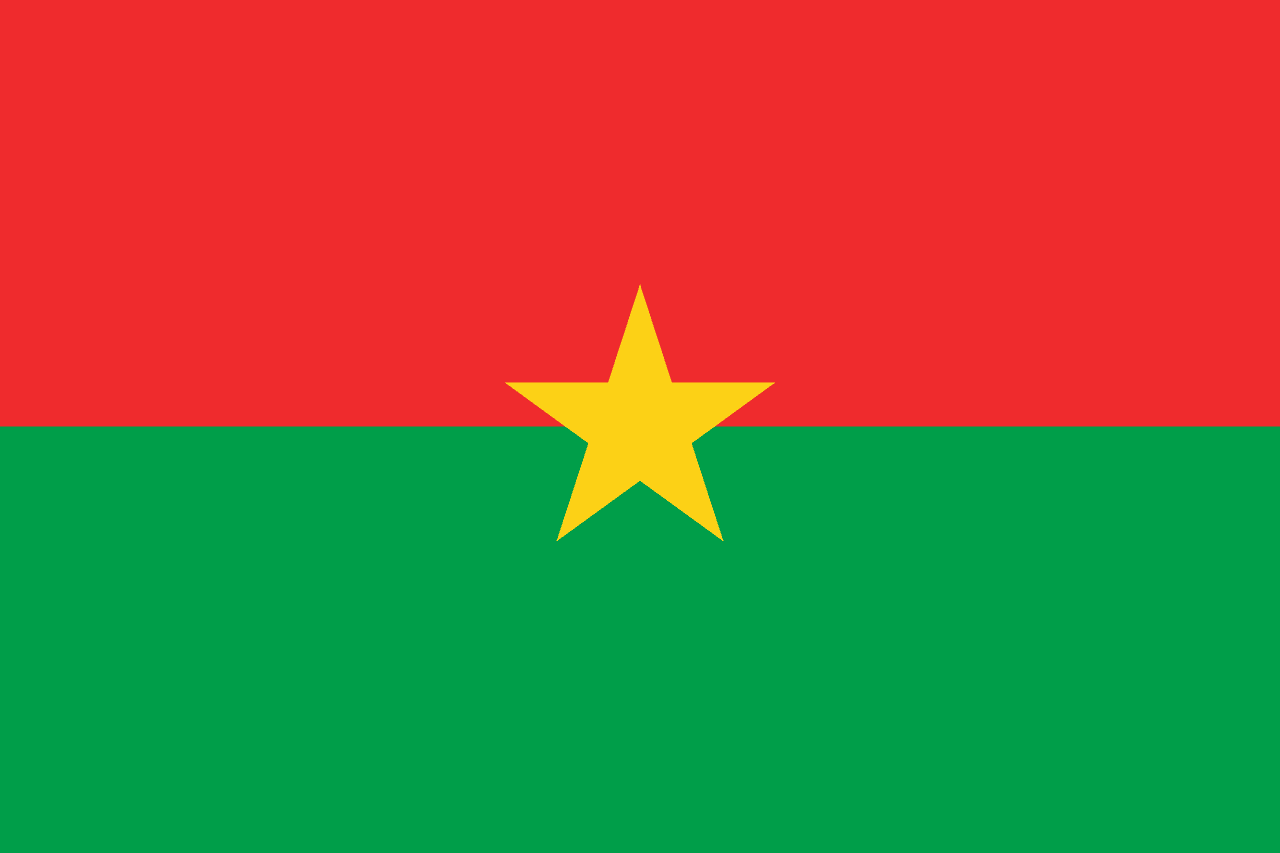
Ask a Burkinabè mother where her children will sleep tonight, and she may not have an answer. Her village may be ash. Her husband may be dead, or among the men conscripted into a war nobody explained to them. Her children may be eating leaves. Somewhere in Ouagadougou, a man in uniform will tell the cameras that Burkina Faso is sovereign, free, and winning.
That gap between the speech and the reality is where Burkina Faso now lives. The UN's humanitarian response plan for 2026 is a document meant to count the human cost of crisis. It asks donors to pay for food, shelter, water, and medicine for people the state has failed to protect. Its funding is chronically short, and each shortfall is measured in children who will not see another harvest. A humanitarian plan of this kind should be a footnote to a functioning state. In Burkina Faso it has become the main evidence against one.
We need to be precise about what happened here, because the junta depends on confusion. Captain Ibrahim Traoré seized power in September 2022, the second military coup that year, promising to end the jihadist insurgency that has spread across the Sahel since the early 2010s. He has not ended it. The Islamic State Sahel Province and JNIM, the Al-Qaeda affiliate, now control or contest large parts of the countryside. Attacks on civilians, roadblocks, and sieges of towns such as Djibo have strangled food supplies. Millions have been displaced. The UN has repeatedly reported around two million people internally displaced in Burkina Faso, a number that dwarfs the displacement of most countries on earth.
Then came Barsalogho in August 2024, where civilians forced to dig trenches for the army were massacred by jihadists in a single day. Hundreds died. Mourners were forced into silence, and the state offered little more than a communiqué. This is what a government does when it has lost control of its territory and no longer wishes to explain itself to the people who pay for its failures.
The junta's response to its own failures has been to dismantle the rules of the game. In 2024 it extended the transition charter to 2029, granting Traoré five more years without an election. The promised return to civilian rule was quietly removed from the calendar. Political parties have been suspended or constrained. Journalists who asked hard questions have been threatened, arrested, and in documented cases forcibly conscripted into the army. Foreign broadcasters have been suspended. A government that fears its own citizens' questions does not need an election to tell you what it thinks of democracy.
And the junta has tied its fate to the Alliance of Sahel States, the grouping it formed with Mali and Niger after leaving ECOWAS. Burkina Faso's exit from the regional bloc was sold as liberation from Western meddling. What it delivered was isolation from the one regional framework that could have offered trade, monitoring, and a pressure point against abuses. Russia's Africa Corps, the successor to the Wagner network, now operates in the country alongside Turkish-supplied drones. Every one of these partners wants something: mining rights, political loyalty, or a foothold in the Sahel. None of them has asked whether the Burkinabè people can eat.
Let us be honest about the West too. For years, Western capitals demanded democratic reform from African governments while they propped up security arrangements that failed to protect civilians. France's withdrawal from the region was celebrated by some and mourned by others, but it did not produce stability. The West lectures us about elections and rule of law, and then acts surprised when African citizens turn to strongmen promising security. We reject that trade. A junta that rules by decree is no answer to a Western failure, and a Western failure is no excuse for a junta.
So what should happen? First, the African Union must enforce its own rules. Burkina Faso remains suspended from AU decision-making bodies after the coup, and that suspension should not be quietly traded away for convenience. Suspension means nothing if it is not paired with a clear, public timetable for a credible, competitive election, observed by independent monitors and open to all parties that respect the law.
Second, humanitarian access must be treated as non-negotiable. Aid convoys, medical staff, and journalists must be able to reach besieged towns without fear of arrest or reprisal. Any government that blocks food and medicine from its own citizens forfeits the presumption that it is acting in good faith.
Third, Burkina Faso should look to the models that prove better is possible. Botswana has sustained multiparty democracy and a functioning free market for decades, built on strong property rights and institutions that outlive their leaders. Mauritius has shown that transparent governance and open trade can lift a nation out of poverty. Senegal's 2024 election, in which an incumbent's attempt to postpone the vote was rejected by courts and citizens, and power changed hands peacefully, is a reminder that African electorates will defend their rights when institutions hold. Ghana's peaceful transfers of power prove the same. These are not Western gifts. They are African achievements.
Fourth, citizens must demand accountability at home. Demand a date for elections. Demand that conscripted journalists be released. Demand that the army explain its losses and its burials. Demand that aid reach those who need it, regardless of which armed group controls the road. Civil society, the private sector, and religious leaders have a role to play in holding power to account, and in building the institutions that will outlast any one soldier.
Now the question that matters most. Who will speak for the mothers who cannot find their children, the farmers who cannot reach their fields, and the journalists who vanished for asking? If we, Africans, look away because a junta wears the language of sovereignty, we become accomplices to a slow catastrophe. Sovereignty belongs to the people, not to the man who holds the gun.
We demand that the AU keep Burkina Faso suspended until it sets a credible election timetable and releases detained journalists. We demand that every government that trades with Ouagadougou ask whether the goods are buying food or buying silence. We demand that the UN and its donors stop treating the 2026 response plan as a routine line item and start treating it as a test of whether the world still cares what happens to Africans. And we demand, loudly and repeatedly, that Burkina Faso's people be given back the right to choose their own government. Silence is not neutrality. In Burkina Faso, silence is what the junta is counting on.
Based on reporting by RELIEFWEB