sudan-conflict
Sudan's Generals Have Stripped Malakal's Families of Papers, Homes and Hope
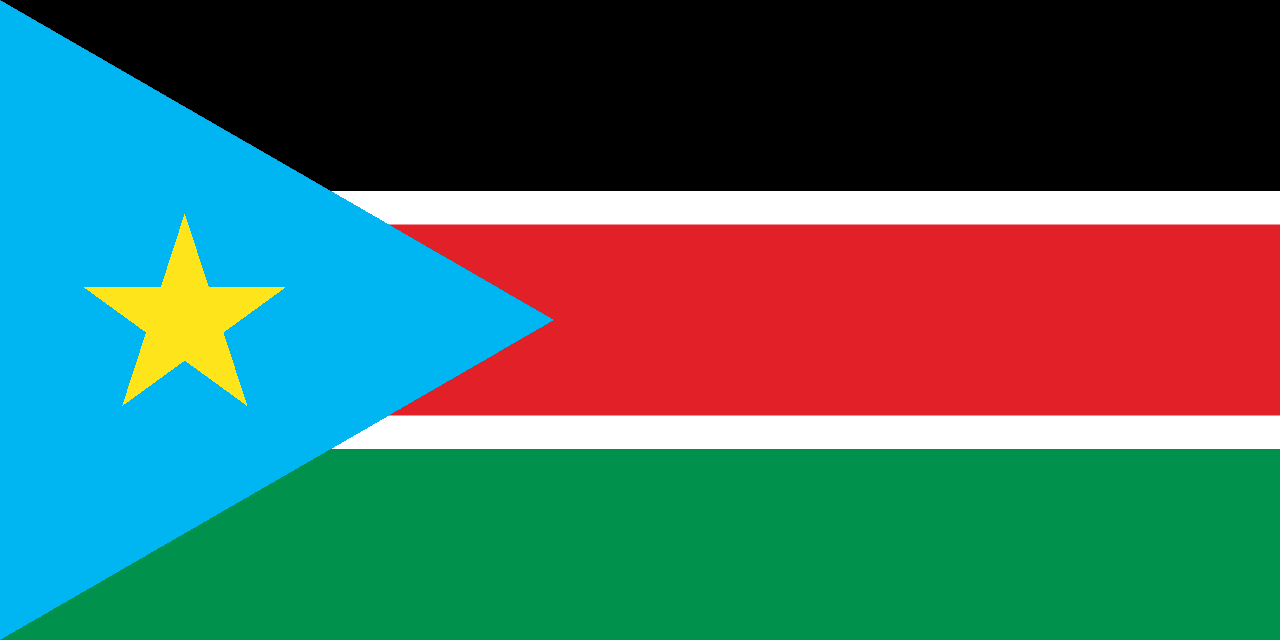
Nine hundred and thirty-seven people. Fifty-eight per cent of them children. Eighty-seven per cent with no civil documents of any kind. Seventy-nine per cent with no property to return to. These are not abstractions from a spreadsheet. They are boys and girls who have no birth certificate proving they exist, mothers who cannot prove they own the ground they once farmed, and families who have been moved from one temporary shelter to another until the word "temporary" has lost all meaning.
On 26 October 2026, enumerators from the International Organization for Migration's Displacement Tracking Matrix, working with the World Food Programme and Plan International, counted them at the Malakal Transit Centre in Upper Nile State, South Sudan. The count recorded 163 households: 657 returnees and 280 internally displaced persons. A third of them arrived this year alone. So ask yourself who they are and where they came from. Ask yourself how a war that began in Khartoum ends up tearing families apart in a river town hundreds of kilometres away from the front lines that many of them fled.
Let us be precise about the cause. Since April 2023, the Sudanese Armed Forces and the Rapid Support Forces have turned Sudan into a killing field. Cities have been shelled, markets have been looted, and entire neighbourhoods have been emptied by men who treat civilians as spoils. The Malakal Transit Centre was established in May 2023, a few weeks after that war metastasised, because the people arriving at the border had nowhere else to go. Onward Transportation Assistance, the service this centre provides, exists because two rival generals chose to fight over state power and left the bill to ordinary families. That is the first crime. Every displaced child in that centre is a receipt for the decisions made by Sudan's generals.
But the second crime belongs to us, and we must say so plainly. Sixty per cent of those counted want to go home. That is a remarkable statement of hope from people who have had everything taken from them. Yet 87 per cent cannot prove who they are. In any functioning state, a birth certificate, a national ID or a land document is what separates a citizen from a stranger. Without those papers, a returnee cannot enrol a child in school with confidence, open a bank account, register to vote, inherit property, or access a clinic without a fight. A people without documents can be ignored, extorted and expelled at will. This is what statelessness looks like in the twenty-first century. It is not a slogan. It is a paper that was never issued.
And 79 per cent report no property in South Sudan. Think about what that means. Homes burned or occupied. Farms abandoned for years. Livestock stolen or sold to pay for the journey. Land that may still be claimed by relatives, local strongmen, or whoever holds a gun in the district. A returning family without a title deed is not a returning family. It is a squatter waiting to be evicted, in a country where land disputes have fuelled violence for decades.
Here is what should trouble every African government, and every African citizen who has ever sat in a queue for a passport. Malakal is not an exception. It is a mirror. Across the Horn, the Sahel and the Great Lakes, millions of people live on the edge of documentation, property rights and legal personhood. They are the first to be displaced when a war starts and the last to be remembered when it ends. Regional bodies that love to issue communiqués about "solidarity" have rarely done the unglamorous work of civil registration, land surveying and mobile ID issuance that would keep these families from becoming invisible.
South Sudan carries its own burden here. The country won independence in 2011 and has spent much of the years since postponing the institutions that make a state accountable. Elections have been delayed repeatedly since the 2015 transitional arrangement, and the 2018 peace agreement has been implemented in fits and starts while its leaders enrich themselves. A government that cannot protect its own citizens from war cannot be expected to register them afterward, but it can start now. It can start tomorrow.
So what must happen? First, the Juba government must launch a mobile civil registration drive in Upper Nile, Unity and the other states receiving returnees, with birth registration for every child in every transit centre and temporary settlement, free of charge and processed in days, not years. Second, it must establish a transparent land commission with clear procedures for proving and restoring property claims, backed by an independent judiciary that does not take orders from the highest bidder. Third, the African Union and IGAD must fund these processes directly rather than through slow multi-year pledges, and they must tie their diplomatic support to measurable progress on documentation and return.
Africa does not lack examples of what works. Mauritius built a modern national identity and civil registration system that most of the continent still envies. Botswana, which has managed its public finances and institutions with a discipline rare in the region, shows that strong rule of law and property protection are the foundation of investment and social stability alike. These are not Western impositions. They are African achievements, and they prove that a state can treat its people as citizens rather than cargo. The private sector has a role too: local firms that can deliver printing, digital registration and surveying services should be given transparent contracts, and returnees should be supported to start small businesses and secure property rights that make their work their own.
And there is the role of you, the reader, the citizen, the young African who thinks this is someone else's problem. Demand that your own government publish the numbers on civil registration in its territory. Demand that your parliament pass laws guaranteeing that displacement does not erase legal identity. Demand that the AU Peace and Security Council put documentation and property rights on its agenda, not just troop deployments and summits. Demand that international donors stop funding emergency bus rides while ignoring the paperwork that would let these families rebuild.
The people of Malakal did not choose this war. They did not choose the generals, the militias or the camps. What they have chosen is the hardest act of faith imaginable: to believe that home is still worth returning to. Our task is to make that faith rational. Give those 937 people their names on paper. Give those children a birth certificate that says they belong somewhere. Give those families a deed that says the land is theirs. Until we do, we are not helping displaced Africans. We are watching them disappear, one undocumented child at a time, and calling it humanitarian work.
Based on reporting by RELIEFWEB