general
Our Diaspora Children Won in America. Our Leaders Keep Stealing Our Future.
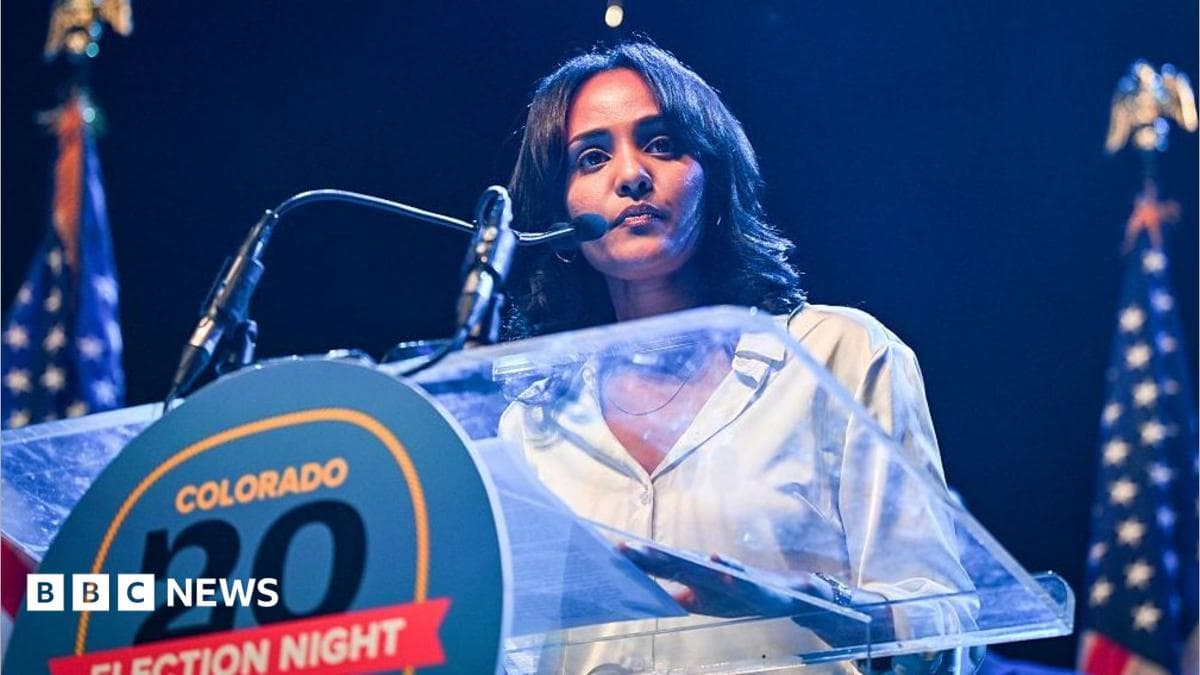
Ask yourself a question that should keep every African head of state awake tonight. How does a 29-year-old woman born in Addis Ababa, carried to Denver as a baby, defeat a fifteen-term incumbent in a fair Democratic primary, while a young man in Lagos, Nairobi or Kampala cannot be sure his vote will be counted?
On 3 November, American voters sent a new generation of African-rooted politicians to Congress and to state and local office. The numbers are not small. Abdul El-Sayed, 42, son of Egyptian immigrants, will be sworn in as Michigan's new senator in January, and he is set to become the first Muslim senator. Melat Kiros, born in Ethiopia, became the first Gen Z woman elected to Congress after unseating a 15-term incumbent in Colorado's 1st District. She had never held elected office before. Adrian Boafo, 32, whose parents came from Ghana, will take over Maryland's 5th District from Steny Hoyer, who spent more than four decades in Congress. Boafo started on the Bowie City Council, moved to the Maryland state legislature in 2023, and won the seat by climbing the ladder rather than inheriting it. Somali-born Ilhan Omar won a fifth term. Junior Ezeonuwas, born in Nigeria, became the youngest member of the Grand Prairie city council before winning a seat in the Texas House. Carol Kazeem, of Nigerian heritage, kept her Pennsylvania seat. At least four candidates with Nigerian roots won across the country.
Now look at what it took. Omar's Washington home was searched by federal agents in October as part of an investigation into her immigration paperwork. She denies wrongdoing. She has not been charged with a crime. And the voters of Minneapolis, or wherever her district sits, still returned her to office. That is not a scandal in the American system. That is the system working as designed: a search, a denial, a presumption of innocence, and a verdict left to the courts and to the people. Hold that picture next to ours. In too many of our capitals, a knock on the door at dawn means a cell without charge, a trial that never comes, or exile for a journalist who asked the wrong question. We have been told that our democracies are too young, too poor, too complicated for such standards. The children of our own soil in America have just proven otherwise.
Then there is the other side of the mirror. President Trump accused El-Sayed of supporting the Muslim Brotherhood, a charge El-Sayed rejected, and attacked his Arabic name in front of a national audience. Trump has also used derogatory language about African countries, including Somalia. His adviser Amer Ghalib, born in Yemen, said in October that the president would refrain from such language. Refrain from it, as if decency were a favour. We will not pretend Washington is our friend because it lets our children run for office. We will not swallow lectures on democracy from a government whose leader insults our nations while praising our talent. Western governments demand that we respect human dignity, free elections and the rule of law. We will hold them to those words, and we will be as loud about their hypocrisy as we are about our own dictators.
So why are these Africans winning there when so many of us are losing here? It is not because of their genes or their blood. It is because of their institutions. An independent judiciary can clear a senator or a congresswoman, or convict one, without the president's permission. A free press and a competitive primary system let a teacher-turned-activist like Kiros, once fired from a New York law firm, build a campaign from nothing. Local councils and state legislatures give a young man like Ezeonuwas a path to power that does not depend on whose cousin is in the presidency. Merit can outrun the tribe only where the rules are written in public and enforced without fear or favour.
We already have proof that this is possible on our own continent. Botswana has held regular multiparty elections since independence in 1966 and has peacefully handed power over more than once. Mauritius has alternated governments through the ballot box and built one of the continent's most stable economies on that foundation. Ghana completed a peaceful transfer of power in 2024 after an election its opposition could lose without the army stepping in. In Senegal, when President Macky Sall tried to postpone the 2024 election, the Constitutional Council and a determined citizenry forced him to step back, and the country voted and changed leaders peacefully. These are not miracles. They are choices, backed by institutions that refused to bend.
Here is what our governments must do, and what we must demand. Electoral commissions must be independent in law and in funding, and they must publish polling-station-level results before anyone is allowed to claim victory. Term limits in our constitutions must be enforced by courts that cannot be purchased or pressured. Judges must be appointed through transparent, public processes, not the phone call of a president. Every minister and senior official must file asset declarations that the public can read, and every government contract above a set threshold must be tendered openly and published online. Property rights must be guaranteed so that a farmer, a shopkeeper or a tech founder can build wealth without a permit from a politician's relative. Free markets are not the enemy of the poor. Captured markets are. Competition, transparent licensing and rule-of-law contract enforcement are what lift people out of poverty, and they are what keep the diaspora's remittances and investments from vanishing into private accounts abroad.
Civil society has a role too. Election observers, journalists and lawyers must document every irregularity and take it to court, and they must be protected when they do. Regional bodies such as the African Union and ECOWAS must stop treating coups and constitutional manipulation as internal matters and start suspending the governments that commit them, with real consequences. And the private sector must refuse to do business with officials who loot public funds, because capital that flows to thieves is capital stolen from our children's schools.
Nigeria and Kenya go to the polls in 2027. Millions of young Africans across both countries have watched Ezeonuwas, Kazeem, Boafo and Kiros win on the other side of the Atlantic and asked the question that should terrify our rulers: if they can do it there, why can't we do it here? So answer it. Register to vote. Show up with your phone charged and your receipts saved. Stand as a candidate for your local council, the same way Ezeonuwas did in Grand Prairie. Demand that your parliamentarians pass the electoral, judicial and asset-disclosure laws we have described, and remember their names when they stall. Hold your governors accountable for every naira, shilling or cedi they touch. Our diaspora children have shown the world what African talent can achieve when the rules are fair. Now make our own rules fair. The next generation is not waiting for permission. It is waiting for us to stop accepting theft as normal and start building the institutions that make dignity possible.
Based on reporting by BBC