sudan-conflict
Donors Are Walking Away and 150,000 Displaced South Sudanese Are Paying With Their Lives
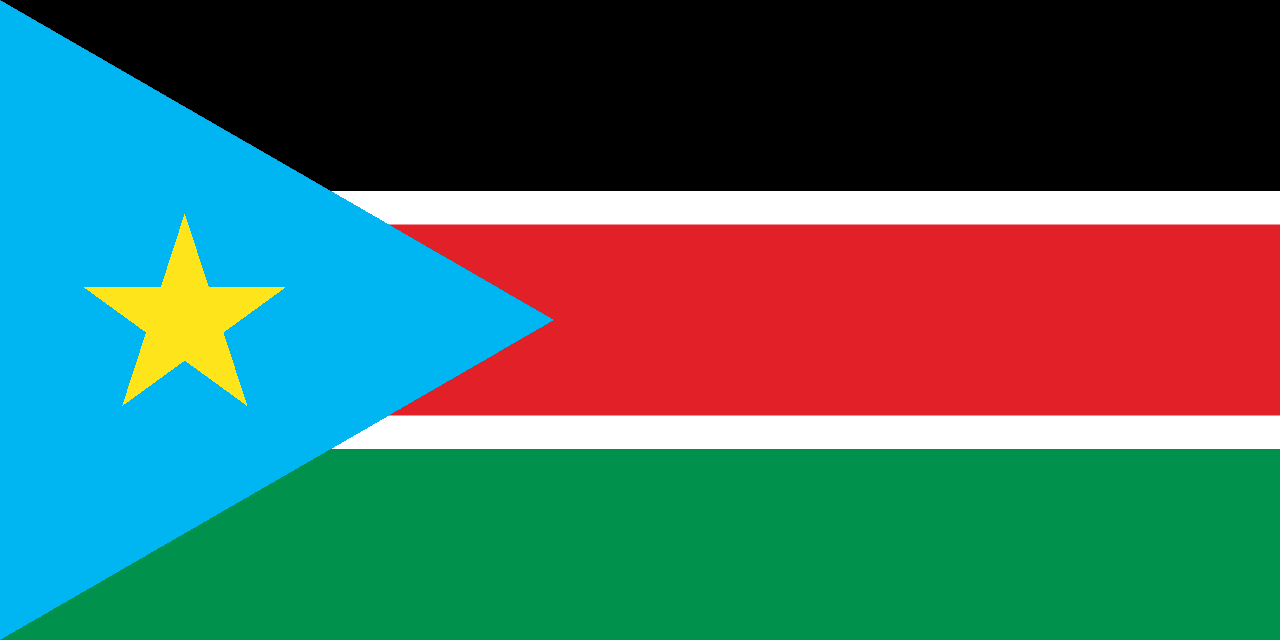
Picture a latrine shared by sixty people. Picture a single handwashing station for more than 100,000 souls. Now picture a mother watching the water run dirty and knowing that the next outbreak is only a rainy season away. This is not a hypothetical. This is Bentiu and Malakal, two displacement camps in South Sudan, where around 150,000 people are being left to fend for themselves while the aid organizations that kept them alive are cutting back or leaving entirely.
Who decided this? Not the children drinking contaminated water. Not the women carrying jerrycans for hours. It was decided in donor capitals, in budget meetings that treated human survival as a line item to be trimmed. Ask yourself a hard question: how many people must fall sick before a funding cut counts as a crime?
The numbers tell a story that should shame every government that has cut its aid budget this year. Bentiu camp holds about 111,000 people in a flood-prone area. Médecins Sans Frontières found roughly sixty people sharing each working latrine and only 109 handwashing stations for the entire camp. Open defecation is widespread. Those are not conditions for human beings in the twenty-first century. They are conditions that breed disease, and South Sudan has already watched that disease kill.
Since 2024, the country has recorded nearly 110,000 cholera cases and 1,970 deaths. Rubkona County, where Bentiu sits, accounted for about a quarter of national cases at the peak of the outbreak in 2024 and 2025. Cases in MSF-supported areas have dropped since mid-2025, but the conditions that caused the epidemic have not been fixed. Between January and September 2026, more than 14,000 cases were recorded nationwide, and Rubkona alone accounted for nearly a third of them. The outbreak did not end. It was simply given a pause, and the people who ran the emergency response are now running out of money to keep it contained.
Consider who is still holding the line. In Bentiu, the International Organization for Migration is effectively the only provider of water, sanitation, and hygiene services and primary healthcare. Its WASH funding has been extended only until March 2027, and primary healthcare faces a major gap from January 2027. In Malakal, IOM is again the only water and sanitation provider, and without new money its water supply for 40,000 people and desludging of roughly 900 latrines could simply stop. The International Medical Corps, which had been supporting close to 100 deliveries a month, has ended its outpatient, laboratory, mental health, and routine immunization services. Those are not abstractions. They are the difference between a mother surviving childbirth and a mother becoming a statistic.
Now look at what replaces these services. Malakal was formally handed over to government authorities in February 2026, and Bentiu was placed under government authority in 2021. On paper, that is progress. In practice, it is abandonment dressed up as sovereignty. Local health authorities are short of staff and supplies. Garbage sits uncollected for weeks. Waste flows into drainage channels that run straight through the places where people sleep. A transfer of authority that comes without money is not a transfer. It is a handover of a burning house with the fire extinguishers removed.
Why are people still in these camps? Because they have nowhere safe to go. An IOM survey from February 2026 found that 55 per cent of households in Bentiu said their intended destination was unsafe. These families fled violence in 2013 and have spent more than a decade waiting for peace that never fully arrived. Renewed violence since last year has pushed needs up even as aid shrinks. The people in these camps did not choose protracted displacement. They were forced into it by armed conflict and by a political class that has never been held to account for it.
And that political class deserves a direct reckoning. South Sudan is one of the continent's largest oil producers, yet its citizens live with some of the worst health and sanitation indicators on earth. Oil revenue has repeatedly vanished through opaque channels, while the people who need clean water wait in lines that never move. Every dollar stolen from the treasury is a latrine not built, a borehole not drilled, a nurse not hired. When Juba talks about sovereignty, ask it a simple question: whose sovereignty is it, if the sovereign people are drinking from the same water that carries cholera?
Donors are not innocent in this story either. The United Kingdom, other European governments, and the United States have all scaled back support even as needs have grown. These same governments stand before the world and lecture African nations about good governance, transparency, and human rights. They are right to demand those things. But they cannot claim the moral high ground while abandoning the very people those values are supposed to protect. A value you only defend when it is cheap is not a value. It is a press release.
Here is the solution, and it is not complicated. Africa already has models that work. Botswana built one of the continent's most respected public finance frameworks by managing its diamond wealth through transparent rules, independent oversight, and long-term savings that outlast any single politician. Mauritius built a stable, rules-based economy by insisting on property rights, open markets, and institutions that do not bend to the whims of the powerful. South Sudan can borrow those lessons tomorrow. Ring-fence a fixed percentage of oil revenue for water, sanitation, and health in displacement sites. Publish every expenditure. Create an independent audit body with real power. Open procurement to competitive local and private contractors who can build latrines and collect garbage at lower cost than a bloated aid bureaucracy. And tie the closure of camps to secure land, property restitution, and the rule of law so that people can return home with dignity rather than being pushed out with nothing.
The African Union and IGAD must stop issuing communiqués about displacement and start demanding accountability. The United Nations Security Council must recognize that a public health emergency in a conflict-affected state is a threat to regional stability. Donors must fund WASH and primary healthcare in Bentiu and Malakal beyond March 2027 and January 2027, not wait for the next outbreak to force their hand. Civil society inside South Sudan must be protected and empowered to monitor how money is spent, because the people who lose most from corruption are never the ones who get the contracts.
And you, reading this on your phone, have a role too. Write to your legislator and ask what your government is doing to fund camp water and sanitation. Ask your national broadcaster why a story about 150,000 people facing cholera gets less airtime than a celebrity scandal. Support the African journalists and health workers documenting this crisis. Demand that your own government stop cutting aid while claiming moral leadership.
We are not asking for pity. We are demanding that the basic promise of humanity be kept. No one should have to choose between thirst and disease. No child should die of a waterborne illness in a camp that the world already knows how to fix. The clock is running in Malakal, as MSF has warned. Make sure it stops before another funeral becomes the only thing that moves the world.
Based on reporting by RELIEFWEB