acss-digest
Kagame's Proxy M23 Now Marches Under a Coalition Led by a Convicted Warlord
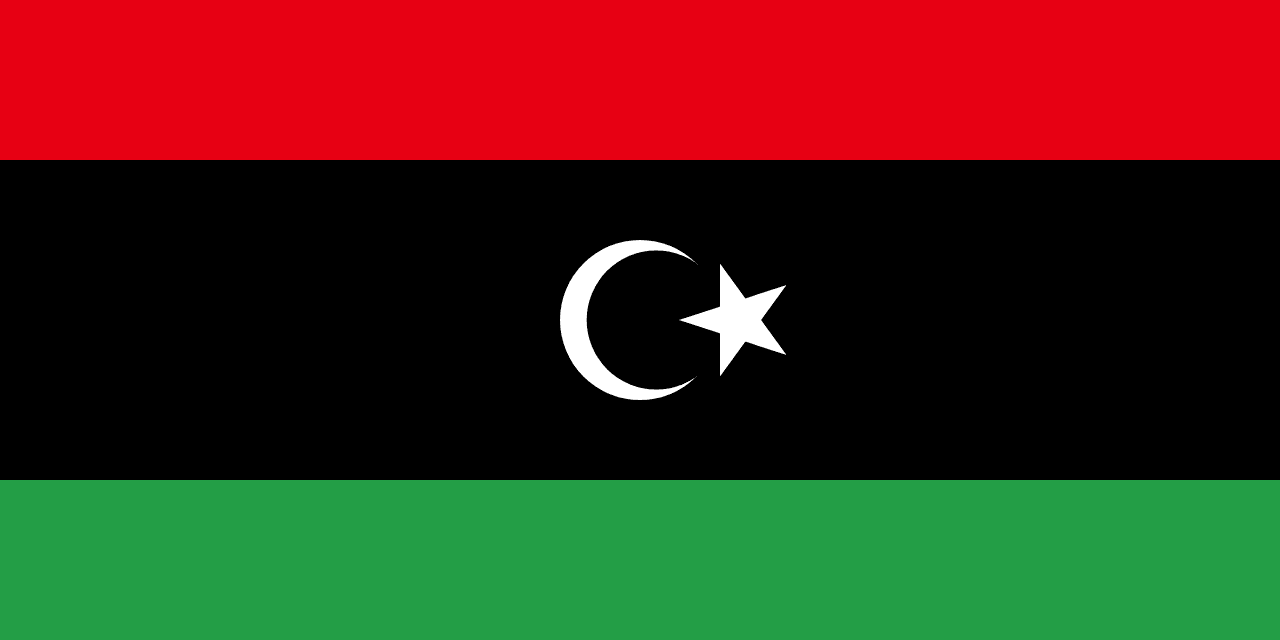
Read that sentence again. A former president of the Democratic Republic of Congo, condemned to death by a Congolese court for treason and war crimes, is now the political face of the armed groups tearing his country apart. He received the head of the UN peacekeeping mission in Goma, the city that M23 holds, and they talked about extending the mandate of the peacekeepers who are supposed to protect Congolese civilians from those same armed groups. Who exactly is being protected here, and from whom?
We need to say this plainly, because the world keeps choosing soft words for hard crimes. M23 is not a homegrown rebellion that happened to find Rwanda's friendship useful. It is the mask of a war of aggression. The Rwandan Defence Force has deployed full combat units into eastern Congo, with UN experts estimating 14,000 to 18,000 Rwandan troops, close to half of Rwanda's army. M23 supplies the mass manpower and the deniability. This is Russia's playbook in Donetsk and Luhansk, transplanted onto Congolese soil. If the world calls Moscow's army an invader in Ukraine, it must call Kigali's army an invader in Congo. There is no honest alternative.
The numbers tell the story the diplomats won't. M23 grew from roughly 3,000 fighters to more than 30,000, and it did so by press-ganging tens of thousands of Congolese civilians and captured prisoners into uniform. Think about that. Fathers taken from their fields. Teenagers seized from the roads. Men handed a rifle and sent to kill their neighbours or die in someone else's war. That is slavery wearing a military uniform, and it is happening while the same regime that runs it markets itself as a model of order and development.
Satellite imagery of Kanombe military cemetery in Kigali has documented more than 1,171 new graves since 2021. Rwanda hides its dead because admitting them means admitting the war. Every one of those graves is a soldier sent across a border that was never his to cross. Ask yourself why a government would bury its own sons in secret unless it was ashamed of where they died.
Meanwhile, the Congolese conflict is being fed by the same minerals that power our phones and electric cars: cobalt, coltan, gold, tin. Around 100 armed groups are fighting for a foothold in that mineral-rich east, and the wealth flows out while the people are left with the bodies. Western, Chinese, Gulf and Turkish companies all want a piece of that ground. Each of them speaks the language of partnership. None of them asks the hard question about who is doing the killing to keep the supply lines open.
Look at what is happening in the same week across our continent. In Uganda, lawyer Steven Atukwatse of the Agora Research Center says he has handled 12 cases since November 2025 of social media users charged under the Computer Misuse Act, most for criticising President Museveni or his son Muhoozi. Families describe relatives who vanish, then turn up months later dumped at police stations. When they ask where their loved ones are, they are told, "We do not have the person." Charges are left hanging over people even after release, a sword that never comes down. This is what a government does when it fears its own citizens' voices more than it fears any rebel army.
In Niger, the prime minister travelled to Benghazi to sign a cooperation memorandum with Khalifa Haftar, the military commander who controls eastern Libya and answers to no electorate. Niger shares more than 340 kilometres of border with Libya, a country split since 2014 between the UN-recognised government in Tripoli and a rival administration in the east. Niger is entitled to manage its own security. But when a sovereign state cuts deals with unelected generals rather than with the democratic institutions of the countries around it, it is choosing convenience over the rule of law. Every time we shake hands with a strongman instead of demanding an election, we teach the next strongman that the ballot box is optional.
And in Nigeria, the National Security and Civil Defence Corps has launched a nationwide enforcement drive through its Mining Marshals, aimed at illegal mining, mine collapses, revenue leakage and avoidable deaths. The goal is right. Men and women are dying in unsafe pits every year, and the state has lost revenue to smugglers who never pay a naira in royalties. But enforcement without transparency is just another tool for extortion. If a marshal can shut down a site, who checks whether he is being paid off to look away? The answer must be public licensing, published revenue figures, and an independent inspectorate that answers to courts, not to whoever is in the room.
So what must we do? The solutions are not mysterious. We already have models that work. Botswana built one of the most prosperous economies in Africa by insisting on transparent mineral revenue management, strong property rights and a judiciary that rules against the powerful. Mauritius shows what happens when a small island state bets on rule of law, open markets and independent courts. Senegal has twice handed power peacefully through the ballot box, proving that democratic transition is a choice African citizens can make and defend. Rwanda has shown what economic planning looks like, and we must also say loudly that its economic model cannot excuse a war of aggression against its neighbour. Development built on invasion is not development. It is looting with a better brochure.
Here is what we demand. The African Union Peace and Security Council must name Rwanda's invasion for what it is, and it must impose targeted sanctions on the commanders and officials running the M23 operation. The UN Security Council must renew MONUSCO's mandate only with a clear civilian-protection mission, backed by publicised reporting on forced conscription, and it must act on the Group of Experts findings, including report S/2025/446, instead of filing them away. Uganda must release every person held without charge, and its government must repeal or radically narrow the Computer Misuse Act. Niger and its neighbours must insist that any security cooperation with Libya be conditioned on a return to elections in both halves of that country. Nigeria must publish every mining licence, every royalty payment and every enforcement action, online, where any farmer or miner can read them.
To the citizens of Congo, Uganda, Niger, Nigeria and every nation on this continent: ask your leaders the question they fear most. Who is accountable when a soldier from a neighbouring state is buried in secret? Who is accountable when a critic vanishes for a tweet? Who is accountable when a convicted man sits at the table with a peacekeeping chief? Demand the answer in writing. Demand it in parliament, in the press, in the courts and at the ballot box. Silence is not neutrality. Silence is the permission that keeps these wars running.
We are not asking for pity. We are demanding the rights that every African is owed: a state that protects rather than preys, a judiciary that answers to law, and a democracy that cannot be bought or buried.
Based on reporting by ACSS-EMAIL