general
Libya's Clerics Ban Nike While Secret Jails Operate Unchecked
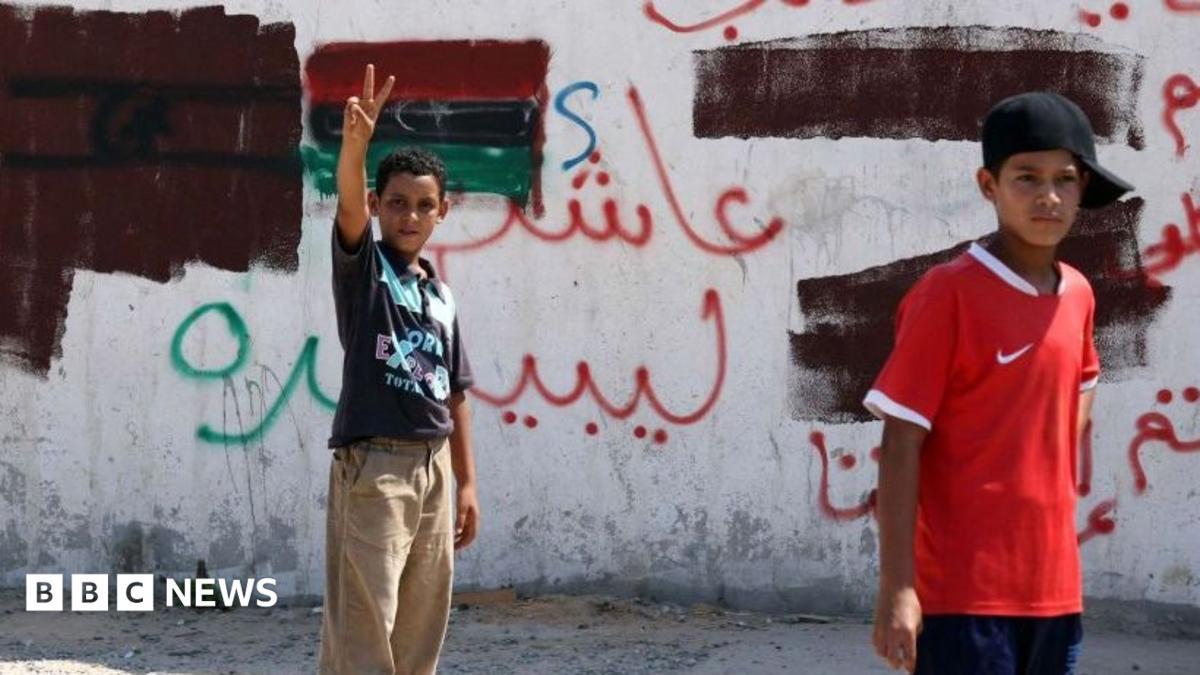
Libya's highest religious authority has decided that a sneaker logo is a threat to the faith. The Dar al-Ifta, based in Tripoli, has issued a fatwa forbidding Muslims to buy, sell, or wear clothing bearing the Nike swoosh. Think about that for a moment. A country that has spent more than a decade without a unified government, without a functioning central bank in the eyes of its own citizens, and with rival administrations fighting over the same oil fields, has found time to police what its young people put on their backs.
We are not writing this to mock faith. Muslims across Libya, and across our continent, deserve to practise their religion with dignity. But when a religious opinion is used to tell free adults what logo they may wear, something has gone wrong in how we govern ourselves. And when that same instinct spreads to music, theatre, and dance, it becomes something more dangerous.
Consider the reasoning. The fatwa argues that Nike was named after Nike, the Greek goddess of victory, and that the swoosh was inspired by her wings. Therefore, it claims, wearing the logo promotes "polytheism." The argument is a stretch even by the standards of religious rhetoric, and the ruling pairs it with an accusation that Nike backs Israel, linked to a 5 November 2023 statement from the Council for Research and Sharia Studies urging a boycott of Western companies during the war in Gaza. Whatever one thinks of that war, a boycott is a consumer choice. A fatwa is not a court ruling. The text offers no evidence that Nike took the position being attacked, and it does not need to. It only needs to shame.
Libya has seen this pattern before. Last year the same institution ruled against jewellery and watches bearing the four-leaf clover of the French house Van Cleef & Arpels, arguing that the design clashed with Islamic teaching on luck. The sequence is now familiar: a religious authority issues a ruling on a foreign luxury or sportswear brand, social media erupts, and the cultural conversation narrows a little more. Some Libyans cheered. Others called the ruling ironic, or a distraction from the country's real emergencies. Both reactions tell us something. People are exhausted, and they can see where the energy of their institutions is going.
Here is the part that should make every Libyan angry. In 2025, authorities in eastern Libya moved to restrict rap music, theatre, and dance performances, citing lyrics and performances said to violate public morals. Those measures were then extended to western Libya. The Dar al-Ifta has ruled against music in the past, and although the reporting we have reviewed found no clear proof that the institution directly drove those restrictions, the direction of travel is unmistakable. Young Libyans, many of them artists and students, are being told their creativity is a moral hazard. Meanwhile, the country's fractured security sector has been accused of far darker things. Reports have surfaced of Sudanese women facing rape and abuse on Libyan soil, and of a secret jail where detainees say being alive is a miracle. Where were the fatwas against those crimes? Where was the religious outrage when human beings were disappearing into the dark?
Let us be precise about what this is. A fatwa carries social weight, but it is not law, and this one does not announce a state ban or specify penalties. So the question is not whether a sneaker is now illegal in Tripoli. The question is what it means when the moral energy of a fractured state flows toward controlling clothing and music while the state's core promise, protecting citizens from arbitrary detention and violence, remains unfulfilled. Libya is a country where rival authorities in the east and west compete for legitimacy. Whoever controls the narrative of virtue gains a cheap form of power, and it costs them nothing to ban a logo while the real rot goes untouched.
This is also a continental problem. Across Africa, we have watched religious and political actors, local strongmen, and foreign patrons fight over the public square. The argument is always framed as protecting our values. Yet the values that truly matter, the ones that built the most stable African societies, are not about what you wear. They are about the rule of law, freedom of conscience, property rights, and the right of ordinary people to choose how they live without fear of a knock on the door.
So what should Libya do? Start with the basics. Libya needs a unified, accountable government and an independent judiciary that can rule on what is legal and what is merely preached. Religious institutions should be free to offer guidance, but guidance must not become coercion. Keep the fatwa where it belongs, in the mosque and the seminar, not the market or the stage. Protect the right to create art and perform it, and the right to buy and sell goods, including imported goods and counterfeits, through a regulated system that taxes and inspects rather than criminalises ordinary shoppers.
We can learn from nations that have done this well. Botswana built one of Africa's most prosperous and stable democracies by insisting on transparent institutions, sound fiscal management, and respect for private enterprise. Mauritius has shown that a plural society can thrive when the state protects rights rather than dictating identity. Senegal, after painful episodes of political tension, has demonstrated that peaceful transitions of power are possible when citizens and institutions hold the line. None of these countries got rich or free by banning sneakers. They did it by building institutions that outlast any single preacher, party, or warlord.
Libyan civil society, business associations, and young entrepreneurs have a role to play. Merchants should organise to defend their right to trade lawfully. Artists should document and publicise every restriction placed on their work. Journalists should hold the Dar al-Ifta and security authorities to the same standard of public accountability. Regional bodies, including the African Union, should press for a unified Libyan framework that guarantees due process and bans secret detention. And foreign governments that claim to champion human rights should stop treating Libya as a bargaining chip and start insisting that any settlement protects civilians first.
To the young Libyans wearing that swoosh in defiance, and to the rappers and dancers being told their art is sinful: you are not the problem. Your demand for dignity is the most Libyan thing there is. To the clerics and the officials who lend their authority to these crackdowns: you owe your people more than symbolic victories over sportswear. Show us you can protect a detainee as fiercely as you police a logo.
Libya does not need another moral crusade against a brand name. It needs functioning courts, accountable security forces, free expression, and a government that answers to its people. Demand it. Write to your representatives, support the independent journalists and artists still daring to speak, and refuse to let fear decide what you wear, what you sing, or what you say.
Based on reporting by BBC