sudan-conflict
South Sudan's Leaders Let One in Three Children in Uror Starve
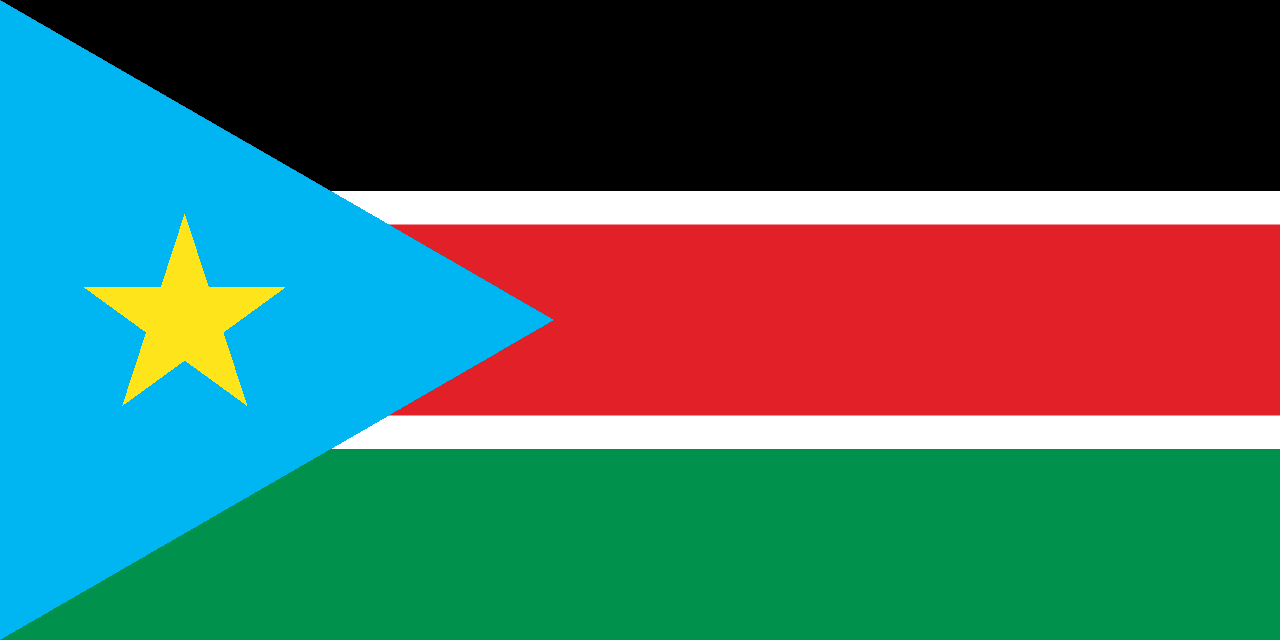
Think about what one in three looks like. In a classroom of thirty children in Uror County, roughly ten are wasting away. Their arms are thin enough to circle with two fingers. Their bellies are swollen with the hunger that starts when the body starts eating itself. Their mothers know the signs, and many of them have already buried a child.
This is not a forecast. It is a measurement. Between 12 and 22 September 2026, a survey team fanned out across all seven payams of Uror County in Jonglei State. They measured 471 children aged 6 to 59 months and interviewed 300 households. The result is that 32.0 percent of those children have Global Acute Malnutrition. The 95 percent confidence interval runs from 27.7 to 36.7 percent. Even the most conservative reading of the data places the county in the emergency zone.
Let us be precise, because precision is what separates a fact from a slogan. Under UNICEF and WHO classification thresholds, a GAM rate of 15 percent or higher marks a critical situation. Rates of 30 percent or higher mark an extremely critical one. Uror County is in the second category. The survey also found Severe Acute Malnutrition in 5.2 percent of children, with a confidence interval of 3.6 to 7.3 percent. Severe wasting is the form of hunger that kills quickly, through infection, dehydration, and organ failure that a child's body cannot survive without intervention. Behind every percentage point is a child who is closer to death than to the classroom.
Those children did not choose this. Their parents did not choose a county where the grain runs out before the harvest, where the rains and the floods arrive on their own schedule, and where the state's own revenue, the oil money that sustains the capital, does not reach the villages. South Sudan sits on some of Africa's richest petroleum reserves. Oil accounts for the overwhelming majority of government income. Yet in the places that should benefit most, children are weighed against a colour-coded chart to see whether they will survive the season.
Who has been accountable for this? Ask the ministers in Juba who approve budgets for luxury vehicles and foreign travel while the nutrition line in the national budget stays a rounding error. Ask the commanders who have turned the country's internal fault lines into armed contests for patronage, and who have never faced a court for the displacement and hunger those contests produce. Ask the officials who sign aid agreements and then watch appeals go under-funded year after year, leaving NGOs to stretch thin supplies across counties the state has abandoned.
This is the South Sudan pattern, and it is older than the country itself. Independence in 2011 was supposed to end a long liberation struggle and open a new era of accountable government. Instead, the country descended into a civil war from 2013 that killed hundreds of thousands and displaced millions. A peace agreement signed in 2018 promised power-sharing, and each new deadline has been extended while the fighting and the looting continued. Each time, the people who pay the price are the same: the farmer who cannot plant, the pastoralist who loses cattle, and the mother who carries a limp child to a clinic that has no therapeutic food in stock.
The wider continent should be uncomfortable with this too. Malnutrition on this scale is not a natural disaster. It is the output of a political system that treats public resources as private property. Every dollar stolen from a treasury is a dollar not spent on a clinic, a borehole, or a road that could get food to a famine-hit county in time. Every contract awarded to a politically connected firm, and every opaque concession signed without public scrutiny, is a decision about who lives and who dies. Africa's poorest children are paying the interest on that corruption.
But this is not inevitable, and that is the point we refuse to let anyone forget. Botswana managed its diamond wealth through transparent revenue rules and a sovereign fund that saved for the lean years, and it built one of the continent's most resilient economies on top of a country that was poor at independence. Mauritius created an independent judiciary, open markets, and a credible anti-corruption framework that turned a sugar economy into a high-income island. Senegal's peaceful transfers of power in 2000 and 2024 proved that citizens can hold leaders accountable at the ballot box when institutions are allowed to function. These are not foreign miracles. They are African choices.
So what must happen in Uror County and across South Sudan? First, the government must publish, audit, and enforce a public budget for nutrition and primary health, with spending tracked by county so that citizens can see where money goes and where it disappears. Second, oil revenue must be placed under an independent, publicly reported framework, modelled on Botswana's example, so that the windfall from the ground becomes food and medicine on the ground. Third, the peace agreement must be implemented in full, with commanders held to account for diverting resources and recruiting children into armed groups, because no nutrition programme survives a war. Fourth, property rights and market access for pastoral and farming households must be protected, so that families can rebuild herds and fields rather than depend forever on handouts.
The African Union and the regional bloc IGAD have the mandate to press these demands. They should use it, not in another communiqué that expresses concern, but through clear benchmarks tied to aid and diplomatic engagement. Donors, including Western governments that lecture the continent about good governance, must stop funding crisis response while ignoring the political theft that causes the crisis. You cannot claim to value human rights while shrugging at a child's starvation because the paperwork is inconvenient.
And you, the reader, have a part to play. Ask your government and your parliament where their aid money goes and whether it is tied to transparency. Support the organisations on the ground, Africa-led and local, that measure malnutrition and deliver treatment. Share this number with people who think famine is a distant problem. Demand that South Sudan's leaders explain, in public and under oath, why their children are being weighed like livestock.
Thirty-two children in every hundred in Uror County are fighting to stay alive. We do not need another report to tell us that. We need leaders who treat that number as a national emergency and a personal shame. Until they do, every one of us who stays silent becomes part of the machinery that lets it continue.
Based on reporting by RELIEFWEB