acss-digest
Eastern Libya's Armed Men Profit From 20,000 Desperate Crossings to Crete
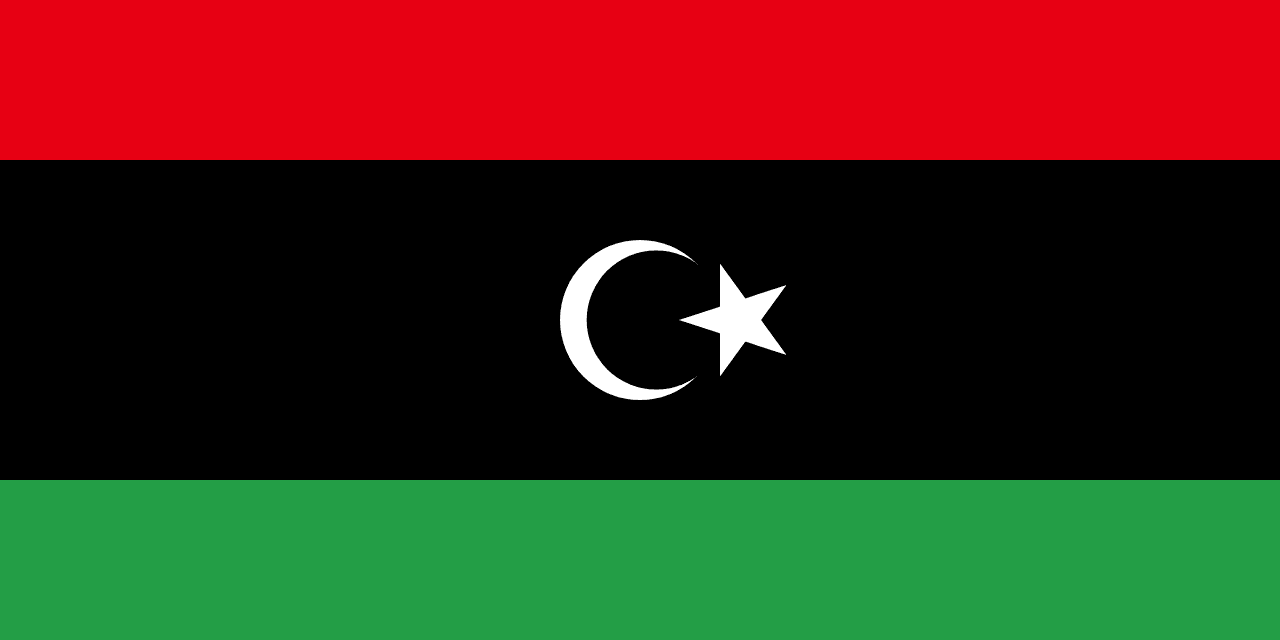
Twenty thousand people. That is how many have already tried to reach Crete from Libya this year, and the year is not finished. Twenty thousand human beings, packed into small boats, handed to men who treat their lives as cargo. Some will not arrive. Some already have not.
Ask yourself what a day and a half at sea means in a boat built for coastal fishing. Ask what it means to have sold your family's land, your mother's gold, or your brother's future to pay $4,000 for a seat on a vessel that may not survive the night. That is the price of a ticket to the one place the continent's young people have been told, for decades, that dignity lives. We know the price. We know the route. The question we must now ask is who is getting rich from it, and why no one in power has stopped them.
The departures cluster around Tobruk, a port city on Libya's eastern Mediterranean coast, close to the Egyptian border. Greek media, citing Kathimerini, have reported that the Crete route has surged into one of the busiest corridors for irregular migration toward Europe. It did not surge by accident. In 2023, eastern Libyan forces moved against smugglers heading for Italy. The networks did what criminal networks always do. They adapted. They shifted to smaller boats and pointed them at Crete. The crackdown did not end the trade. It moved the trade and kept the money flowing.
Let us be precise about who holds the levers. Eastern Libya is dominated by Khalifa Haftar's Libyan National Army, a force that has been propped up by the United Arab Emirates, Egypt, and Russia, which has deployed mercenary personnel in the region. Multiple UN investigations and human rights organisations have documented how armed groups and officials tied to the east have been linked to trafficking, detention, and extortion of migrants. Across the Libyan divide, the Tripoli-based coast guard, financed by Italy and the European Union under arrangements dating back to the 2017 Italy-Libya memorandum, has been accused by UN bodies and NGOs of intercepting boats and returning people to detention centres where torture, rape, and forced labour are documented. Europe paid for those interceptions. Europe looked away from what happened after.
This is the Libyan tragedy in one sentence. A country with no functioning state has become a marketplace where armed men sell migrants to smugglers, sell protection to smugglers, and sell border control to Europe. Since 2014 Libya has had two rival governments and a patchwork of militias answering to whoever pays. Elections planned for 2021 never happened. Without one accountable police force, one central treasury, or one independent judiciary, smuggling is no longer a crime against the state. It has become the state.
Meanwhile, Europe has chosen to outsource its conscience. Greece has been repeatedly accused of illegal pushbacks at sea, and in 2025 it suspended asylum applications from arrivals from North Africa for a period, a move that rights groups condemned as a violation of international law. Brussels talks endlessly about the rule of law, then funds militias to do its border work. You lecture us about democracy while bankrolling the warlords who sell our children into the Mediterranean. You cannot have it both ways. And the newcomers to this contest are no better. Russia, the UAE, Turkey, and Egypt are all competing for Libya's oil, ports, and political loyalty. This is the new scramble for Africa, with different flags and the same appetite. The people paying for it are the young men and women from Sudan, Chad, Eritrea, and across West and East Africa, fleeing war and collapse, who arrive at Tobruk with nothing left to lose.
Consider who benefits. The smuggler collects $4,000 a head. The armed commander collects a cut at every checkpoint. The foreign patron buys leverage over a country sitting on Africa's largest proven oil reserves. And who bleeds? The mother in Khartoum whose son left after the war reached her street. The 19-year-old in Eritrea who saw conscription swallow his youth. The family in Kumasi or Kano that mortgaged its future on a phone call from a man in a Libyan safe house. The bodies that wash up on Crete or never surface at all are not statistics. They are our sons and daughters, and we have allowed their deaths to become a business model.
We must be clear about what would work, because Africa has already shown us. Morocco, for all its flaws, regularised tens of thousands of undocumented migrants in its 2014 and 2017 campaigns, proving that legal status is a stronger weapon against exploitation than a fence. Botswana and Mauritius have shown that predictable institutions, transparent budgets, and property rights attract the investment that creates jobs at home, which is the only durable answer to the question of why people leave. Senegal's peaceful transfers of power have demonstrated that accountable democracy is not a luxury for wealthy nations. It is the basic machinery of a state that can protect its citizens. Libya needs all of it, and it needs it urgently.
So here is what must happen. The UN Security Council should impose targeted sanctions and asset freezes on every commander, militia leader, and official named in the UN Panel of Experts reports on migrant trafficking, and it should enforce them without exception for the powerful. Libya's rival factions must agree on a single central treasury, a unified security architecture, and a timetable for elections that cannot be cancelled by whichever general controls the airport. The European Union must stop funding detention systems and coast guard units that the UN has documented abusing human beings, and it must publish the audit trail of every euro it has spent. The African Union must put migrant protection on its agenda with the same seriousness it gives to diplomatic summits, and it should press for legal labour corridors so that a young Sudanese engineer or Ghanaian nurse can work abroad through a visa, not a smuggler's boat. Private employers in Europe who depend on undocumented labour should be held to account, and civil society groups documenting detention centres deserve protection, not harassment.
And you, reader, have a role. Ask your member of parliament, in Accra, Nairobi, Lagos, Brussels, or Athens, what their government has done about the Tobruk route. Demand that your government name the militias it funds and the officials it sanctions. Support the journalists and rights groups who risk their lives documenting these camps. Refuse the lie that nothing can be done. It can. It has been done in Morocco's regularisation drives, in Botswana's institutions, in Senegal's peaceful elections. The only thing missing is the will to demand it.
Twenty thousand people have already tried this year. How many more will we bury before we decide that their lives are worth more than the profits of the men who sell them? We are Africans. This is our continent, and these are our children. Stop calling this a migration crisis. Call it what it is: a crime, paid for in dollars, and protected by people who know exactly who they are.
Based on reporting by ACSS-EMAIL