acss-digest
Yahya Jammeh Stole 22 Years and Tried to Steal an Election
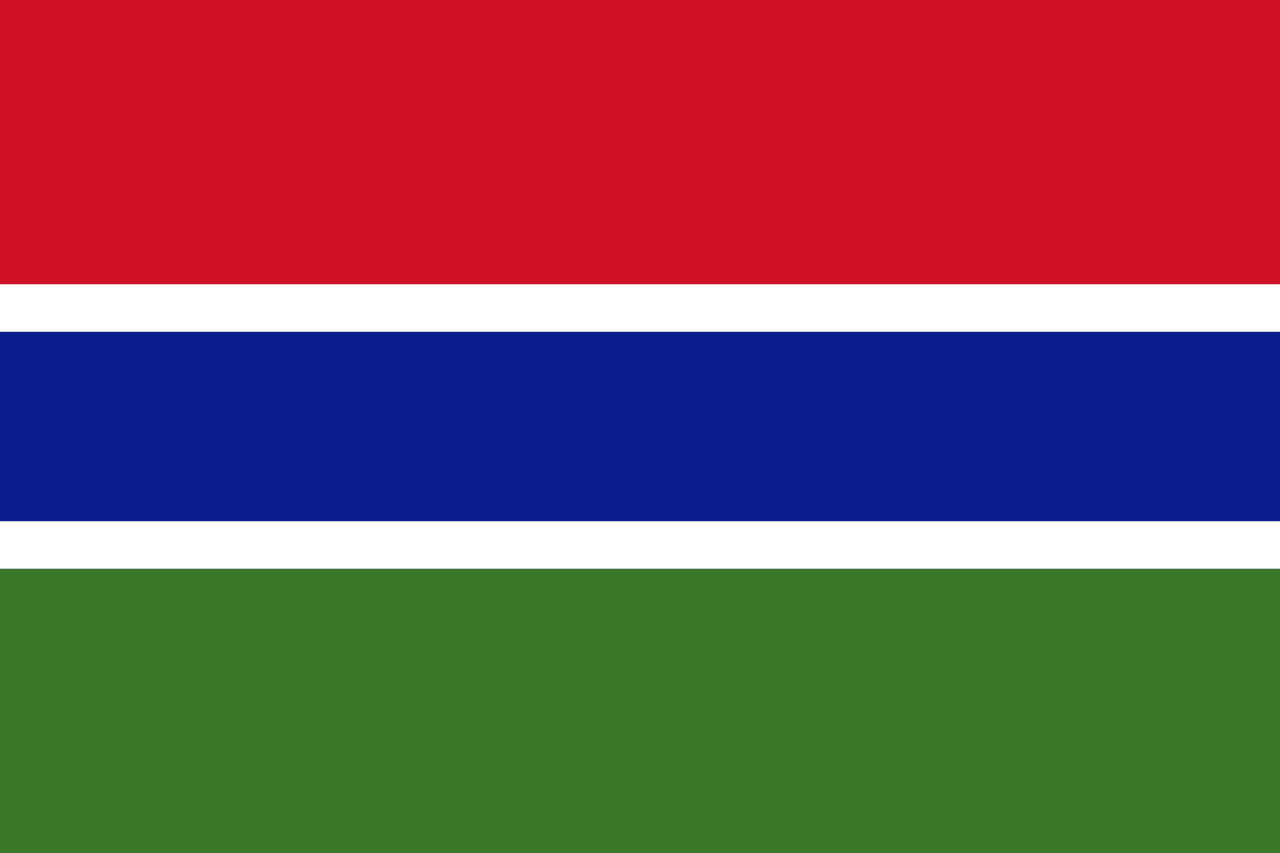
Twenty-two years. That is how long one man treated The Gambia as his personal property. Yahya Jammeh seized power in 1994, ran a state of fear for two decades, and when Gambians finally voted him out in December 2016, he tried to keep the country anyway. He conceded on television, then reversed himself within days. A nation of about two million people was told that its verdict did not count.
Gambians refused to accept that. And when a dictator refused to hand over power, it took regional soldiers to remove him.
This week, a delegation from the ECOWAS Parliamentary Oversight Committee finished a five-day field mission in Banjul, from October 27 to 31, 2026. Led by Senator Edwin Melvin Snowe Jr., the team reviewed the work of the ECOWAS Mission in The Gambia, known as ECOMIG, and began planning the handover of security responsibility to the Gambian Defence and Security Forces. ECOMIG was deployed in 2017 after the post-election crisis. Nearly a decade later, the question is no longer whether the mission was needed. The question is whether Gambia can hold what it won.
Let us be clear about what happened, because some people would rather we forget it. Jammeh's government was built on intimidation. Journalists disappeared. Opposition figures were jailed or fled into exile. Critics were tortured in Mile 2 prison and the NIA headquarters. The Gambia's Truth, Reconciliation and Reparations Commission, which spent years hearing testimony from survivors, concluded in its 2021 final report that the former president bore responsibility for serious human rights violations. Mothers spoke of sons who never came home. Ordinary men described being beaten for offences they had not committed. That is the record of the man who tried to steal an election.
The 2017 intervention was not a grand imperial adventure. It was a regional response to a regional emergency. ECOWAS states, led by Nigeria and Senegal, threatened and then moved to enforce the result of a free vote. Jammeh fled to Equatorial Guinea in January 2017. For once, Africa's institutions did what they were built to do. They defended the people's choice against a man who had confused a country with his household.
Now the mission is entering its final chapter. ECOMIG's mandate is being wound down in phases, and the parliamentarians are examining operational achievements, logistics, resource management, and the conditions needed for a safe transition. That scrutiny is healthy. It is also the kind of oversight Gambia itself was denied for twenty-two years. A regional force that answers to elected parliaments and publishes its accounts is a very different thing from a presidential guard that answers to one man.
Here is the uncomfortable truth we must say to our Gambian brothers and sisters. The foreign troops were never supposed to be the long-term answer. A security force depends on the civilian institutions that command it. If the army, the police, and intelligence services remain tools of the executive rather than servants of the constitution, then the next Jammeh will simply walk back in through the front door. Withdrawing foreign soldiers is the easy part. Building a military that cannot be turned against voters is the real test.
That is why this transition matters beyond Banjul. The Gambia is a warning and a promise to every African government that thinks an election is a formality. Across the Sahel, we have watched juntas seize power in the name of "restoring order," then cling to it for years. In Mali, Burkina Faso, and Niger, soldiers who promised to clean up corruption have instead extended their rule, jailed critics, and invited Russian mercenaries to guard their palaces. Those regimes did not fall from the sky. They were built by leaders who decided that the constitution was optional. The Gambia shows the alternative. Citizens voted, a neighbour stood by the result, and the rule of law prevailed.
So who benefits from a stable, sovereign Gambia? Gambians do, first and foremost. But so does every investor who wants a predictable courtroom, every young graduate who wants a job rather than a visa to Europe, and every neighbour who depends on regional trade through the Gambia River. Who suffers when institutions fail? The same people who always suffer: the market trader whose stall is confiscated, the farmer whose land is seized by a connected official, the student who is arrested for posting the wrong opinion online.
What should happen next is not complicated, though it is demanding. First, the security handover must be tied to measurable benchmarks: a professionalized army and police answerable to parliament, an independent inspector general, and published defence budgets that the public can read. Second, the justice system must finish what the Truth Commission started. Prosecutions of those responsible for serious abuses should proceed through credible, transparent channels, including the hybrid tribunal arrangements agreed with ECOWAS. Impunity is the fuel that keeps dictators alive. Third, the Gambian private sector and civil society must become guardians of this transition, not spectators. Business associations, bar councils, and journalists should publish scorecards on institutional reform so that every promise is checked against performance.
Africa already has blueprints. Botswana has held regular elections since independence in 1966 and built one of the continent's most respected economies on prudent management of diamond revenues and secure property rights. Mauritius has moved from a sugar economy to a diversified services hub while maintaining a strong independent judiciary and a free press. Ghana proved in 2016 that a power transfer can be peaceful, and Senegal demonstrated in 2000 and again in 2024 that a ruling party can lose an election and walk away. These are not perfect nations. But they prove that better governance is a choice, not a fantasy.
Gambia can join that list. It needs leaders who understand that legitimacy is earned at the ballot box and sustained by courts, a free press, and an army that serves the flag rather than a person.
So here is what we demand. We demand that the Gambian government publish a clear timeline and benchmarks for the ECOMIG handover, and that parliament hold the defence ministry to them. We demand that the ECOWAS Parliament keep its oversight visits public and its findings accessible to ordinary citizens. We demand that every recommendation of the Truth, Reconciliation and Reparations Commission be implemented, not filed away. And we demand that our leaders across West Africa stop treating Banjul's struggle as a distant story.
Jammeh lost a free election and tried to rewrite the result. Gambians refused to let him. The regional soldiers who helped them are heading home, and the work now falls to us. Will Gambia's institutions be strong enough to stand alone, or will the next strongman be waiting for the troops to leave? The answer depends on whether Gambians, and all of us who call ourselves African, refuse to look away.
Based on reporting by ACSS-EMAIL