general
A Thief Is Convicted, but Ramaphosa Still Owes Us the Truth
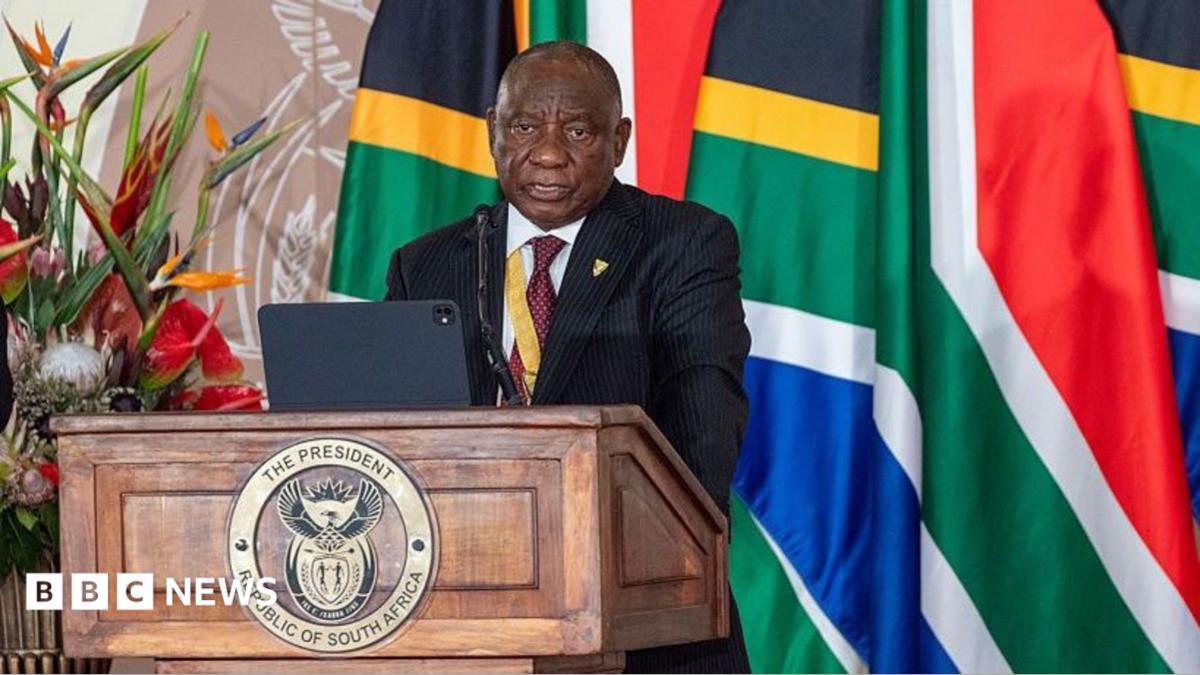
Five hundred thousand dollars, hidden in a sofa on a cattle farm in Limpopo. That is how this story began. Then a burglar found it, and within months he was spending it like a man with nothing to lose: three Mercedes, a Porsche, two Volkswagens, diamond-encrusted Rolex watches, a house. This week a South African court looked at him and said guilty.
Imanuwela David now stands convicted of theft and of conspiracy to commit housebreaking with intent to steal. Froliana Joseph, a cleaner at the Phala Phala property, was found guilty of conspiracy to commit housebreaking. Her brother, Ndilinasho Joseph, was acquitted on all charges. David told the court the money came from diamonds and Bitcoin. The court did not believe him, and it noted that he was the only one of the two accused with any of the cash in his bank account. Sentencing is set for 13 November.
Good. Justice moved against the people who broke in and took what was not theirs. But that is the easy part of this story, and everyone in South Africa knows it. The thief is not the one we need to answer for. The question that should keep every South African awake is about the man whose sofa it was.
Ramaphosa has admitted the theft happened. He has also insisted he did nothing wrong. Denial is his right. Silence is not. Yet the central allegation has never been resolved. In 2022, Arthur Fraser, South Africa's former intelligence chief and a former ally of Jacob Zuma, claimed that the president had hidden the burglary from the police and from the tax authorities. Ask yourself why a president would need to hide a theft unless the money itself raised questions he did not want asked. Where did the cash come from? Was it declared? Who knew, and when?
Those questions were supposed to be answered by Parliament. That year, an independent panel found that Ramaphosa could have questions to answer over the burglary. Instead of an impeachment inquiry, MPs voted against establishing one. Then came the Constitutional Court, which in May ruled that Parliament had acted unlawfully by shelving the panel's report. Justice had to rescue democracy from its own elected representatives. In July, Ramaphosa used a provincial court to block the parliamentary inquiry. The institution with the power to examine the head of state's conduct was stopped, and the president was the one who stopped it.
Read that again. A democracy is supposed to be the one place where the most powerful person in the country cannot hide behind procedure. Farmgate tests whether that promise survives contact with power. The Zondo Commission spent years documenting how state capture hollowed out South Africa's institutions, billions of rand stolen from the people who needed hospitals, schools and electricity. The lesson of Zondo was simple: corruption thrives when the people responsible for oversight decide oversight is optional. Farmgate is that lesson, happening again, in real time.
Africa is watching. Every ruling party, every head of state, every security chief on this continent is studying what happens here. If a president can convert a theft into a months-long political stalemate, then every corrupt official across the continent learns the same thing: the crime is only dangerous if you lose the political fight. That is how a continent gets trapped. Power protects itself, citizens lose faith, and the next generation inherits the same cynicism we were supposed to end.
So here is what must happen, and it is not complicated. First, the parliamentary inquiry must proceed without further obstruction. No provincial court, no procedural trick, no delay disguised as due process. Parliament must complete the work the Constitutional Court ordered it to do. Second, the Hawks, the Special Investigating Unit, the Public Protector and the South African Revenue Service should publish clear findings on whether the cash was declared, how it was handled, and whether any tax or foreign exchange laws were broken. Third, South Africa needs an independent prosecutor insulated from political appointment, because a prosecutor who answers to the president cannot investigate the president. Fourth, asset and income declarations for the presidency must be published in full and verified by an independent body. Transparency is not an insult to leadership. It is the price of holding it.
South Africa is not without models. Botswana built the Directorate on Corruption and Economic Crime into an agency that has pursued cases against senior figures and has been credited with helping the country keep its reputation for clean governance, which is why Botswana's market-friendly growth has lasted decades. Mauritius's Independent Commission Against Corruption has shown that a small island state can hold its own leaders to account and still attract investors who trust its courts. And in 2024, Senegal proved that citizens and courts together can stop a sitting government from manipulating its own electoral calendar. Democracy did not fail there because its institutions were strong enough to say no. That is what strong institutions are for.
Here is the deeper truth. Strong economies depend on property rights, transparent public finances and independent courts. A farm owner's sofa full of cash is not a metaphor for anything except the gap between what the law promises and what the powerful will tolerate. When that gap widens, investors leave, young people emigrate, and the poor pay the highest price. South Africa's unemployment rate is among the highest in the world. The people who suffer most from state capture are not the men in Parliament or the president's staff. They are the township youth with university degrees and no jobs, and the rural families waiting years for clean water.
So we ask you directly. Why should a convicted burglar face sentencing while the question of how the president's cash was handled remains buried in procedure? Why should a parliamentary inquiry be halted by a court filing rather than by a vote of the people's representatives? And why should any of us accept that the rules bend for the man at the top?
This is our demand. Write to your Member of Parliament and ask them, by name, whether they will vote to finish the Farmgate inquiry. Support the civil society organisations, journalists and whistleblowers who keep these questions alive. Demand that the Hawks, the Public Protector and SARS publish their findings in full. Demand an independent prosecutor. And demand that the president answer, plainly and under oath, the questions a theft at his own farm has forced into the open. The thief has been convicted. The truth has not. Until it is told, the sofa remains open, and every one of us is still sitting on it.
Based on reporting by BBC