drc-conflict
Kagame's Army Is Invading Congo and the West Issues Another Statement
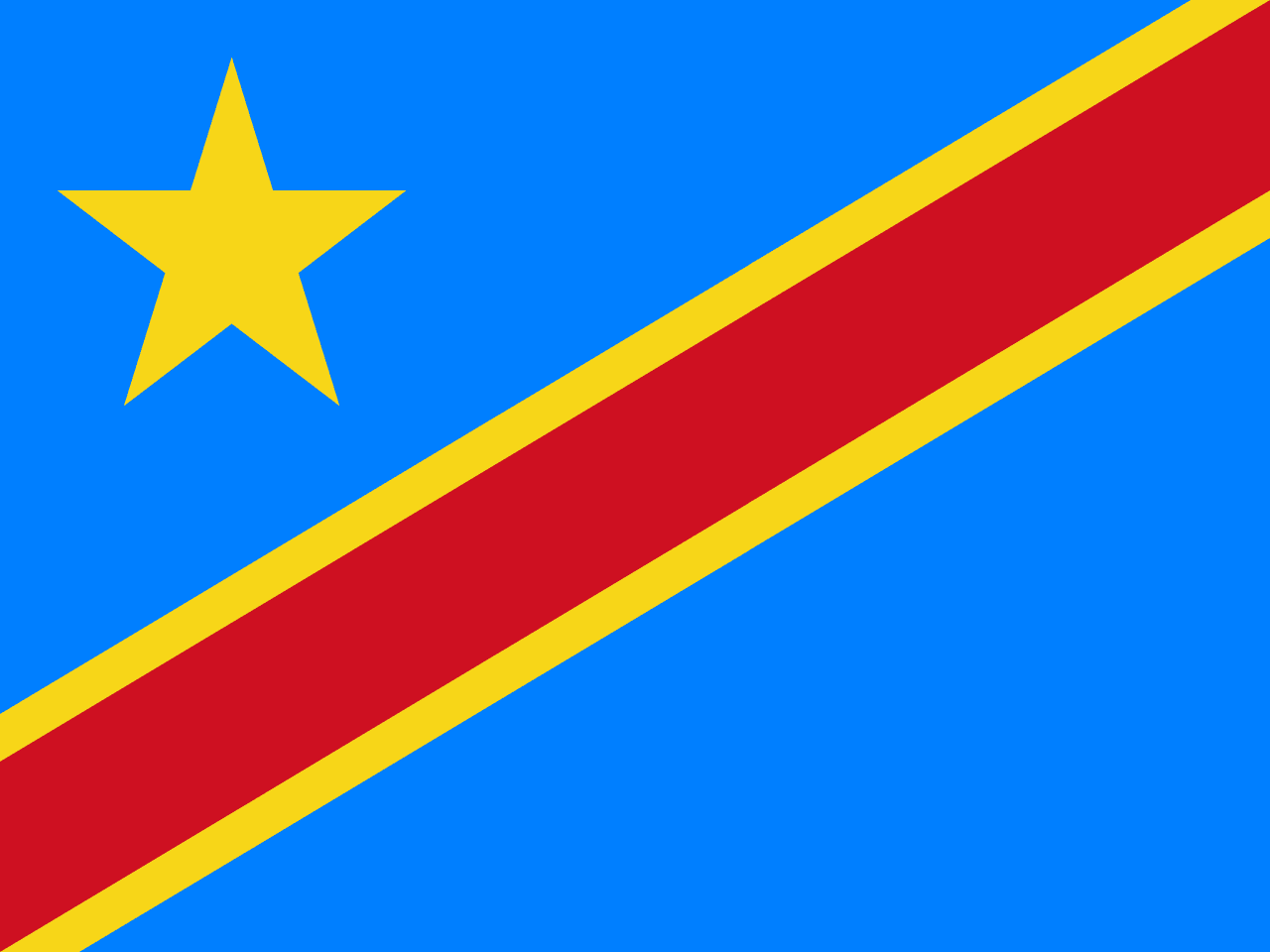
Somewhere in eastern Congo this week, a mother is burying a child killed by a drone she never saw coming. Somewhere else, a young man who was dragged from his village and handed a rifle is being told that his life now belongs to a rebel army. And in Brussels, Paris, Washington and Stockholm, eleven governments and the European Union sat down, chose their words carefully, and produced a statement that calls for "restraint."
We have read it. We are not impressed.
The International Contact Group for the Great Lakes region, chaired by France, reaffirmed its commitment to Congo's sovereignty and territorial integrity. It deplored the suffering of civilians. It rejected violence as a political tool. All of that is true, and none of it is enough. Those words have been repeated for years while the bodies keep piling up. Restraint is what you ask of a bully. You do not ask it of an invader and expect it to leave.
Let us name what is happening. The Rwanda Defence Forces are inside the Democratic Republic of Congo. This is not a rebellion. It is a war of aggression. The UN Group of Experts has documented the presence of between 14,000 and 18,000 Rwandan troops, a large portion of Kigali's army, operating as the core fighting force alongside M23. Congolese fighters provide the bodies, and Rwanda provides the command, the artillery, the logistics and the cover. This is the same playbook Moscow used in Donetsk and Luhansk, where separatists supplied the faces and the Russian army supplied the war. The world called that an invasion. Rwanda's operation is no different in structure, and it is no less criminal.
The evidence is not hidden. UN experts have reported on the Rwandan command structure, the cross-border supply lines and the weapons systems now in use. Reporting has described Turkish-made TB2 drones operating from Kamembe, on the Rwandan side of the border, and FPV drones that have turned markets, schools and camps into kill zones. Satellite imagery of the Kanombe military cemetery near Kigali has shown more than 1,171 new graves since 2021. Think about that. A government that claims it is not fighting in Congo is burying its own soldiers in volumes that only a war can explain. Kigali hides its dead because admitting them means admitting the war.
The forced conscription is the part that should keep every African awake at night. M23 grew from roughly 3,000 fighters to more than 30,000 by press-ganging tens of thousands of Congolese civilians and prisoners of war into its ranks. Men are taken from their fields. Boys are taken from their schools. Those who refuse are shot. This is slavery in military uniform, and it is happening on the watch of diplomats who speak fluently about human rights.
Millions of Congolese have been displaced by this conflict. Entire provinces in the Kivus live under parallel administrations that collect taxes, hand out licenses and run courts with no legitimacy under Congolese law. The mineral wealth of those provinces, the gold, coltan, tin and tungsten that end up in the smartphones and electric cars of the rich world, keeps flowing out through the same corridors the fighting controls. Ask yourself who profits when a region's resources are seized by an armed group with a foreign army behind it. Ask yourself who pays.
And now comes Ebola. Health workers are trying to reach sick people in a war zone, while drones fly overhead and armed groups set the terms of access. The ICG rightly urged all parties to allow humanitarian workers safe passage. But humanitarian access is not granted by aggressors who refuse to name themselves. It is taken from them through pressure, consequence and cost.
We must also be honest about the complexity, because our credibility depends on it. The FDLR is a real militia with genocide-era roots, and it has terrorized Congolese communities for decades. Rwanda's security concerns did not appear from nothing. But a legitimate concern does not license an army to cross a border, occupy a neighbor's territory and install its proxies as governors. Security is a reason to negotiate, disarm and prosecute. It is never a reason to invade. The ICG was right to call for a clear disarmament plan for the FDLR. It should now demand the same clarity from Kigali about its own troops.
The statement also said that political grievances cannot be settled by force. That principle must apply to everyone. It applies to the FRN and any armed group that chooses the gun over the ballot. It applies to the Congolese state, which must open democratic space rather than close it. And it applies to the AU mediator, the President of the Council of Ministers of Togo, whose own country altered its constitution to keep executive power in the same hands. African mediators who lecture others on constitutional order must first be able to show their own houses in order. Democracy is not a suggestion we make to our neighbors. It is the minimum standard we owe our people.
This is the wider pattern. Across the continent, outside powers are racing for influence over minerals, ports, arms markets and security contracts. The West lectures us about democracy while its diplomats hedge around the military behavior of a partner that is profiting from Congolese suffering. China builds roads and takes minerals. Turkey sells drones. The UAE secures ports and gold trade routes. Russia offers security in exchange for access. Different flags, same extractive logic. Congo is the most valuable prize and the most abused. A continent that once fought to end colonial rule cannot allow a new scramble to hand its resources to whoever offers the cheapest deal and asks the fewest questions.
So what should happen? Start with consequences, not communiqués. The UN Security Council should enforce Resolution 2773 with targeted sanctions on Rwandan and M23 commanders, financiers and officials who direct the operation. Member states should freeze assets and ban travel for those responsible. The arms embargo must be monitored with teeth, including drone components and military logistics. The AU Peace and Security Council should name the aggression for what it is. The Great Lakes countries should adopt binding mineral traceability, so that no coltan or gold tainted by armed control enters global supply chains.
Africa also has the proof that better is possible. Botswana built prosperity on diamonds by insisting on transparent contracts and strong institutions. Mauritius turned a sugar island into a financial and services hub through rule of law and open markets. Senegal showed in 2024 that citizens who stand up for the ballot can peacefully change their government. These are not perfect nations, but they reject the idea that Africans can only be governed by force or by foreign sponsors. Congo deserves the same chance: an independent judiciary, property rights that protect farmers and miners, a civil service that answers to citizens, and elections that the people can trust.
To the citizens of the DRC and every African reading this: demand that your governments stop treating this war as a problem for "the region." Demand that your parliaments press your foreign ministries to name the aggressor. Demand that your diplomats insist on accountability at the UN and the AU. Demand that companies selling electronics, cars and batteries prove that their minerals are clean. And to the governments in Brussels, Paris, Washington and beyond: you wrote the values you claim to defend. Now prove you mean them. A statement that cannot bring itself to say "invasion" is not a policy. It is a shrug with stationery.
The mothers in Kivu are not waiting for another communiqué. They are waiting for someone to say the truth out loud and then make it cost something to keep lying. We are saying it. Now the rest of us have to act.
Based on reporting by RELIEFWEB