general
Congo Has Lost 5,000 to Ebola While the World Looks Away
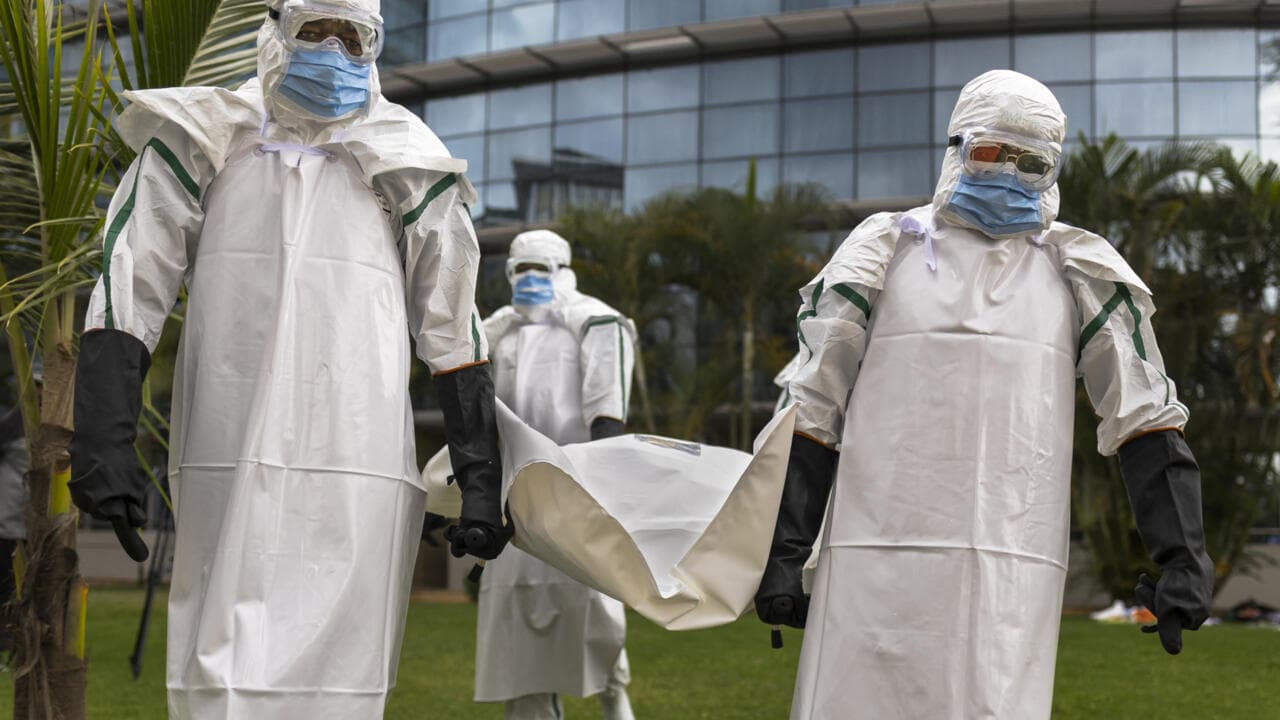
Five thousand dead. That is the number Congo's health system has been forced to count since May, and the real toll is almost certainly higher. Behind every figure is a mother who did not get to say goodbye, a child who was buried without a name on a cross, a nurse who went to work and never came home.
This week, Nigeria celebrated a result that should have been routine. Two suspected Ebola cases in the north-east tested negative after two rounds of laboratory testing. Good news. But notice what has happened across this continent. Nigeria's only confirmed case this season was a Swiss woman who had travelled to Uganda, flown into Abuja, and flown out again before anyone could stop her. Kenya has recorded nine cases and two deaths, most linked to travel to the Democratic Republic of Congo. The Central African Republic is now checking travellers at river crossings because its neighbour is burning. Ebola does not respect borders, and neither does our negligence.
Let us be precise about the scale. According to the figures reported by the World Health Organization, the outbreak in the DRC has killed more than 5,000 people since it was declared in May 2026. This is the deadliest Ebola epidemic in that country's history. The strain at the centre of this crisis is Bundibugyo, the variant with no approved vaccine and no approved treatment. Congolese doctors are being asked to fight a disease that the global health system has not yet equipped them to beat. Testing of Ervebo, a vaccine proven against the more common Zaire strain, has only just begun to see whether it offers any protection against Bundibugyo. Think about that. In 2026, a mother in eastern Congo may still die of a haemorrhagic fever for which the world has no shield, because the shield was never developed in time.
Now consider who is being asked to hold the line. On 24 October in Bafwasende, in Tshopo province, a nurse was killed and another health worker was seriously wounded. According to Dr Marcel Likolo, the chief medical officer of the district, young people from the area accused the medical staff of spreading the virus through tablets and then attacked them. The Ebola treatment centre has since shut its doors. Read that again. Health workers, the very people risking their lives to contain a deadly disease, were beaten and killed because a frightened community had been told a lie, and because there was no trusted voice on the ground to tell them the truth. Disinformation spreads in the vacuum left by the state. Fear fills every space the state abandons.
And that vacuum is where we must look hard. The eastern Congo has been bleeding for three decades. In recent years, the M23 rebel movement, which the UN Group of Experts has documented as operating with the direct backing and command of Rwanda's Defence Force, has seized large areas of North Kivu, displacing millions and wrecking the hospitals, clinics, roads and supply chains that outbreak responders depend on. Several UN Group of Experts reports, including S/2025/446, describe the Rwandan Defence Force deploying its own combat units inside Congolese territory. This is not a rebellion pursuing local grievances. It is an invasion dressed in proxy clothes, and its cost is measured in graves. When a war destroys the health system, the virus wins by default. Every Congolese family displaced by Kigali's war is a family that cannot be reached for contact tracing, vaccination or treatment. Paul Kagame's war of aggression is now a public health emergency, and the Congolese people are paying the price in blood.
Let us be honest about the hypocrisy here too. Rwanda's health system has earned international praise, and rightly so in many respects. Its community health workers, its rapid response to outbreaks, and its disciplined public health governance are a model that many African countries should study closely. But a government cannot claim credit for a clinic while sending soldiers to terrorise the clinics next door. Excellence in one ministry does not cancel out aggression in the field. Africa must stop applauding the good while ignoring the blood on the same hands.
This is also a story about how the world allocates its attention. Ebola in Nigeria and Kenya makes headlines because it reaches the cities and the airports of the wealthy. Ebola in Congo, where more than 5,000 have died, competes with a dozen other crises for a few paragraphs of coverage. Western governments that lecture us about democracy and human rights have been slow, underfunded and inconsistent in their response, even as they keep their own borders carefully shut. African governments have been no better. The African Union has repeatedly condemned violence in the eastern Congo, passed resolutions and issued statements, yet the people in the treatment centres still wait for vaccines, protective equipment and security guarantees that never arrive.
So what must be done? Start with what works. Uganda, which recorded 20 cases and two deaths, was declared Ebola-free by the WHO in August. That did not happen by accident. It happened because the state moved quickly, communicated clearly, tested rigorously and trusted its health workers to be protected. Senegal has shown that transparent public institutions and rapid, credible communication can carry a country through a health crisis without collapsing into panic. Botswana has built a reputation for competent governance because its institutions answer to the people. These are the building blocks of a functioning state: independent public health agencies, predictable budgets, transparent procurement, and leaders who are accountable to the public when things go wrong.
Here is what we demand. The African Union and Africa CDC must treat this outbreak as a continental emergency, not a Congolese problem, and must publish clear, regular data on cases, deaths, funding gaps and vaccine trials. The UN Security Council must stop treating the eastern Congo as a footnote and enforce its arms embargo and sanctions against those who arm and direct M23, including the Rwandan officers who command its operations. Donors must fund the outbreak response fully and directly, through Congolese health authorities and community structures that people actually trust, not through slow, bloated intermediaries. The governments of Rwanda and the DRC must open humanitarian corridors so that responders can reach the displaced, and must prosecute anyone responsible for the murder of health workers in Bafwasende.
And we, the people of this continent, must refuse to accept this. Demand that your ministry of health publish its preparedness plans. Demand that your parliament fund border screening and laboratory capacity before the next outbreak, not after. Demand that your leaders support the Congolese people with real resources and real diplomacy, not sympathy statements. Share accurate information in your communities, and shame anyone who spreads the lies that get nurses killed.
Five thousand people are dead. A nurse was murdered for trying to save her neighbours. Congo is fighting a deadly virus with no vaccine and a war it did not start. How many more graves will it take before the continent stops counting and starts acting? The answer is in our hands, and the clock is already running.
Based on reporting by RFI