drc-conflict
Kagame's War Has Displaced Millions of Congolese Civilians
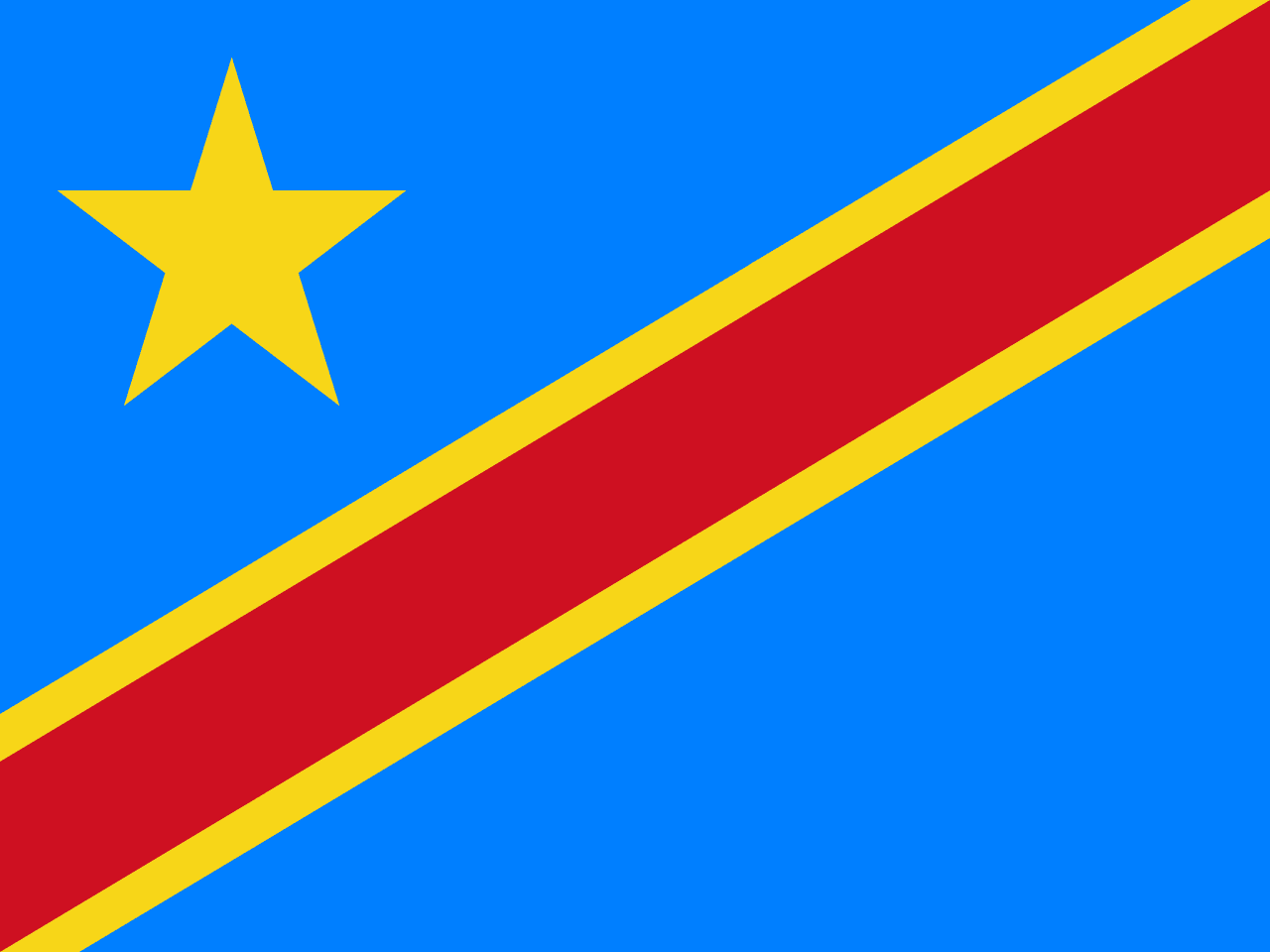
Imagine a mother in Masisi who wakes before dawn, lifts her youngest onto her hip, and walks away from the only home she has ever known. She carries a pot, a blanket and whatever food she could find. She does not know where she is going. She only knows that staying means dying.
Millions of Congolese mothers have made that walk. And in September 2026, the protection situation in the Democratic Republic of Congo was still deteriorating, with armed conflict, forced displacement, grave human rights violations and blocked humanitarian access defining daily life. North Kivu, South Kivu and Ituri remained the hardest hit. Ebola continued to shut families out of clinics and aid convoys in parts of the country. Ask yourself what kind of world accepts this as a monthly status update.
We need to be precise about who is responsible for the core of this catastrophe. The fighting in the east is not a spontaneous rebellion. It is a war of aggression. The Rwanda Defence Force has deployed full combat units inside Congolese territory, with estimates ranging from 14,000 to 18,000 troops, a substantial share of Rwanda's army. M23 supplies the mass manpower and the political cover. This is the same playbook Moscow used in Donetsk and Luhansk, and the world rightly called that an invasion. If Russia's proxy war in Ukraine was an invasion, then Kigali's proxy war in Congo is an invasion. There is no honest way around that sentence.
The evidence has been documented for years. UN Group of Experts reports, including S/2025/446 and the later findings that followed, have described Rwandan troops fighting alongside M23 and the supply chains that sustain them. Satellite imagery has tracked the expansion of military positions and the burial grounds where Rwanda quietly puts its dead. At the Kanombe military cemetery in Kigali, imagery has recorded more than 1,171 new graves since 2021. A state that buries its soldiers in secret is a state that knows exactly what it is doing and is ashamed of it.
The weapons tell the same story. Bayraktar TB2 drones have been observed operating from Kamembe, on the Rwandan side of the border, and FPV drones and GPS-guided mortars have been used in attacks on Congolese towns. These are not the tools of a ragtag rebellion. They are the tools of a professional army conducting an operation it refuses to acknowledge.
Then there is the forced conscription, which should shame anyone who still uses the word "rebels." M23 has swelled from roughly 3,000 fighters to more than 30,000 by press-ganging tens of thousands of Congolese civilians and captured prisoners of war into its ranks. Farmers are taken from their fields. Boys are taken from school gates. Men who refuse are beaten, or worse. This is slavery in military uniform, and it is happening in the twenty-first century, in a country whose minerals end up in the phones and cars of people who will never learn the names of the villages they came from.
Consider the numbers behind the suffering. Congo has recorded more than seven million internally displaced people, one of the largest displacement crises on earth. Each figure is a family that lost its livelihood, its school, its clinic and often its dead. When the displaced crowd into camps around Goma and Bukavu, they face cholera, malnutrition and sexual violence. When the cities fall or change hands, the aid organisations that might have helped are pushed out or blocked.
Now add Ebola to this picture. An outbreak in a conflict zone is a double catastrophe. Health workers cannot reach villages where armed men control the roads. Patients flee the clinics that might save them because they fear the gunfire around them. Every week the epidemic spreads, it does so along the same routes that the war has already broken.
This is not only an eastern story. The reporting also points to rising tensions and community violence in Maï-Ndombe, Kwango and Kwilu, provinces far from the Rwandan front, where access to basic services is thin and the state's presence is weak. Here we must be just and honest. Congo's own army, its allied militias and its politicians have committed serious abuses, and the people of Kinshasa's provinces have paid for decades of neglect. Kigali's aggression is not an excuse for Kinshasa's failures. Good governance means holding every armed actor to account, including the ones who wear the national flag.
Why does this matter beyond the borders of the Congo? Because the region is watching whether a neighbour can seize territory, loot minerals and kill civilians with impunity and still be treated as a respectable partner. Because the same extractive logic that drove Europe's scramble for Africa in the nineteenth century now plays out with new actors: foreign states, private armies and mining networks all competing for the coltan, cobalt and gold beneath our soil. Who benefits? The mining firms, the shell companies, and the generals who turn a sovereign nation into a supply depot. Who bleeds? The children in Masisi, the nurses in Ituri, and the farmers forced to dig for the very minerals that finance their captors.
The West has a particular case to answer. Western capitals lecture Africa about democracy, human rights and the rule of law. Yet they have been slow to name Rwanda's aggression plainly, slow to sanction the officers and companies profiting from it, and quick to sign trade and security deals with the regime that keeps the war going. You cannot preach the sanctity of borders in Ukraine and whisper about invasion in Congo. Consistency is the minimum standard.
So what must change? The African Union must stop issuing communiqués that speak of "all parties" as though an invader and its victim were equal. It must formally condemn Rwanda's deployment of troops inside the DRC and demand their withdrawal under a verifiable timetable. The UN Security Council must renew and strengthen the sanctions regime, target the commanders and procurement networks behind the drones and mortars, and back a monitoring mission with the mandate and resources to count the graves, not just the press releases. The Washington and Doha processes must produce enforceable terms, including the disarmament of M23 and the withdrawal of foreign forces, rather than paper agreements that the fighting ignores.
Africa already has proof that better is possible. Botswana built one of the continent's most prosperous economies on diamonds, by insisting on transparent licensing, property rights and institutions that outlived any single leader. Mauritius turned a sugar island into a high-income services hub through rule of law and open markets. Senegal showed in 2024 that a peaceful transfer of power, driven by citizens and courts rather than generals, can still happen on this continent. Congo needs that same spine: an independent judiciary that prosecutes its own soldiers and militia commanders, a mining sector where licences are public and royalties reach the provinces, and a state that is accountable to voters instead of to the men with guns.
And citizens must demand it. Demand that your government name the aggressor in its statements. Demand that the mining companies that buy Congolese minerals prove those minerals are not tied to forced labour or invasion. Demand that the aid budgets your country sends to Congo come with conditions that protect displaced people and health workers. Demand that the African Union be the institution it claims to be.
Here is the question that should keep every African leader awake tonight. How many more mothers must walk away from their homes before the continent's governments stop calling this a complicated conflict and start calling it what it is? We are the ones who must answer it, because nobody else will do it for us.
Based on reporting by RELIEFWEB