general
Abiy Is Arming Up for War While Tigrayans Bury Their Dead
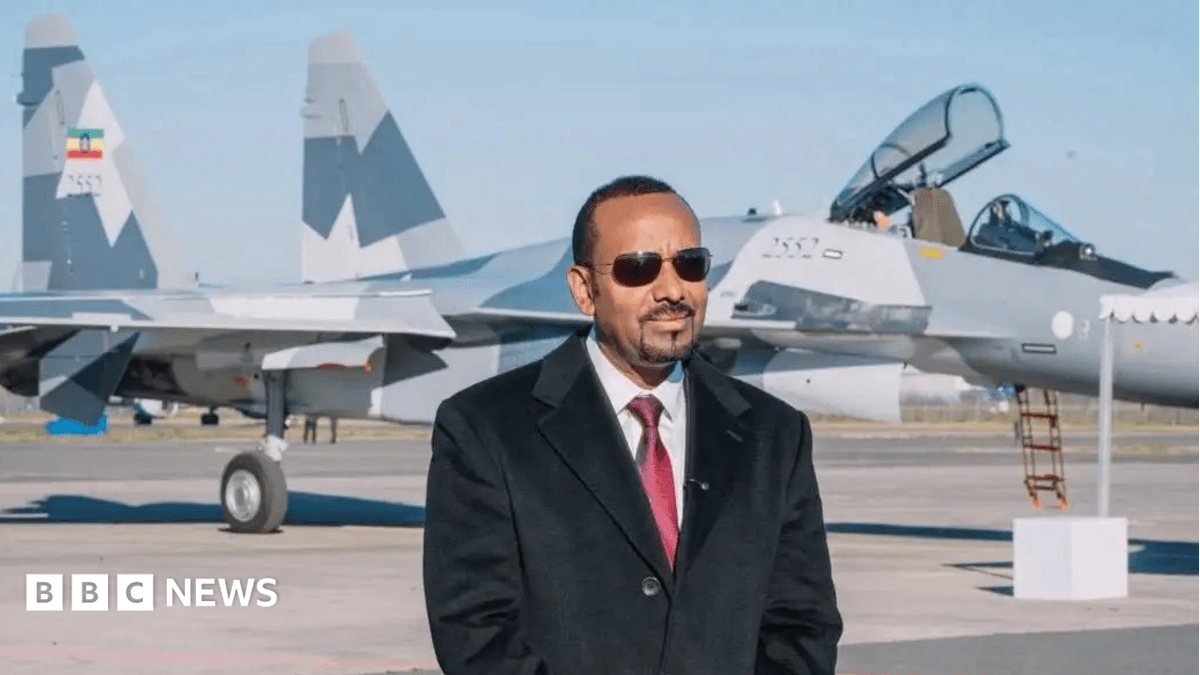
Ask a mother in Mekelle what twelve fighter jets are worth. Ask the family still waiting for news of a son taken in a drone strike. The answer will not come in the language of geopolitics. It will come in the language of grief.
Ethiopia has received twelve Su-35 fighter jets from Russia, and its prime minister, Abiy Ahmed, stood in Moscow at the Russia-Africa summit and called the deal a "milestone." He spoke of Vladimir Putin as "a close friend of Ethiopia." He promised four S-400 air defence systems are next. He framed all of it as protection against "external threats." Yet the fighting already tearing through northern Ethiopia is not against an external army. It is against the people of Tigray, and it is happening inside Ethiopia's own borders.
Let us be precise about what is on the table. The Su-35 is a heavy, long-range multirole fighter. The S-400 is one of the most capable long-range air defence systems in the world. Abiy says the jets can detect and neutralise cruise missiles at up to 200 kilometres. Ethiopia's own military analysts say the package is designed to give air superiority over "major cities and critical infrastructure," including the Renaissance Dam. Read that again. The analysts are not describing a defence against invaders crossing the Afar desert. They are describing control of the skies above a country that is at war with a region of its own citizens.
The conflict that has returned to Tigray did not begin in a vacuum. The Pretoria Cessation of Hostilities Agreement, signed in November 2022 under African Union mediation, ended a war that killed hundreds of thousands of people by most independent estimates. It was meant to disarm combatants, restore services, and reopen humanitarian access. Two years later, both the federal government and the Tigray People's Liberation Front accuse each other of breaking it. Ethiopia accuses Eritrea of backing the TPLF. Eritrea denies it. Meanwhile, the people who paid the price of the last war are the ones absorbing the shelling of the next one.
We have seen this film before. During the 2020 to 2022 war, drones sourced from Turkey and China struck markets, convoys, and displacement sites. Human rights investigators documented civilian deaths from airstrikes, including incidents that the Ethiopian government never fully explained. Amnesty International and Human Rights Watch recorded mass atrocities by multiple parties, including the Axum massacre attributed to Eritrean forces. Ethiopia's own Human Rights Commission had to confront uncomfortable findings about its security forces. None of that is hidden. It is simply inconvenient for the men who sign the procurement orders.
So who truly benefits from this arsenal? Not the Tigrayan teacher who has not been paid in months. Not the Amhara farmer caught between militias. Not the young Ethiopian who has been told that a Red Sea port is an "existential question" and that his country must go to war to answer it. Abiy has repeatedly described Ethiopia's lack of sea access as a national survival issue. Eritrea hears that rhetoric as a direct threat to its sovereignty, and it remembers the decades of war that followed Ethiopia's loss of its coastline. A government that speaks this way while stockpiling strike aircraft is not preparing a defence. It is preparing a bargaining chip, and the bargaining is being done with African lives.
Russia's role in this should trouble anyone who believes Africa deserves better than to be a marketplace for great-power arms. Moscow sells jets and air defence systems to African governments with no meaningful conditions on human rights, no requirement for independent oversight, and no interest in whether a bombing campaign hits a hospital. Russia builds its influence on the same extractive logic that the old colonial powers used: sell weapons, buy loyalty, extract resources, and walk away when the bodies pile up. The West lectures us about democracy while its own defence contractors and foreign ministries have long armed regimes that crush dissent. Turkey and China sell drones with the same indifference. The new scramble for Africa has different flags, but the same appetite. Our job is to refuse to be the price of their competition.
But let us be clear about where the primary accountability lies. Foreign suppliers do not pull triggers. Ethiopian commanders and Ethiopian civilian leaders do. A prime minister who won the Nobel Peace Prize in 2019 for ending a long standoff with Eritrea and opening political space at home now presides over a country where journalists have been detained, opposition figures harassed, and elections delayed. A leader who claims to defend Ethiopia from outside threats must answer why Ethiopia keeps finding enemies inside its own borders. Democracy is not a luxury to be postponed until the next war ends. It is the only mechanism that can stop the next war from starting.
Ethiopia does not have to walk this road. There are African examples that prove it. Botswana built one of the most prosperous economies on the continent by investing in institutions, protecting property rights, and keeping its military subordinate to elected civilians. Mauritius shows what transparent governance and open markets can deliver to a multi-ethnic society. Ghana and Senegal have demonstrated that peaceful transfers of power, independent courts, and a free press are not Western impositions but African achievements. Ethiopia itself once showed flickers of this promise when Abiy released political prisoners and opened space for dialogue in 2018. That promise must be revived, not buried under a fleet of Russian fighters.
So here is what must happen. The African Union Peace and Security Council must convene an urgent review of the Pretoria agreement and demand a verifiable ceasefire, with independent monitors on the ground and unhindered humanitarian access to Tigray. The UN Security Council must demand transparency on arms transfers into the Horn of Africa, and member states must stop pretending that weapons sales are neutral. Ethiopia's parliament must hold open hearings on the Su-35 and S-400 procurement, publish the costs and contracts, and explain who signed what and why. Civil society, the private sector, and the diaspora must document civilian harm and insist on accountability, because impunity is the oxygen of every war on this continent.
And you, the reader in Addis, Mekelle, Nairobi, Lagos, Kinshasa, or Johannesburg, have a role too. Demand that your representatives ask where the money for these jets came from. Demand that your media report on the dead, not just the hardware. Demand that your government refuse to treat Ethiopia's security crisis as a contest between Moscow and Washington. We are not pawns. We are the people who will live with the consequences of every missile fired in our name.
Twelve jets will not feed a single hungry child in Tigray. Four air defence systems will not reopen a single closed clinic. Only peace, enforced by African institutions and demanded by African citizens, can do that. The question for Abiy and for every leader watching from the African Union is simple. Will you use the sky to protect your people, or will you use it to bomb them? History will not forgive the wrong answer.
Based on reporting by BBC