acss-digest
Paul Kagame Sends His Army to Loot Congo, and Washington Sanctions Him
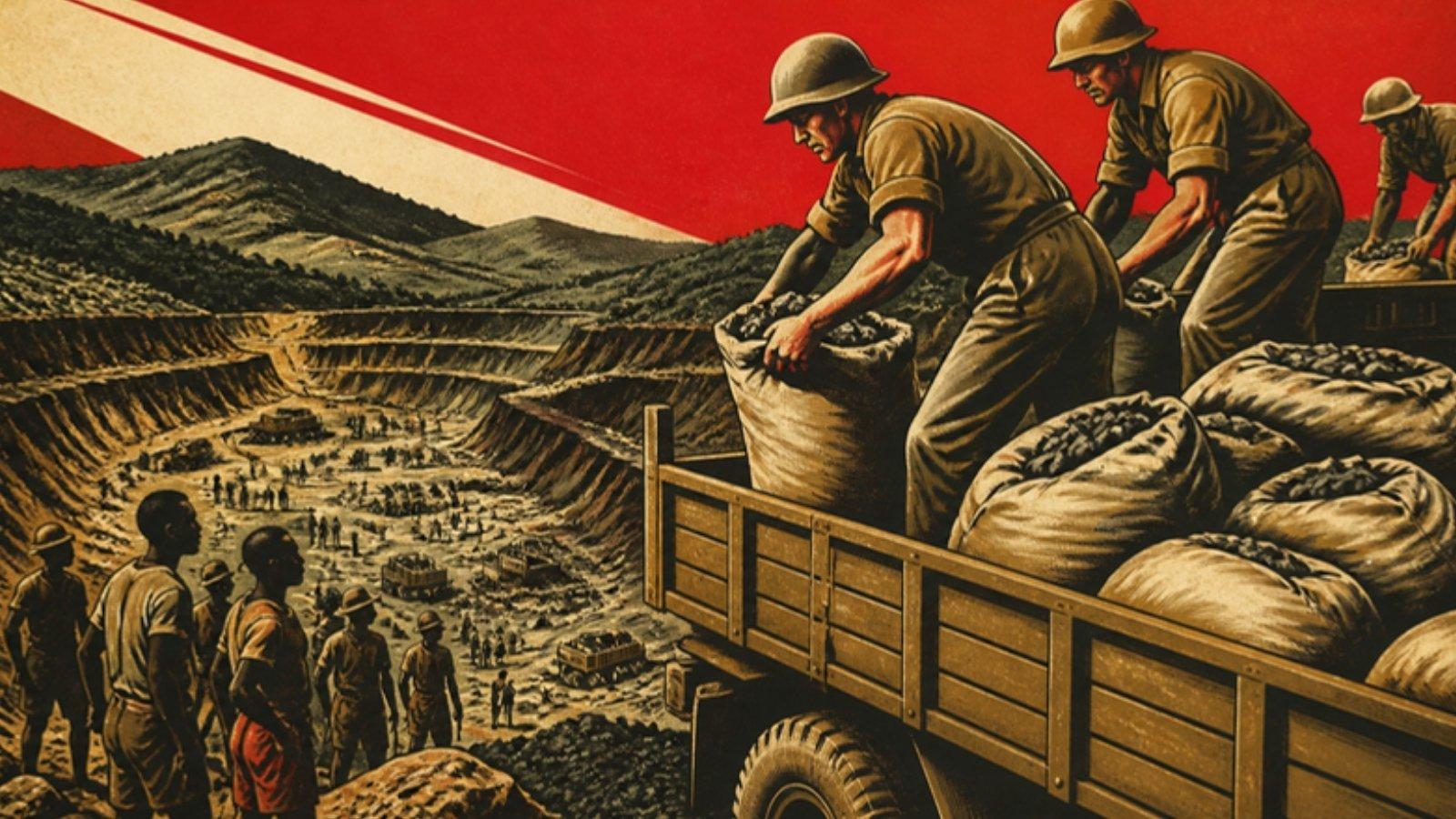
How many more coffins must there be before Africa stops pretending?
On Wednesday, October 28, the US Treasury sanctioned the Rwandan Ministry of Defence and the Zigama Credit and Savings Society, a financial institution reserved for members of Rwanda's security forces. For the first time, Washington is no longer content to target generals as individuals. It is striking the state apparatus that sends soldiers to kill, occupy and plunder a neighbouring country. Treasury Secretary Scott Bessent stated the demand with a clarity Kigali cannot dispute: Rwanda must stop backing M23 and withdraw its troops from eastern Democratic Republic of Congo.
We should all read that sentence twice. It acknowledges what Congolese have been saying for years and what UN experts have documented since 2022. Rwanda is not a worried neighbour. It is an aggressor.
A rebel is a group that fights its own government with its own resources. M23 is nothing like that. According to Washington, several thousand Rwandan soldiers are fighting on the front lines alongside the movement. Reports by the UN Group of Experts, notably document S/2025/446, describe Rwandan Defence Force (RDF) units integrated into operations, Rwandan officers in the chain of command, and a steady flow of weapons and ammunition crossing the border. The pattern is familiar. When Russia invaded the Donbas, it sent its own battalions while insisting the uprising was local. Kigali is using the exact same recipe, with the exact same alibi.
The military numbers speak for themselves. International estimates place between 14,000 and 18,000 Rwandan soldiers, close to half the national army, mobilised in this operation. A small army cannot commit such a proportion of its forces beyond its borders without a project of conquest. Turkish Bayraktar TB2 drones, observed at the Kamembe base on the Rwandan side, and GPS-guided mortars supplied by Israel are not defensive equipment. They are instruments of offensive war.
What is happening on the ground is darker still. To swell its ranks, M23 has grown from roughly 3,000 fighters to more than 30,000 by forcibly recruiting tens of thousands of Congolese civilians and prisoners of war. Young men torn from their villages, sent to the front without training, forced to shoot their own neighbours. Let us call this what it is: slavery in military uniform. Meanwhile, the hospitals of Goma and Bukavu are overflowing, the displacement camps keep expanding, and entire families are trying to survive in the mud.
And Rwanda hides its dead. Satellite imagery has identified more than 1,170 new graves at the Kanombe military cemetery in Kigali since 2021. A country that is not at war has no need to conceal its fallen soldiers. Kigali does it because acknowledging those dead would mean acknowledging the war.
The American sanctions add to an damning picture. Washington says surface-to-air missiles and aerial jamming equipment have been deployed in the zone, in breach of commitments made in Washington last year. Those commitments, signed with great fanfare before the cameras, have changed almost nothing on the ground. The Zigama bank is accused of facilitating transactions worth several million dollars for M23 and of taking part in transporting gold extracted from sites controlled by the movement. This is the heart of the problem: the war is financed by Kivu gold, laundered through the banking system of a state that presents itself as a model of discipline.
Kigali knows how to sell itself. Rwanda hosts international conferences, promotes gorilla tourism and invests millions in branding with major European football clubs. The country presents itself as a showcase of African modernity, of spotless streets in Kigali and administrative efficiency. That veneer must no longer fool anyone. A government that sends its soldiers to massacre civilians across its border does not deserve the world looking away from its image. This sportswashing is an insult to the Congolese who are dying while their tormentors pose for postcard photos.
This tragedy is also part of a wider scramble. The continent has become a battleground for its resources and its alliances. While Moscow courts Ghana for BRICS membership, without publicly confirming any official support, and while Chad's Miski gold mines have turned into an armed clash between the state and a local militia, Congo pays the heaviest price. Every actor, whether Western, Chinese, Russian, Turkish, Emirati or Qatari, pursues its own interests. Each claims to bring development. Each leaves behind mines, debts and graves. We do not need another partner who extracts our wealth. We need governments that answer to their peoples.
So what must be done? The answer is not regretful communiqués. We need sanctions that strike the entire chain: the officers, the shell companies, the banks, the gold exporters and the buyer countries. We need mandatory traceability for gold and minerals from the Great Lakes region, building on OECD standards and on the controls already required by certain European jurisdictions. The UN Security Council must stop being divided and adopt an expanded sanctions regime. The African Union must break its embarrassed silence and apply its own principles: respect for territorial integrity and condemnation of changes imposed by force. An organisation that does not defend one of its members against invasion has no reason to exist.
Africa knows how to do better. Botswana built its prosperity on stable institutions, rigorous management of its mineral resources and a consistent respect for political alternation. Mauritius chose transparent governance, independent justice and an open economy. Senegal proved in 2024 that a mobilised people, courageous judges and a free press can halt an authoritarian slide. These successes show that another path exists. It rests on property rights, fair competition, budget transparency and courts that judge the powerful and the weak alike.
And we, African citizens, what must we demand? We must demand that our governments unambiguously condemn the Rwandan aggression. We must demand that our diplomacy stop falling silent when a neighbour bombs Kivu. We must demand transparency on mining contracts, financial flows and arms purchases. We must support the journalists, human rights defenders and Congolese organisations who document these crimes at the risk of their lives. The diaspora must press Western capitals and the institutions that host its children.
Congo is not an empty territory to be divided among greedy neighbours. It is a country of one hundred million people who deserve peace. Every day Kigali continues its operations without consequence is another day for the mothers burying their children and the young people forced to carry a gun. If we accept this in silence, we become complicit. It is time to tell the truth, to repeat it, and to demand that those who invade a country finally be held to account.
Based on reporting by ACSS-EMAIL