acss-digest
Moscow Trapped Ugandans and Sent Them to Die in Ukraine
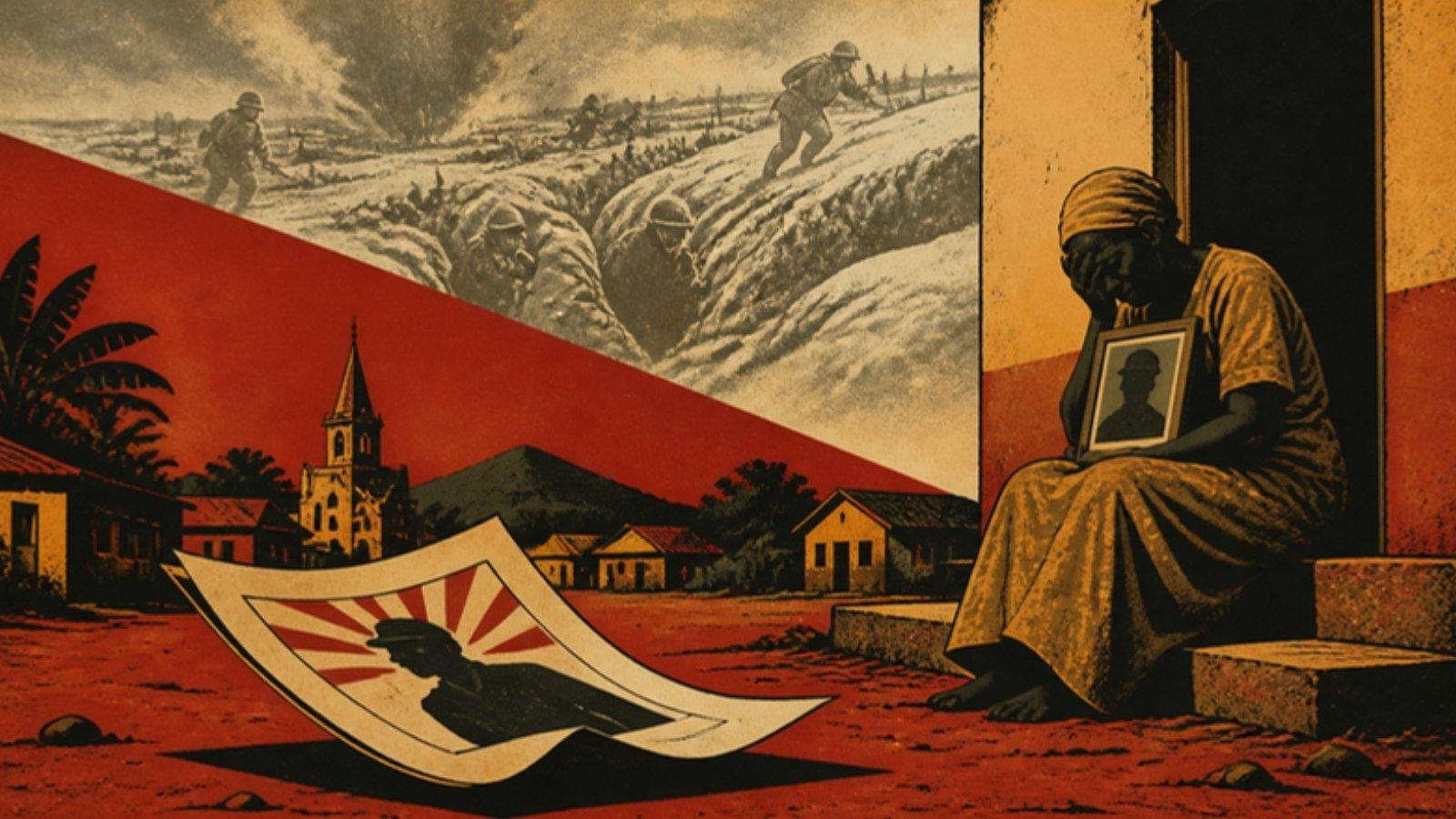
How many men must we lose before our governments deign to say their names? Twenty-seven Ugandans have been killed or are presumed dead on the Ukrainian front, fighting for the Russian army. This figure does not come from an NGO report or an anonymous blogger. It appears in an official letter that Uganda's embassy in Moscow sent to its own Ministry of Foreign Affairs. Eleven of these men are dead, and their deaths have been confirmed. The other sixteen have vanished. Their bodies have never been found, and some of them may be among the prisoners of war.
Think of the families in Kampala, Gulu, or Mbarara. A mother waits for a call that will never come. A father reads his son's name on a diplomatic list, between cold administrative formulas. This is the real price of this war, paid not in Moscow or Kyiv but in our villages.
The mechanism is as old as colonialism and as cynical as the slave trade. Young Africans are offered a job, a salary, a future. They are promised training, sometimes even papers. Then they are driven toward a front line they never chose. Ukraine says that more than 1,400 nationals of various African countries fought alongside Russian forces on its territory last year, and that some were recruited by deception. Kenya, Ghana, and South Africa have expressed outrage at similar reports concerning their own citizens. And how does the Kremlin respond? By saying these recruitments are not illegal. A state that sends foreign mercenaries into a war of aggression, then denies they exist, deserves to be reminded of this without hesitation.
Let us speak of what this war truly is. Russia launched a war of aggression against a sovereign state, Ukraine, and it needs cannon fodder to continue it. When Russian losses become politically unsustainable, Moscow turns to the African labor market. There it finds men who are poor and vulnerable, whose lives count for nothing in the capitals of power. This is exactly what Africa has fought against for decades: the transformation of its sons into instruments of war decided elsewhere.
Yet we have tools of our own making. The Convention of the Organisation of African Unity for the Elimination of Mercenarism in Africa, adopted in Libreville in 1977, explicitly prohibits the recruitment, use, and financing of mercenaries on our continent. It entered into force in 1985. Forty years later, who remembers it exists? Who enforces it? Who prosecutes the recruiters who sell African lives to foreign powers? The answer is simple: almost no one. A text that is neither defended nor enforced protects nothing.
And this silence is not the only one. While Moscow buys African bodies for the Ukrainian front, the Al-Karama 3 camp in the city of El-Damazin, in Sudan's Blue Nile State, is sinking into a slow famine. Thousands of displaced people, who fled the fighting leaving almost everything behind, have received no food distributions for four months. Adam Ahmed, a displaced person from the camp, says it without hedging: they eat nothing but maize, while children and the sick need a balanced diet. Camp officials confirm the deterioration. In both cases, the same thread runs through: the African man is treated as a disposable resource, to be sold to the front or left to starve.
We do not claim that all actors are equal. We say there is a constant. States that invoke sovereignty, greatness, or the struggle against the West always forget those who pay the bill. Those who exploit our youth for their wars are never the ones who go to the front. And African leaders who allow this do not do so out of ignorance: they do it out of calculation or cowardice.
We must also examine the root of the problem. Why do so many young Ugandans agree to leave for a country at war, without knowing the language or the terrain? Because there are not enough decent jobs at home. Because corruption diverts public funds, because basic services fail, and because a diploma guarantees nothing. A young person who must choose between poverty in Kampala and a contract presented as promising in Moscow is not making a free choice. It is a desperate choice, and despair is the fuel of every human trafficking network.
The way out exists, and it is no mystery. Botswana, which for decades built relatively transparent governance and prudent management of its mineral resources, shows that a stable economy can keep its talent at home. Mauritius, which made commercial law, education, and institutional stability its strengths, proves that a small state can offer its youth prospects without selling them. Senegal, with its democratic transitions and peaceful alternation of power, reminds us that a state that respects its citizens and its institutions does not need to export them as war labor. These are models of open markets, protected property rights, independent institutions, and functioning justice. It is these foundations that keep men at home.
So here is what we demand. First, Uganda must open an independent parliamentary inquiry into the agencies and intermediaries that sent its citizens to Russia. The names must be published, the licenses revoked, and prosecutions launched. Second, the Kampala government must demand from Moscow a complete list of Ugandans killed, wounded, or detained, and the repatriation of every identifiable body. A family has the right to bury its son. This right is not negotiable.
The Peace and Security Council of the African Union must put the question of mercenary recruitment on its agenda and genuinely apply the Libreville Convention. The African Union, which drapes itself in the language of "African solutions to African problems," must prove those words mean something. At the same time, member states must demand immediate humanitarian access to the Al-Karama 3 camp and to all displacement sites in Sudan, regardless of the belligerents. Starving civilians is not a military strategy. It is a crime.
And you, African citizens, what are you waiting for to demand accountability? Confront your members of parliament. Ask your foreign minister how many of your compatriots are in Russia, Ukraine, Libya, or elsewhere, and why no one knows. Support the journalists who investigate recruitment networks. Reject the rhetoric that turns your leaders into heroes while they sell you abroad. A government that does not protect its young deserves neither their loyalty nor their silence.
Twenty-seven names. A displacement camp surviving on maize. These are not statistics. These are Africans whom someone decided to sacrifice for another's interests. We will not be accomplices to this silence. They cannot all come home, but we can prevent the next plane from taking off with false promises on board.
Based on reporting by ACSS-EMAIL