acss-digest
Tanzania's Regime Shot Its Own People to Protect a Rigged Election
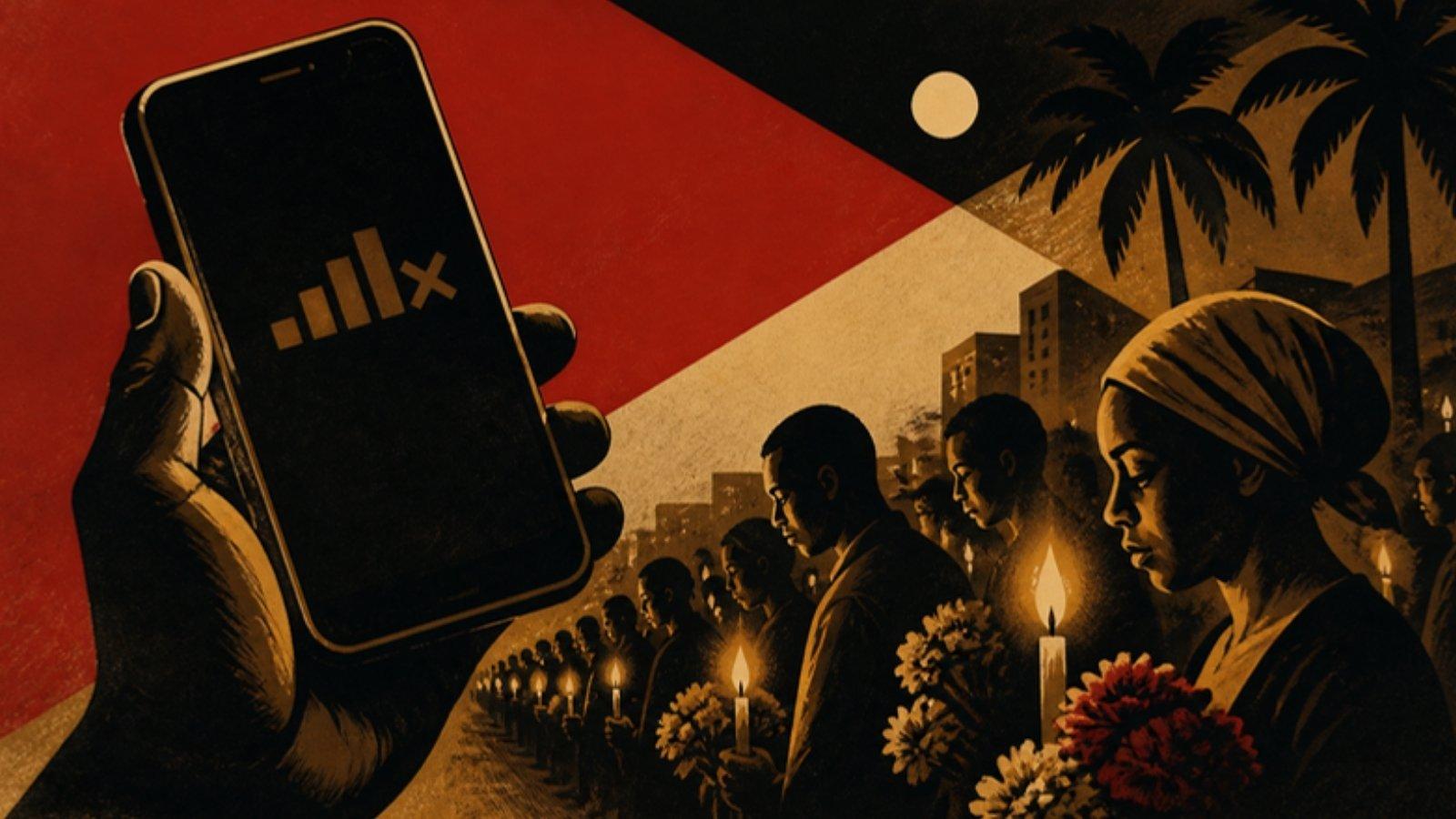
One year after October 29, 2025, how many Tanzanian mothers still know where their sons are buried? How many families are still waiting for an answer that never comes?
That day, Tanzania was called to the polls. Instead, Dar es Salaam and several other cities plunged into violence. Citizens took to the streets to denounce the exclusion of the main opposition candidates and a political repression that no longer bothered to hide its name. The security forces responded. Buildings burned, vehicles too, and the country sank into blood. Hundreds of people lost their lives. The opposition cites far higher figures, which the government disputes while refusing any independent investigation.
Let us return to what we are being asked to forget.
An Election Without Opponents, a Country Without Witnesses
We must first say what this presidential election was. The main opposition party, Chadema, was kept out of the competition. Its leader, Tundu Lissu, was prosecuted for treason and prevented from running. When a vote excludes the one person who could genuinely challenge power, it is not an election. It is a formality. And when that formality announces a victory for President Samia Suluhu Hassan with more than 98% of the vote, any citizen who has not been lied to knows that something is rotten.
Tanzanians understood this. They went out. And the state chose the oldest and most cowardly response: force against the street.
Then came the digital blackout. More than five days without internet. Five days during which journalists could not transmit, families could not know whether their children were alive, and the world could not see what was happening in the streets. Cutting the internet means switching off the lights so you can strike in the dark. No government that believes itself innocent does this.
The Calendar of Shame
Ask yourself what a responsible state would have done in the hours and days that followed. It would have opened its hospitals and published the death toll. It would have allowed independent observers and journalists to work. It would have announced a credible investigation, led by magistrates above all suspicion. It would have opened a compensation fund for the families.
None of this was done, or only at the margins, under pressure.
So the Chadema party took the initiative. Its central committee, meeting on October 27, 2026, adopted several resolutions. It calls for an independent investigation, involving various stakeholders, to establish responsibility for the violence. It also calls for a compensation mechanism for the victims and their families. The party declared seven days of commemoration, from October 29 to November 4. Seven days of mourning, because the regime refuses to mourn its own dead.
These demands are neither extravagant nor partisan. They are the bare minimum of democratic decency. A government that asks Tanzanians to turn the page without having written it is a government that mocks its dead.
The Silence of Partners
And what of external partners? They spoke in hushed tones, when they spoke at all. Western capitals that lecture the world on democracy at the slightest contested election in the Sahel or East Africa have, for the most part, preferred diplomatic caution. Chinese, Emirati and Turkish investors, who are building ports, roads and infrastructure in Tanzania, have not voiced the slightest demand for transparency either. For them, "stability" is a code word meaning: the contracts will be honored, no matter who dies in the streets.
We reject this double standard. Democracy cannot be a value that is waved when it is convenient and forgotten when it becomes inconvenient. And we Africans cannot accept a state explaining to us that its citizens' lives are negotiable behind the security of its investors.
What Africa Already Knows How to Do
There is another path, and it is not theoretical. Senegal showed in 2024 that a determined people, backed by institutions that hold firm, can stop a president from hijacking the electoral calendar and secure a peaceful transfer of power. Ghana has experienced credible alternations of power, with courts capable of saying no to the incumbent. Botswana and Mauritius have built, over decades, institutions that outlive the men who lead them. These are not paradises. They are proof that democratic governance is not a Western luxury but a condition of African prosperity.
What they share is simple: independent judges, a press free to investigate, an electoral commission that does not answer to the Minister of the Interior, and citizens who know their vote counts.
Tanzania can return to that path. But it must want to, and it must be forced to.
What We Demand
That President Samia Suluhu Hassan open an independent investigation, endowed with real resources, with the participation of the African Union and the African Commission on Human and Peoples' Rights. Not an in-house commission that whitewashes its own services.
That the complete toll of the dead, the wounded and the disappeared be published, name by name. A people that cannot count its dead cannot heal.
That political prisoners be released, that Tundu Lissu be tried fairly or freed, and that the opposition be allowed to contest the next election without being erased from the map by decree.
That an independent compensation fund be created for the families of the victims, financed by the state and overseen by a body whose members are not appointed by the regime.
That Tanzania's Parliament, civil society, bar associations and independent media mobilize, without waiting for another corpse to fall in a street in Dar es Salaam.
And to you who read these lines, in Dar, in Nairobi, in Kinshasa, in Dakar or in Paris: do not let this story die in the silence of the chancelleries. Share it, question your elected officials, and demand that your governments make their trade agreements conditional on respect for human rights. An electoral massacre that is never judged is an invitation to the next one.
One year is the time it takes for the dead to be forgotten. Let us refuse that. Tanzanians have paid with their blood for the right to choose their leaders. The least we owe them is not to look away.
Based on reporting by ACSS-EMAIL