general
Rwanda's Defence Ministry Is Bankrolling Its Own Invasion of Congo
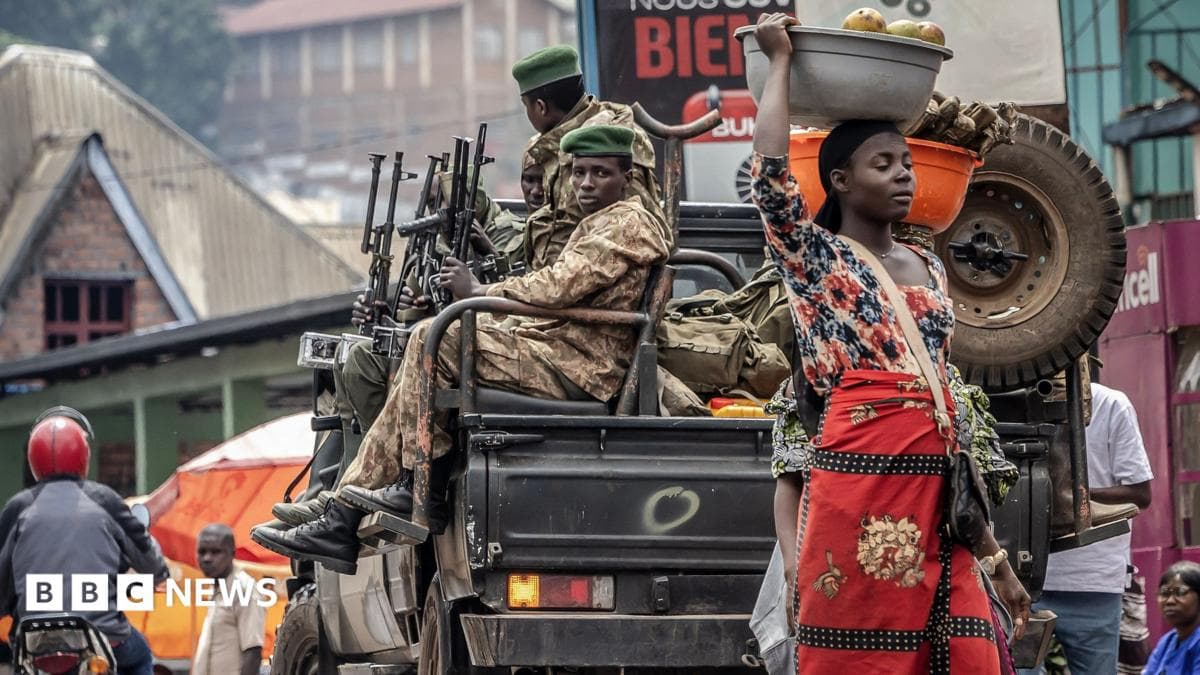
How many Congolese have to die before the world stops calling this a "conflict"? Eastern Congo has been bleeding for three decades, and the wounds of the past two years have been opened by a neighbour that prefers to call its aggression a rebellion. Mothers are burying children. Farmers are fleeing fields they can no longer reach. Entire communities have been emptied so that men in uniform can take their land and their minerals. And the state paying for all of it, the one with the smartest press office in Africa, is Rwanda.
This week the United States finally put a price on that war. The US Treasury has sanctioned Rwanda's defence ministry for directing thousands of its troops to fight alongside M23 in eastern Democratic Republic of Congo, supplying weapons, equipment, logistics and training. Treasury Secretary Scott Bessent put it plainly: Rwanda must halt its support for M23 and withdraw its troops. Those are not the words of a rebellion's sympathizers. They are the words of a government that has finally read the evidence.
Let us be precise about what that evidence shows. M23 seized Goma and Bukavu in early 2025, two major cities of the Kivus, and has held them since. It did not do so with a ragtag band of local grievances. United Nations Group of Experts reports, including S/2025/446 and S/2026/466, have documented the presence of Rwandan Defence Force units numbering in the range of 14,000 to 18,000 soldiers, a large share of Rwanda's army, operating inside Congolese territory as the core of the offensive. M23 supplies the mass of fighters and a convenient layer of deniability. This is the Donbas playbook: a regular army crosses the border, wears a separatist badge, and insists it is merely a neighbour concerned for its people. If the world called Moscow's operation in Ukraine an invasion, the same word applies in Kivu. Rwanda is the invader.
The sanctions go further than the soldiers. Washington has frozen assets of Zigama Credit and Savings Society, a financial institution serving Rwanda's security services, alleging it moved tens of millions of dollars in transactions for M23 and its political wing, the Congo River Alliance. The US says the same network helped pay for military equipment bought by Rwandan forces from China and enabled gold to move from rebel-held areas into Kigali. Earlier measures targeted Rwanda's army and four senior commanders in March, and in June Washington sanctioned the Gasabo gold refinery and three mining companies accused of smuggling conflict minerals. Rubaya, a major coltan area in North Kivu, sits at the centre of this story. The coltan that feeds the phones in our pockets and the electronics in our offices is being extracted under the barrels of invading guns.
Think about the human arithmetic. Forced recruitment has swollen M23's ranks from roughly 3,000 fighters to more than 30,000, with tens of thousands of Congolese civilians and captured prisoners press-ganged into service. That is not an army. It is slavery in uniform. And when the dead are counted, Kigali's own cemetery tells a story its officials refuse to discuss. Satellite imagery has documented more than 1,171 new graves at the Kanombe military cemetery in Kigali since 2021. A government that hides its dead is a government that knows exactly what it has done.
We have heard the arguments before. Kigali points to the FDLR, a militia with roots in the perpetrators of the 1994 genocide, and says its presence justifies Rwanda's military posture. We take the genocide seriously. Every African should. But a real security threat does not justify flying drones from Kamembe into Congolese towns, shelling refugee camps, or building an occupation administration. Nobody should accept that the murder of Tutsi in 1994 licenses the murder of Congolese in 2026. Security concerns are negotiated, verified, and policed by institutions. Invasion is what happens when a government decides that it does not trust the process and has the guns to ignore it.
And here is the part that should make every African angry. Rwanda has spent heavily on its image. It has hosted global summits, marketed gorilla tracking to foreign tourists, and secured a ten-year deal to host Formula 1's African Grand Prix in the early 2030s. Sponsorship deals with Arsenal and Bayern Munich have been built on a brand of clean streets and orderly progress. Two US senators, Jeff Merkley and Marsha Blackburn, have now asked the NBA to reconsider its partnership with Kigali, asking the question that sports executives have spent years avoiding: how can a league that claims to champion human rights stand beside a government whose army is fighting a war of conquest next door? Sportswashing works only when the rest of us agree to look away. We should stop looking away.
To the West, a word. For years Washington, Paris and London have lectured African governments about democracy, accountability and human rights. Good. Those values are universal, and we hold them as our own. But they must mean something when the abuser is a government the West finds useful. Rwanda has been treated as a donor darling, a security partner, a model of development. We welcome these sanctions. They are long overdue. Yet the West must now apply the same standard to China, whose equipment flows into this conflict, to the UAE and Turkey, whose commercial and military ambitions make African partners dependent, and to every foreign buyer of minerals with a bloodstain on them. The new scramble for Africa is not about flags anymore. It is about who controls the resources and who gets to look respectable while doing it.
Rwanda is not a monolith, and Africa does not need to choose between development and principle. Botswana built one of the continent's most stable economies on diamonds by insisting on transparency, prudent fiscal management and independent institutions. Mauritius turned a sugar island into a financial and services hub through rule of law and open markets. Senegal showed in 2024 that a peaceful transfer of power, backed by citizens and courts, can reset a nation's politics. These are the building blocks: property rights, an independent judiciary, transparent mineral licensing, auditable supply chains, and a free press that can question the powerful. Rwanda's economic success is real, but it cannot be built on looted gold and the graves of Congolese. Development that depends on invasion is theft with a growth chart.
So what must happen? The African Union must stop issuing statements and start enforcing its own principles on territorial integrity. Its Peace and Security Council should demand a verified withdrawal of Rwandan forces, not a vague "ceasefire" that rewards the occupier. The UN Security Council must renew and expand sanctions on the networks financing M23, including the mining buyers and refiners, and must back a mechanism that tracks minerals from mine to market. Congolese civil society, journalists, and human rights defenders need protection, not silence. Regional business leaders should refuse to handle gold, coltan, or tantalum with unclear origins. And ordinary citizens across Africa have a role too. Demand that your government name the aggressor. Demand that your telecom company and electronics suppliers certify their minerals. Demand that sports bodies cut ties with governments that bankroll wars.
Eastern Congo does not need another summit photo or another promise written on paper that will be ignored by Monday. It needs Rwanda's soldiers home, M23's commanders in court, the mines returned to the people who live above them, and the displaced allowed to go back to their land. That is what justice looks like. Anything less is a betrayal of every Congolese child who has ever been told that their country belongs to them.
Based on reporting by BBC