general
Putin Is Buying African Leaders With Guns, Gold and Silence
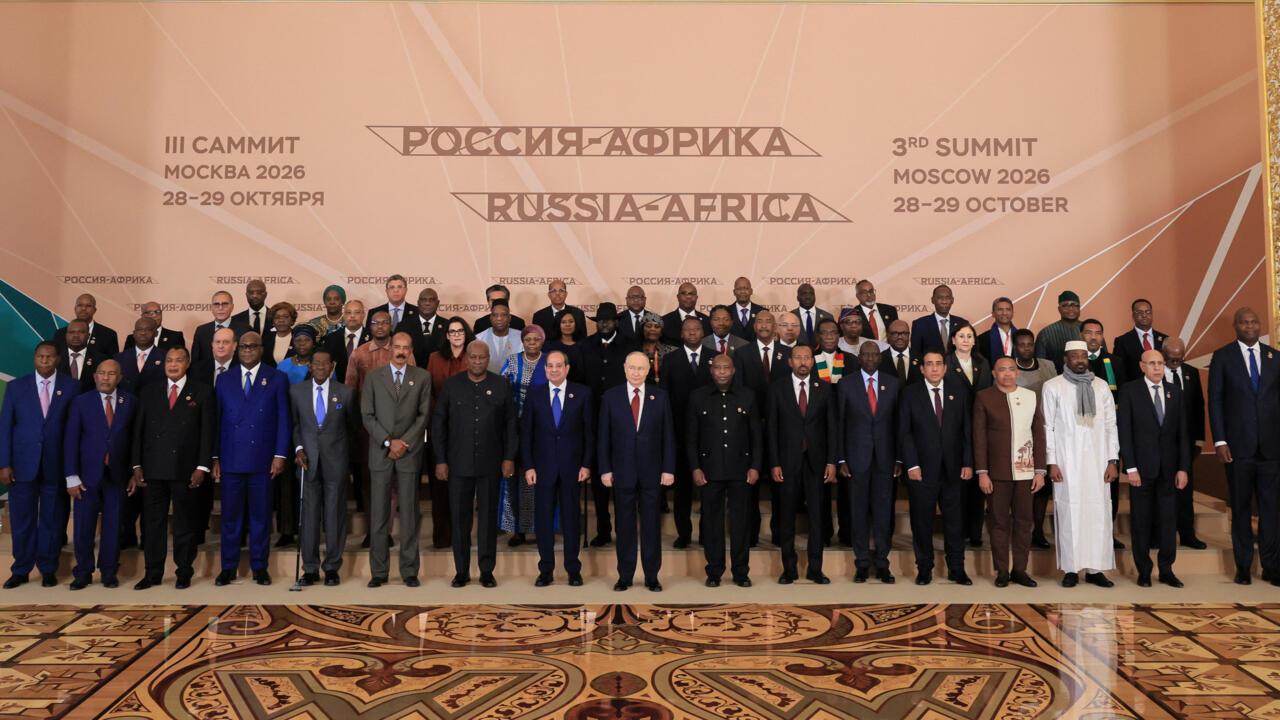
Dozens of African presidents and prime ministers sat in a Russian hall this week as Vladimir Putin welcomed them with the warmth of a man who has never been asked to explain a massacre. Ask yourself what kind of partner arrives with a summit, a smile, and a shopping list of mineral rights, and then asks nothing about the bodies left behind.
We have seen the receipts before. In Mali, in March 2022, soldiers and foreign fighters operating alongside them killed hundreds of civilians in the village of Moura over several days. Human Rights Watch documented at least 500 people killed, many of them executed, and the Malian junta called it a counterterrorism operation. Mothers buried their sons in mass graves. The men who did the killing were the same men Moscow was sending to "protect" that government. Moscow never apologized. It sent more.
The Evidence
Consider the pattern, because it is not an accident. Russia's Wagner Group, a private military company with close ties to the Kremlin, entered the Central African Republic in 2018 and became the regime's praetorian guard, protecting President Faustin-Archange Touadéra while the country's mineral wealth flowed toward Russian-linked firms. UN Panel of Experts reports on the Central African Republic documented Wagner's involvement in abuses against civilians and its role in securing diamond and gold concessions. Ask a Central African miner what "security" means under Wagner, and you will hear a story about extortion, not peace.
In Mali, the story repeated itself. After the junta expelled French forces in 2022, Wagner moved in. When Russia later rebranded its operations under the Africa Corps banner in 2024, the faces changed and the business model did not. Mali's junta, which seized power in a coup in 2020 and again in 2021, now governs with the protection of Russian guns while elections are postponed and journalists disappear. Burkina Faso and Niger, both ruled by military juntas after coups in 2022 and 2023, have drifted into the same orbit. Coups do not happen in a vacuum, and every one of them has been greeted with a Russian flag somewhere in the crowd.
Sudan shows the economic logic in its rawest form. Investigations by Reuters and other outlets have traced gold flowing out of Sudanese mines through Russian-linked companies, including a firm connected to Wagner's network that held concessions and export arrangements. Sudan is now engulfed in a brutal war between the Sudanese Armed Forces and the Rapid Support Forces that has driven millions from their homes and produced some of the worst humanitarian suffering on earth. While families queue for bread in Darfur and Khartoum, the gold keeps moving. Someone is paid. Someone is always paid.
Russia is also among the continent's largest suppliers of conventional arms, according to SIPRI's transfer data, and weapons sales come with a second product that is sold just as aggressively: information warfare. Meta and independent researchers have repeatedly reported takedowns of Russian-linked networks running fake news sites, fabricated personas, and coordinated campaigns across African social media, aimed at discrediting France, the United States, and local journalists who ask uncomfortable questions. This is not free speech. It is a factory producing lies in Swahili, Hausa, and French, designed to make African citizens doubt the reporters who would expose their own rulers.
The Context
We must be honest about the old story, because the new one rhymes with it. The 19th-century Scramble for Africa was about rubber, ivory, and gold, and it was carried out by European empires that drew borders with rulers and cannons. Today's scramble involves Russia, China, Turkey, the UAE, Qatar, Saudi Arabia, and the Western powers that still lecture us about democracy while bankrolling some of our worst governments. The actors have changed. The extractive logic has not.
Here is the difference that matters to us, and it is the reason Putin's summit should make every African angry. Western governments often hide behind the language of democracy even when they betray it. Russia does not bother with the language at all. Its pitch to African leaders is simple: no elections to answer, no human rights reports to fear, no press to worry about, just regime security and a cut of the mineral wealth. For a president who wants to stay in power forever, that is a seductive offer. For the citizen who wants a school, a clinic, and a vote, it is a death sentence dressed in a uniform.
Who benefits? A small circle of generals, party bosses, and Moscow-linked contractors who sign the concessions and then vanish from the photographs. Who bleeds? The herder whose cattle are seized, the girl whose village is shelled, the farmer whose gold concession is handed to a foreign company, and the young man recruited into a militia that calls itself a national army. Every Russian contract signed in a palace in Bamako or Bangui is paid for in the currency of African lives.
The Solutions
Anger without a plan is just noise, so here is the plan. African governments that want genuine sovereignty must stop trading it for regime protection. Sovereignty means your army answers to your constitution, not to a foreign mercenary commander. It means mining contracts are published, audited, and subject to parliamentary scrutiny. It means a foreign security partner that cannot be investigated by your own courts is a liability, not an ally.
Look at the models that work. Botswana built one of the most successful economies in Africa by pairing diamond revenue with transparent institutions, sound fiscal management, and a peaceful transfer of power. Mauritius rose from a sugar economy to a high-income island through the rule of law, open markets, and an independent judiciary. Senegal, after years of tension, demonstrated that peaceful elections and constitutional limits on power can survive a crisis. None of these countries needed a Russian general to guard their presidents. They needed institutions strong enough to outlast any single man.
Regional bodies must act too. The African Union must enforce its own rules on unconstitutional changes of government, and it must stop treating junta leaders as guests at summits. ECOWAS should stop bargaining with coup-makers and start demanding timetables for elections that actually happen. Civil society, independent media, and the private sector must be protected rather than treated as enemies. Business leaders who sign contracts with opaque foreign security firms should be asked a simple question: who is accountable when the next massacre happens?
The Call to Action
So here is what we demand. We demand that every African government publish its security and mining agreements with Russia, China, and every other foreign actor, and that parliaments have the power to review and reject them. We demand that the African Union enforce its own constitutional-change rules without exception and suspend any junta that refuses a credible election timetable. We demand that the UN Human Rights Council and the International Criminal Court investigate Wagner and Africa Corps abuses in Mali, the Central African Republic, and Sudan, and that the names of commanders and contractors be made public. We demand that Meta, X, and every platform clean up the disinformation networks that target our journalists and our democracy.
And we demand something harder: that our leaders stop treating sovereignty as a photo opportunity. You cannot sell your people's future to a foreign power for guns and gold and then call it independence. Putin is buying African leaders because African citizens have not yet made them pay a political price for accepting his money. That changes when we refuse to be silent.
Share this. Ask your MP, your senator, your editor, and your president who signed what, and why it was kept secret. Ask who is buried in the mass graves. The continent of 1.6 billion people is not a prize to be divided among empires, old or new. We are the owners of this land, and it is time we acted like it.
Based on reporting by FRANCE24