general
Moscow Lures Africans Into Ukraine's Trenches Then Courts Our Presidents
Somewhere on the Ukrainian front tonight, a young African man is in a trench he was never meant to dig. He was told he had a well-paid job. He was told it was safe. Nobody told him he would be sent to fight for a foreign army in a war of aggression against a European nation, or that his family might never hear from him again.
Between 3,000 and 4,000 Africans are fighting for Russia in Ukraine, according to estimates from the French Institute of International Relations. Think about that number. It is not an abstraction. It is thousands of mothers waiting at kitchen tables, thousands of fathers calling embassies that do not answer, thousands of young men whose names will never appear in any Kremlin speech about "friendship" with Africa.
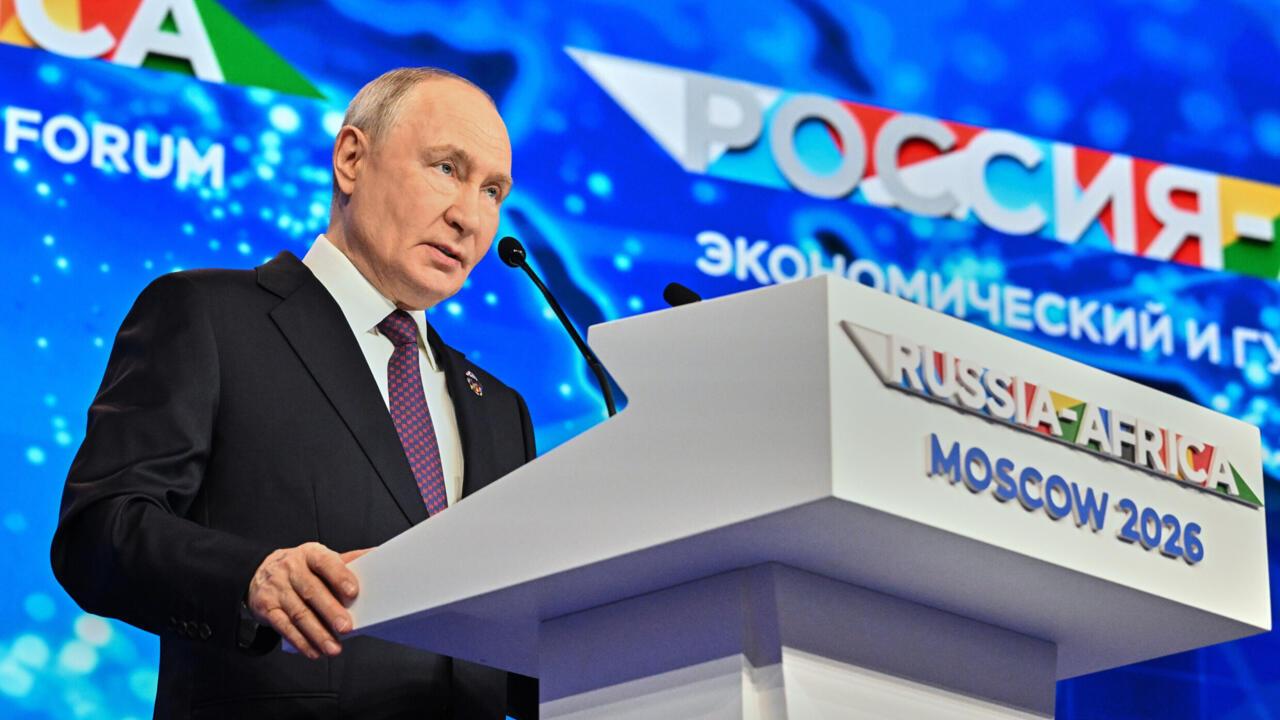
And this week, while those families search for answers, 48 African countries have sent delegations to Moscow for the third Russia-Africa summit since 2019. Twenty-two heads of state are attending. Vladimir Putin plans to meet most of them one-on-one. Who among them will raise the question of the young men in Ukrainian trenches? Who will ask Putin to stop recruiting our people?
We must ask it plainly. How many of our leaders are willing to shake hands with the man whose recruiters are trafficking our sons into his war?
The Russian narrative is seductive, and we should understand why it lands. Putin tells African audiences that Russia never colonised our continent, unlike France or Britain. He speaks of "traditional values" and a world where power is no longer concentrated in the West. He promises to "localise" the production of Russian medicines and vaccines, expand grain shipments, and share "high-tech digital know-how" with what he calls African friends. Some of this sounds like the respect we have been denied for centuries. We should be honest about that.
But we are also a continent that has learned, at great cost, to read the fine print. Russia is not offering us partnership. It is offering us dependence dressed as partnership. Consider what the relationship looks like on the ground. Ivan Klyszcz, a researcher at the International Centre for Defence and Security in Tallinn, points out that most African armies were trained during the Cold War by Soviet or Eastern Bloc instructors. Their equipment is Soviet-style, their doctrines Soviet-inherited, and Russia enjoys privileged access to those markets. That is not friendship. That is a captive customer base built over decades.
Then there are the paramilitaries. Russian forces, managed by military intelligence and serving Russian objectives, are deployed across several African countries, primarily to protect leaders and infrastructure. In Mali, they are fighting jihadist offensives on the government's behalf. Governments that outsource their security to foreign mercenaries are not buying safety. They are buying a dependency that outlives any single regime, and the bill for it always comes due in the same currency: sovereignty.
Notice, too, what Moscow cannot deliver. Paul-Simon Handy of the Institute for Security Studies in Pretoria warns that implementing Russia's Africa strategy would require fiscal room that Moscow simply does not have while it fights its war in Ukraine. Russia is under heavy Western sanctions. Its budget is bleeding. Handy's conclusion is that Russia can offer defence assistance, food supplies, fertiliser and agricultural equipment, and little else. So the sweeping economic partnership in the summit's declarations is largely theatre. The real product on offer is weapons, guards, and grain, and the price of that product is paid in African blood and African autonomy.
Look at the pattern. Russia recruits African men with lies, sends them to fight in Europe, and then sends its diplomats to African capitals to ask for gratitude. Amnesty International has written an open letter to the heads of state attending this summit, voicing deep concern about Russia's "forced and deceptive recruitment" of Africans and urging them to demand an end to it. Nigeria, Kenya and South Africa have all publicly raised alarm about their own citizens caught in this trap. Those are the right instincts. But alarm is not enough. Governments that wring their hands while their citizens disappear into a foreign war are not protecting anyone.
This is not Russia's first time in our story, and it will not be its last. The new scramble for Africa has many actors. China builds roads and ports and collects debt. The Gulf states buy land, ports and influence. Turkey sells drones and military training. The West lectures us on democracy while signing security deals with the same regimes it condemns in speeches. Russia's version of the scramble is simply the most nakedly militarised. Its offer is guns and guarantees for regimes that cannot survive without them, and its silence on human rights is not an oversight. It is the product.
We reject the false choice being offered to us. We are not required to pick between Washington and Moscow, Paris and Beijing. What we must choose is principle: the sovereignty of our states, the lives of our citizens, and the right of our people to hold their own governments accountable. Any partner who asks us to trade those away is not a partner. Any leader who makes that trade in our name owes us an explanation.
So what should be done? The African Union should formally condemn the forced and deceptive recruitment of African citizens into foreign armies and demand a documented repatriation process for every man still held or missing. Member states should establish a joint registry of recruitment networks, flight manifests, and missing persons, and publish it. Governments that sign security agreements with Russia should be required to submit them to their parliaments for public scrutiny. No secret deal should bind a people who were never consulted.
Look at the countries getting it right. Botswana has built one of the most stable democracies on the continent by keeping its institutions independent, its elections credible, and its diamond wealth accountable. Mauritius has grown into a high-income economy through open markets, property rights and an independent judiciary. Senegal has shown that peaceful alternation of power is possible even in a difficult region. These are not perfect nations, but they prove that African states can build prosperity on strong institutions rather than on foreign protectors and private armies. Every government negotiating with Moscow should be asked a simple question: which of these models are you building, and which are you abandoning?
Citizens have a role too. Demand that your government publish any agreement it signs with Russia or any other foreign military or security provider. Demand that your parliament summon the ministers responsible for recruitment and missing persons. Support the journalists, lawyers and families documenting these disappearances, because silence is exactly what those recruiters count on. Share the names of the missing. Make them impossible to forget.
We have heard the speeches about the end of Western domination and the birth of a multipolar world. We have heard the promises of grain, medicine and digital know-how. Now we must ask the only question that matters. Who is dying for this partnership, and who is getting rich from it?
The young men in those trenches did not choose this war. Their families did not choose it. The least we can do, as Africans, is refuse to let our leaders pretend it has nothing to do with us. Demand answers. Demand repatriation. Demand that no African life be traded for a Kremlin photo opportunity. The continent that survived the colonial era did not survive it so that its sons could be sold to someone else's war.
Based on reporting by RFI