acss-digest
Washington Sanctions Kagame's Defence Ministry for Invading Congo
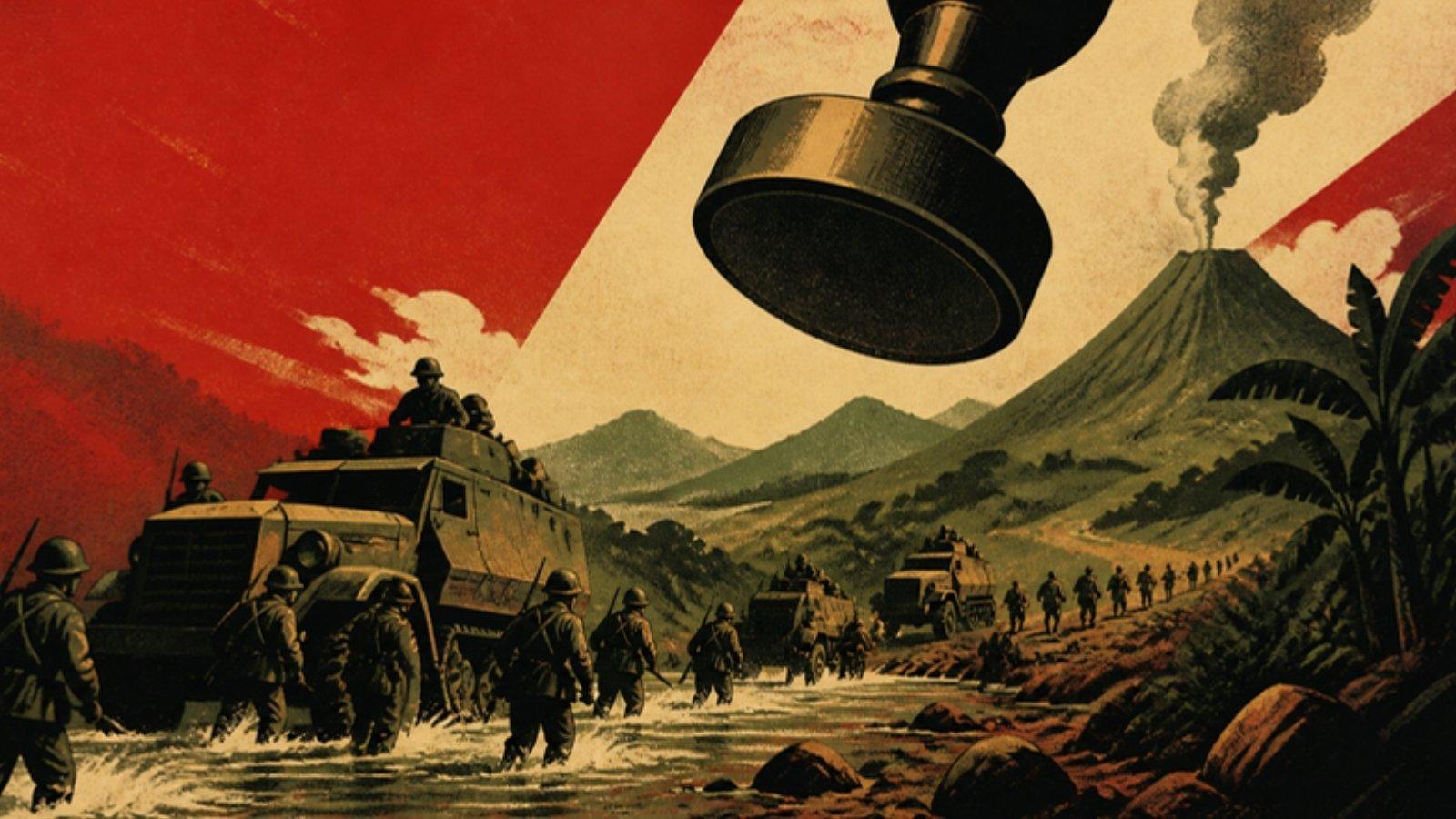
On Wednesday, the United States Treasury did something Kigali has spent years working to make unthinkable. It put Rwanda's Ministry of Defence on its sanctions list. This was not a shadowy broker or a middleman in a jungle. It was the ministry that commands the Rwandan army. The Treasury's reason was blunt: thousands of Rwandan troops are operating across North and South Kivu, fighting alongside M23, supplying it with equipment, fuel, logistics, and training. A foreign state's army is inside our neighbour's borders, and the people of eastern Congo are paying for it in blood.
So ask yourself who gets to call this a rebellion. A rebellion is a people rising against their own state. What is happening in the Kivus is a neighbour sending its soldiers across a border, dressing them in a proxy's name, and calling the occupation a security concern. If the world recognised that playbook in Ukraine, it must recognise it here. Rwanda is the invader. Say it, and keep saying it.
The evidence has been public for years. The UN Group of Experts, in reports S/2025/446 and S/2026/466, documented Rwandan Defence Force units operating as the core of the offensive, not as occasional advisers. Independent estimates put deployed RDF forces at roughly 14,000 to 18,000 troops, somewhere between 40 and 50 percent of Rwanda's entire army. Those are not training missions. They are combat formations, equipped with heavy weapons, supported by Turkish-made TB2 drones operating from Kamembe airbase near the Congolese frontier, and by Israeli-designed GPS-guided mortars. Satellite imagery and open-source investigators have traced the movements, the convoys, and the firing positions. The denial has grown thinner every year.
Now look at what M23 has become. In 2021 it was a few thousand fighters. Today its ranks are reported at more than 30,000, and the growth did not come from voluntary enlistment. It came from forced conscription. Congolese civilians have been seized from their villages, and captured prisoners of war have been pressed into uniform under threat of death. Mothers are losing sons to a militia that took those sons from the market, the church, or the field. That is slavery wearing a military cap. Meanwhile, satellite analysis of the Kanombe military cemetery outside Kigali has documented more than 1,171 new graves since 2021. Rwanda hides its dead because admitting them would mean admitting the war.
Washington's action builds on earlier American sanctions against the Rwandan Defence Forces and four of its senior officers. Yesterday's designations also hit Zigama Credit and Savings Society, a Rwandan financial institution the Treasury says played a central role in funnelling support to M23 and to its political wing, the Congo River Alliance. Follow the money and you find the same pattern every time: a state that wants the territory and its minerals, a proxy that wants the fight, and a financial network that keeps both afloat. Our sovereignty is being hollowed out one ledger entry at a time.
Here is the part Kigali would rather we forget. Rwanda spends a fortune on conference hosting, international branding, and gorilla tourism campaigns that paint it as the clean, orderly success story of Africa. Its soldiers, meanwhile, are alleged to have carried out summary killings and sexual violence against civilians in the Kivus, and its proxies have seized mining zones rich in coltan, tin, tungsten, and gold. You cannot sell the world a postcard of a peaceful nation while your army burns villages across the border. That is not branding. It is deception on a national scale, and it deserves to be named every single time.
This is also where the broader pattern of the new scramble for Africa becomes impossible to ignore. Congo's minerals feed the phones, cars, and batteries of the world. Western governments lecture us about democracy while their supply chains run through the same contested hills. Chinese firms, Gulf investors, Turkish defence exporters, and Russian security contractors all circle Congo's wealth in their own ways. Different flags, same extraction. And the people who pay the price are the same as they were in 1885: the miners digging by hand, the farmers pushed off their land, and the children who will inherit a border that was drawn in blood. Washington's sanctions finally acknowledge what Congolese have been saying for years. But Washington also brokered a peace deal in December, stood beside Tshisekedi and Kagame for the cameras, and watched the fighting continue. Words without enforcement are just another press release.
So what must happen? First, the African Union Peace and Security Council must stop treating Rwanda as a neutral mediator. A state that deploys combat troops across a neighbour's border should not sit in judgement of that neighbour's crisis. The AU should suspend Rwandan participation in its peace mechanisms until the RDF withdraws, and it should demand a verified troop withdrawal with independent monitors on the ground. Second, the UN Security Council must enforce its arms embargo with teeth. That means monitoring the supply lines for drones, mortars, and fuel, sanctioning the Rwandan officers and Congolese commanders involved in forced conscription, and publishing the names of mineral traders who launder conflict gold and coltan into global supply chains. Third, the European Union and the United States must make minerals partnerships conditional on full traceability and due diligence, so that no electronics maker can claim ignorance about where its tantalum came from.
Congo must also clean its own house. Kinshasa's officials have profited from the chaos, and corruption in the mining sector has helped armed groups thrive. The fix is not complicated, and it is not foreign. It is transparency: a public mining cadastre, independent audits of concession deals, a judiciary that can prosecute officials regardless of rank, and a central bank that tracks where mineral revenue goes. Africa already has proof this works. Botswana built one of the world's most prosperous diamond economies by insisting on transparent partnerships, strong property rights, and institutions that outlasted any single leader. Mauritius turned itself from a sugar island into a regional financial hub through rule of law and open markets. Senegal, in 2024, showed that a democratic transfer of power can happen even under pressure. These are not perfect nations, but they prove that good governance produces growth, and that impunity produces graves.
To the people of Congo, we owe you more than sympathy. We owe you pressure. Call your representatives. Demand that the AU act against a member state that is invading another. Demand that the UN enforce its own embargo. Demand that Kinshasa stop selling out its own citizens for a seat at the table. And if you are a consumer, ask the companies that sell you phones and electric cars where their minerals come from. Silence is what the invaders are counting on.
Rwanda's soldiers are inside Congo today. Their graves are growing in Kigali. Their drones are flying over villages where children are being forced into a militia. The United States has finally put a name on the ministry giving the orders. Now the rest of us must decide whether we will keep letting this war be called a rebellion, or whether we will stand up and call it what it is: an invasion, and a crime, and a betrayal of every African who was told that our borders would finally belong to us.
Based on reporting by ACSS-EMAIL