acss-digest
Samia Hassan Took 98 Percent and Tanzania Still Buries Its Dead
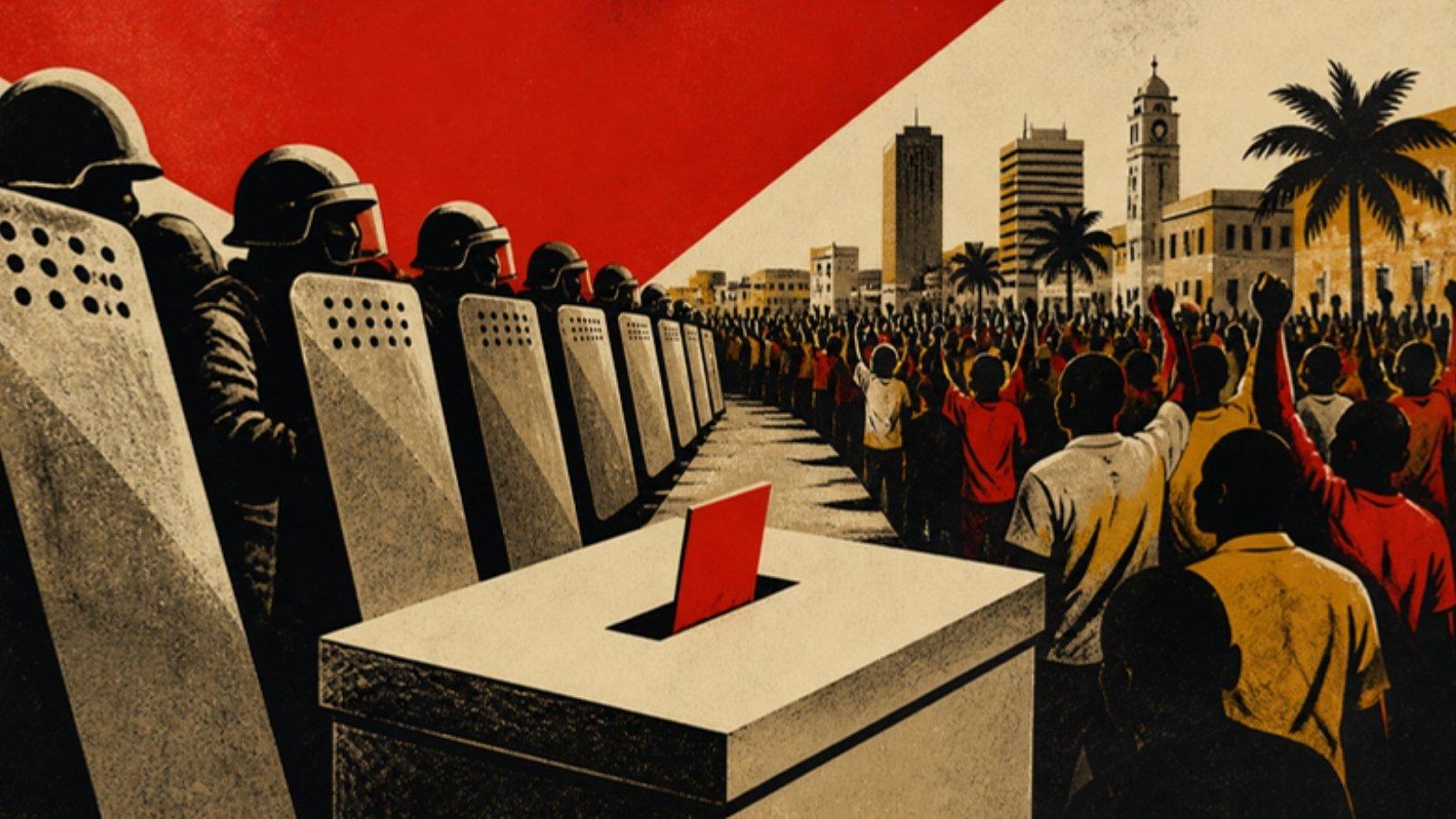
A year ago, Tanzanians went to the polls and were told the result before the counting was finished. President Samia Suluhu Hassan won with 98 percent of the vote. Nobody who had watched the campaign was surprised. Most of the opposition had been excluded from the ballot. Its leaders were in court, in hiding, or in prison. When citizens took to the streets to say that this was not an election, the state answered with live fire.
How many died? The government's own presidential commission says 518. Rights groups and the opposition say thousands. Think about what that gap means. It means a state that cannot count its own dead, or will not. It means mothers who still do not know where their sons were buried. It means families who collected bodies from mortuaries at night because they were afraid of what daylight would bring.
We should not pretend this is a story about a distant capital. This is about a country that many of us visited, admired, and held up as a model of Africa's stability. Tanzania has been a regional anchor for decades. Its failure is ours.
Today, the Tanzanian state is still at work. Analysts describe the country as "tense," and the word is too gentle. Arbitrary arrests are rising. Critics of the government live with the fear of abduction. Some face charges of treason or terrorism for saying things that would pass without comment in Accra, Nairobi, or Johannesburg. The most visible example is Tundu Lissu, the opposition leader whose treason trial reaches its verdict on November 6. A man who campaigned for the presidency is facing the gallows-era charge of treason for doing politics. Ask yourself what a verdict means when the court's outcome has been written in advance by the prosecution's ambitions.
The government set up a presidential commission to investigate the violence. Critics say it was created in bad faith, a tool to "clean Tanzania's image" for international audiences. The skepticism is earned. An inquiry that reports to the same power that ordered the shootings is not justice. It is public relations with a case number.
Now look at what else happened this month, because the timing tells its own story. Ghana's foreign minister, Samuel Okudzeto Ablakwa, met Russian Foreign Minister Sergei Lavrov on the sidelines of the Russia-Africa Summit in Moscow. Accra is pursuing partner status in BRICS, the bloc of emerging economies, and says it wants investment, trade, and a stronger economy. Russia has reportedly pledged to back that bid and to seek consensus support from the founding members.
Ghana has every right to seek investment. Nobody in this newsroom believes African nations should be trapped in a single set of partners or forced to beg at one door. But we must ask the question that Moscow will never ask on our behalf: what does the BRICS club demand of its members on democracy, on elections, on the treatment of opponents?
The answer is nothing. BRICS does not run a human rights check. It does not require free elections or an independent judiciary. Its members include governments that jail journalists, rig votes, and shoot their own citizens. Russia itself has spent years building a network across the Sahel and beyond, using private military contractors and political advisers to prop up regimes that sell out their people for protection. Wagner gold has flowed out of Sudan and the Central African Republic while the men who dug it were paid in cigarettes. Russian "security" arrived in Mali and brought with it massacres and disappearances. Africa has seen this film before, and it never ends well for the audience.
So here is the uncomfortable truth Ghana must face. Partnership with an authoritarian power is not neutral. Every alliance sends a message to Dar es Salaam, to Bamako, to Ouagadougou. It tells rulers that the price of democracy can be paid by someone else's money. Ghana's own story is the best rebuttal to that message. Ghana has had peaceful transfers of power in 2000, 2008, 2012, 2016, and 2024. It is one of the few places on this continent where losing an election does not mean losing your life. That reputation is worth more than any BRICS seat.
We should be honest about the West too. Western governments have lectured Africa about democracy for decades while signing trade deals with leaders who cheat, and while looking away when opposition figures disappeared. Those double standards are real and they are shameful. But the answer to hypocrisy is not to trade one master for another. The answer is to hold every government, East or West, to the same standard: competitive elections, independent courts, a free press, and the right to live without fear.
There is a better path, and Africa has walked it. Botswana has built one of the most stable democracies on the continent through decades of mineral wealth managed with discipline, not theft. Mauritius has turned a sugar island into a financial and services hub by protecting property rights and rewarding competition. Senegal showed in 2024 that even a sitting president who tried to postpone an election could be stopped when courts and citizens refused to accept it. Those are the blueprints. They are not perfect, but they prove that Africa does not have to choose between development and dignity.
So what must happen now?
The African Union and the East African Community must stop issuing mild statements and start demanding accountability. Send an independent investigation with subpoena powers, not a commission chosen by the men who ordered the shootings. Release every political prisoner held on charges of speech or assembly. Ensure that Tundu Lissu's trial, and any verdict on November 6, is observed by credible international and African monitors, with the results published in full.
Ghana, as a democratic leader in West Africa, should use its BRICS bid to set conditions. Ablakwa should say publicly that Ghana will seek investment and partnership only with states that respect electoral integrity and human rights, and that Ghana expects its partners to hold the same values. If Russia will not accept that, Accra should ask itself why it is knocking on that door.
Civil society must document everything. Every arrest, every abduction, every court date should be recorded, verified, and published. Repression thrives in silence. Lawyers, journalists, and church groups in Tanzania must be protected by regional and international solidarity, not left to fight alone.
Investors, too, have a role. Private capital that prefers stability to strongmen should demand transparent rule of law before committing to Tanzania's future. Markets run on property rights and predictable courts. A business climate built on fear is not a business climate. It is a hostage situation with a spreadsheet.
And citizens? You are the ones who must demand this. Write to your MPs. Ask your foreign ministries what they are doing about Tanzania. Ask your government whether its partnerships with Russia, China, the Gulf, or Europe come with conditions on human rights. Share the names of the detained. Refuse to let a 98 percent result be treated as a normal number.
Five hundred and eighteen dead is the government's number. The true figure may be far higher. Behind every figure is a name, a family, and a grave that someone is still afraid to visit. Africa did not win independence from colonial masters so that new masters could kill in our name.
Samia Hassan has the power to open the gates, release the prisoners, and let a free investigation speak. Ghana has the standing to remind its partners what partnership means. And we, as Africans, have the duty to refuse to look away.
Ask yourself: what kind of Africa do you want to hand to your children? Then act like it matters.
Based on reporting by ACSS-EMAIL