general
Putin Sells Africa Guns and Grain and Calls It Liberation
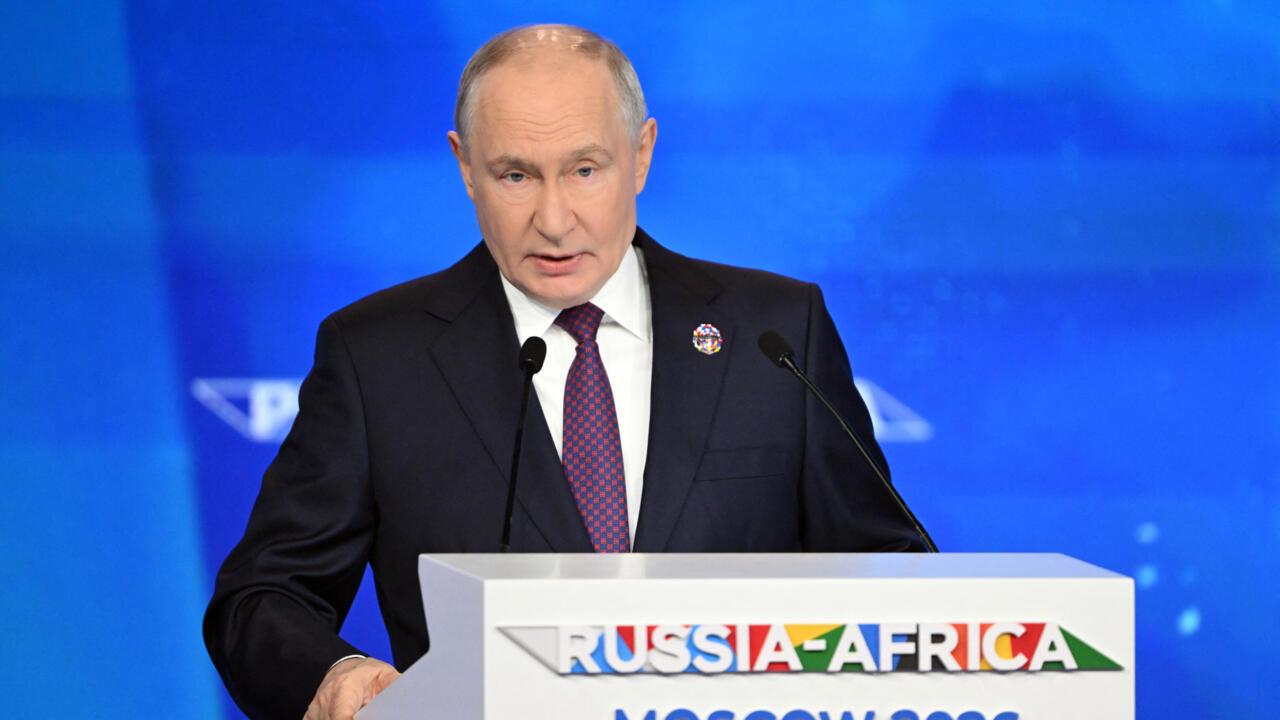
Ask yourself who arrived in Moscow this week, and why. Forty-eight countries sent delegations. Twenty-two African heads of state sat across from Vladimir Putin, a man who has spent years bombing cities in Ukraine, jailing his own critics, and running a mercenary machine across our continent. They came to talk about trade, security, arms, and grain. They were told, once again, that the West is the enemy and Moscow is the friend.
We have heard this song before. It is sung by men who want to be seen as liberators while they tighten their grip on whatever they are liberating. Putin stood before African leaders and accused unnamed Western countries of dragging Africa back into "debt bondage." He spoke about predatory terms, neo-colonial exploitation, and elites who "enrich themselves fabulously." Every one of those charges deserves a serious hearing. Africa has been cheated by foreign creditors and foreign extractors for centuries. But the man making the accusations is not offering a cure. He is offering a new chain and calling it a gift.
Consider the record Putin would rather the summit forget. Russia's Wagner Group, rebranded in 2024 as Africa Corps, has operated in Mali, the Central African Republic, Libya, and Sudan. In Mali, the junta that invited these fighters seized power in coups and has since ruled with a heavy hand, banning opposition, extending its own rule, and turning on civilians. Human Rights Watch documented the killing of hundreds of civilians in the central Malian town of Moura in 2022, in an operation carried out by Malian soldiers and Wagner fighters. Families who lost fathers, sons, and brothers that March did not receive an apology from Moscow. They received silence.
Now do the arithmetic that Putin skipped. Mercenaries are not charity. In the Central African Republic, Wagner-linked firms have secured control over gold and diamond concessions, while the country remains among the poorest on earth. Investigations by journalists and researchers have traced Russian-linked gold operations in Sudan, where a war that has displaced millions is being fuelled by weapons and gold that move through networks of which Moscow is part. Ask the mothers in Darfur and Khartoum whether Russian gold has brought them bread. Ask the teachers in Bamako whether a Russian-backed junta has made their schools safer.
Putin says his companies "localise" production and create jobs. Some of that may be true in narrow cases, and we should measure it honestly. But the pattern is clear. Russia offers security guarantees to regimes that fear their own people, then collects payment in mineral rights, port access, and political loyalty. That is not partnership. It is protection racket with a flag.
And look at the grain. Putin boasted that Russia shipped 13 million metric tonnes of agricultural products to Africa in the first nine months of this year and now supplies more than 40 countries. Food matters. Hunger is real, and the Sahel and Horn of Africa know it. But a country that weaponises grain in the Black Sea, that has blockaded Ukrainian ports and exported stolen grain from occupied territories, does not get to pose as Africa's bread basket without a serious question being asked. Who controls the grain? Who sets the price? And what does a government owe its citizens when it accepts food with strings attached to its sovereignty?
Here is the context Putin wants you to ignore. Russia's own empire was built on conquest. Chechnya, Crimea, Donbas, and the wars across the Caucasus and Central Asia all tell the same story of a Moscow that treats neighbouring peoples as territory. The man lecturing Africa on colonialism is presiding over the last large imperial project in Europe. We do not need a Russian professor to tell us what colonial exploitation looks like. We have lived it. And we know that new masters rarely arrive wearing the old uniform. They come with a microphone, a development plan, and a promise that this time, it is different.
It is not different. Africa is now a battlefield for the new scramble. China builds the railways and holds the loans. The Gulf states buy ports and farmland. Turkey sells drones. Western governments lecture us about democracy while signing contracts with the same regimes they condemn in public. Russia offers guns and rhetoric. Every one of these actors wants access to our minerals, our votes, and our strategic location. None of them, at least not by default, is loyal to African citizens. Our leaders must stop choosing between masters and start choosing their own people.
So what should happen? Start with the simplest demand. Every arms deal, security contract, and mining concession signed with a foreign state or private military company must be published in full and approved by an independent national parliament. No secret protocols. No junta-era agreements buried in ministry drawers. If Africa Corps is guarding a government, the citizens of that country have the right to know what it costs, who controls it, and what happens when its fighters kill civilians.
Second, African governments should follow the example of those who have built institutions that outlast their leaders. Botswana has managed diamond wealth for decades with transparent rules, an independent central bank, and a long record of peaceful transfers of power. Mauritius built one of the most prosperous economies in Africa by welcoming investment under the rule of law and protecting property rights. Senegal showed in 2024 that a people who vote can throw out a government that tries to cling to power, and that the army can stay in the barracks. These are the models. Not Moscow's model of mercenaries and sanctions evasion.
Third, Africa must stop borrowing its way into dependence. Demand public disclosure of every loan. Push for reform in the IMF and World Bank so African nations carry real voting weight in institutions that decide our fate. Accelerate the African Continental Free Trade Area so our countries trade with each other rather than begging at the gates of Beijing, Moscow, Paris, or Abu Dhabi. Invest in our own fertiliser production and food processing so that no single power can turn off the tap.
And the African Union must finally act like the guardian of the continent it claims to represent. It should set clear standards for foreign military involvement and insist that no private military company operates on African soil without full transparency and accountability to African courts. The Union's silence on atrocities committed by its own members and their foreign contractors is a stain that will not wash out with another summit communiqué.
To the citizens reading this, the call is simple. Ask your MP who signed the deal that brought foreign soldiers to your country. Ask your journalists to investigate the gold, the grain, and the loans. Ask your government whether a single Russian ruble is worth one civilian life. Demand that your leaders answer in public, under oath, and in front of an independent court.
Putin came to Moscow to sell Africa a story about liberation. We have heard that story before, from empires that left us poorer and more divided than they found us. We will not be bought with grain or seduced with flattery. Our future belongs to the people who live here, not to the men who want to rule us from a distance. Stand up, speak out, and demand that African sovereignty be something more than a slogan on a summit banner.
Based on reporting by FRANCE24