general
Cameroon's Railway Killed 79 People and Its Elites Walked Free
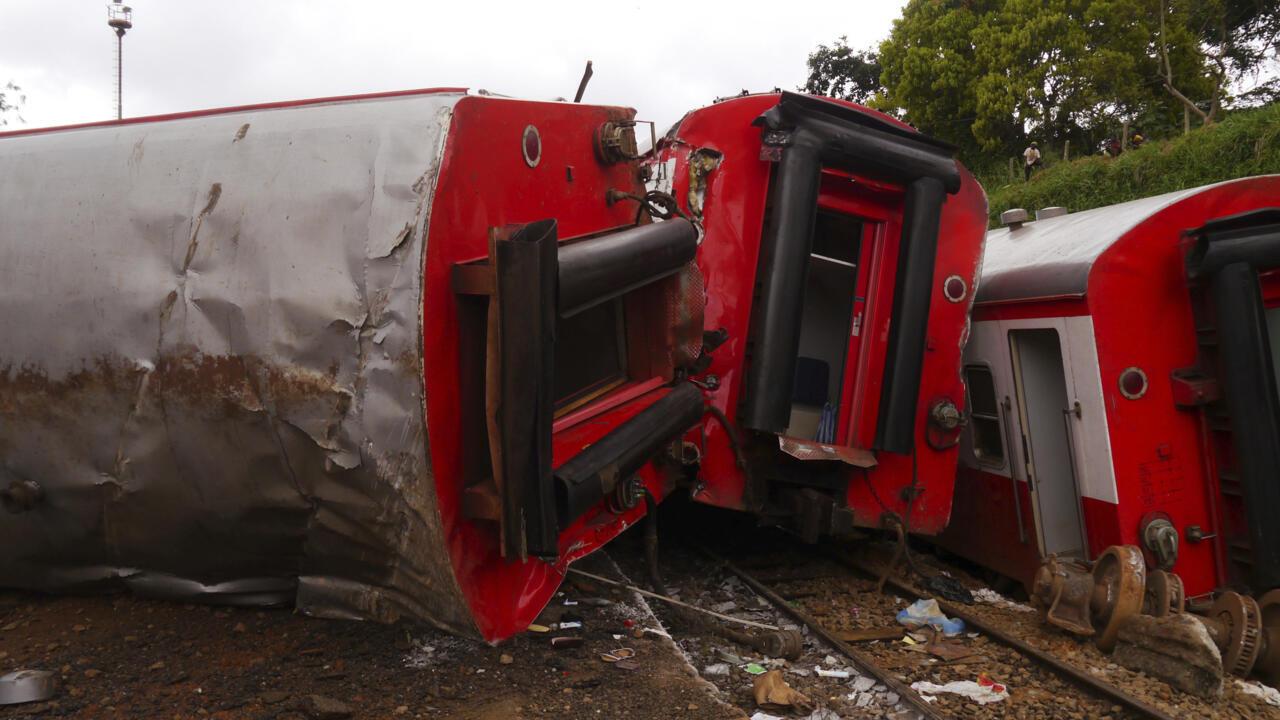
On the morning of 21 October 2016, Cameroonians boarded a train because they could not afford to be stuck in traffic. A road jam between Yaoundé and Douala had sent thousands toward the rail line, and Camrail, the operator, responded by hitching on more carriages to carry them. Then the train left the tracks near Eseka. Seventy-nine people died. More than 500 were injured. Cameroon's worst railway disaster was not an act of God. It was a decision made by people who knew the risks and chose the profit.
Ten years on, we have to ask the question that every Cameroonian should be asking loudly: who paid for those deaths? The answer is painfully small. A company was fined in a courtroom and then carried on. Its former managing director received a six-month suspended sentence. Other officials walked away with suspended terms of three to five months. The train driver, who fled, was handed five years in absentia. Seventy-nine families buried their children, parents, spouses and friends, and the people who made the choices that killed them received sentences that would not keep a petty thief awake at night.
The facts of the crash are not in dispute. Investigators found the train was travelling at 96 kilometres per hour through a section capped at 40. It was overloaded. Extra carriages had been added without proper engineering, and some carriages had defective braking systems. The report also found that Camrail management had ignored concerns raised by the driver before departure. Read that again. The person at the front of the train warned the company, and the company sent the train out anyway. That is not an accident. That is negligence with a price tag, paid by the poorest people in the carriage.
Consider what that negligence looks like on the ground. Eugénie, now 39, survived with fractures, including one to her neck. She was trapped beneath a carriage, praying aloud for rescue, while people screamed and bled around her. Today she cannot live on her own. She needs someone in the house with her at all times, she lives with constant pain and memory loss, and she describes her life since that day as one that "ceased to exist." Arnaud, who was in the second-to-last carriage, woke to find bodies around him and every seat and luggage rack torn from the floor. These are not statistics. These are Cameroonian citizens whose lives were broken by a company that answered to no one.
Then there is Dorette Dissakè, a respected notary in Yaoundé whose body has never been recovered. Her husband, the lawyer Thomas Dissakè, has spent a decade asking a question no family should ever have to ask: how does a grown woman vanish from a derailed carriage? He has paid for experts to search the ground at Eseka. He has pursued exhumations, including one in a village in the Centre region, only to find the body was not hers. He asks how anyone can grieve when there is nothing to bury. A nation that cannot account for one of its own dead has failed at the most basic duty of a state.
Justice has been delayed for so long that it now looks like abandonment. Camrail appealed its conviction, arguing there was no qualified expert assessment behind the case against it. Ten years later, that appeal has still not been heard. Lawyers for the victims say the compensation was too low for the physical and psychological harm inflicted, and some payments have never been made. Let us be precise about what this means. Families who lost breadwinners, who now nurse disabled relatives, who still wait for money the courts have already ordered, are being punished a second time by the same system that failed them the first time.
We must also talk about who held the concession. The French conglomerate Bolloré Group kept the Camrail railway concession after the disaster and only sold its transport arm to the Italian-Swiss firm MSC in 2022. Foreign capital profits from African infrastructure, collects the revenue, and then slips away when the bodies pile up. Europe lectures us constantly about good governance, transparency and corporate responsibility. Yet when a concession it controlled produced the worst rail tragedy in our history, the lectures went quiet. If the standards Paris and Brussels preach are real, they must apply to a French company operating in Douala as much as to a Cameroonian minister in Yaoundé.
This is the wider pattern across our continent. Infrastructure is built or run under concessions with thin oversight, weak regulators and courts that move at the speed of bureaucracy. Companies cut corners because they know the penalties are cheap and the enforcement is slow. Politicians accept the contracts because the ribbon-cutting photos are useful and the victims are far from the cameras. Whether the operator is a national firm, a French conglomerate or a foreign investor, the logic is the same: profit now, pay later, and make sure later never comes.
So what must change? First, Cameroon needs a genuinely independent rail safety regulator, with its own budget, its own inspectors and the legal power to halt operations that break safety rules. The driver's warning should have triggered an automatic stop, not a memo that gathered dust. Second, concession contracts must carry binding safety obligations, public disclosure of inspection results and automatic penalties that scale with the harm caused. Third, the appeal must be heard, and it must be heard now. A justice system that lets a case sit for a decade has already decided who matters.
Look at what is possible. Botswana built one of Africa's most stable economies by insisting on strong institutions, transparent public finances and an independent judiciary that does not bend to whoever holds power. Mauritius climbed from a sugar-dependent island to a high-income economy by protecting property rights, enforcing contracts and treating the rule of law as a competitive advantage. Senegal has shown that peaceful transfers of power are not a fantasy. These are not perfect countries, but they prove that accountable institutions produce better outcomes than impunity. Cameroon has the talent, the engineers and the lawyers to build the same. What it lacks is the political will to make the powerful answer for their failures.
Victims' compensation should not depend on a company's goodwill or a minister's convenience. It should be paid through a dedicated fund, financed by a mandatory levy on operators and fast-tracked through the courts, so that families like Eugénie's do not spend their final years chasing signatures. And the state must commit to finding the remains of every victim who is still missing, including Dorette Dissakè, with the same urgency it would give a senior official who had disappeared.
We, the people, have the power to refuse this quiet. Journalists must keep asking why the appeal has stalled. Civil society groups must track every unpaid cheque and every unexecuted judgment. Parliamentarians must summon the ministers responsible for transport and justice and demand a public timetable. Citizens must demand that every railway, every bus line and every road concession publish its safety records. Silence is how Eseka became a footnote. Refusing to be silent is how it becomes a turning point.
Seventy-nine people boarded a train in 2016 and never got off. Their families are still waiting, and so are the survivors. How many more trains will leave the station on the same negligence before we decide that Cameroonian lives are worth more than a suspended sentence? The answer belongs to us. Demand the appeal be heard. Demand the victims be paid in full. Demand the search for Dorette Dissakè continues until her family can finally bury her. And demand that the next railway in this country is built on the principle that no passenger should ever again be sacrificed for a company's margin.
Based on reporting by RFI