spotlight
Kagame's Rwanda Invaded Congo and 2,900 Died in Goma
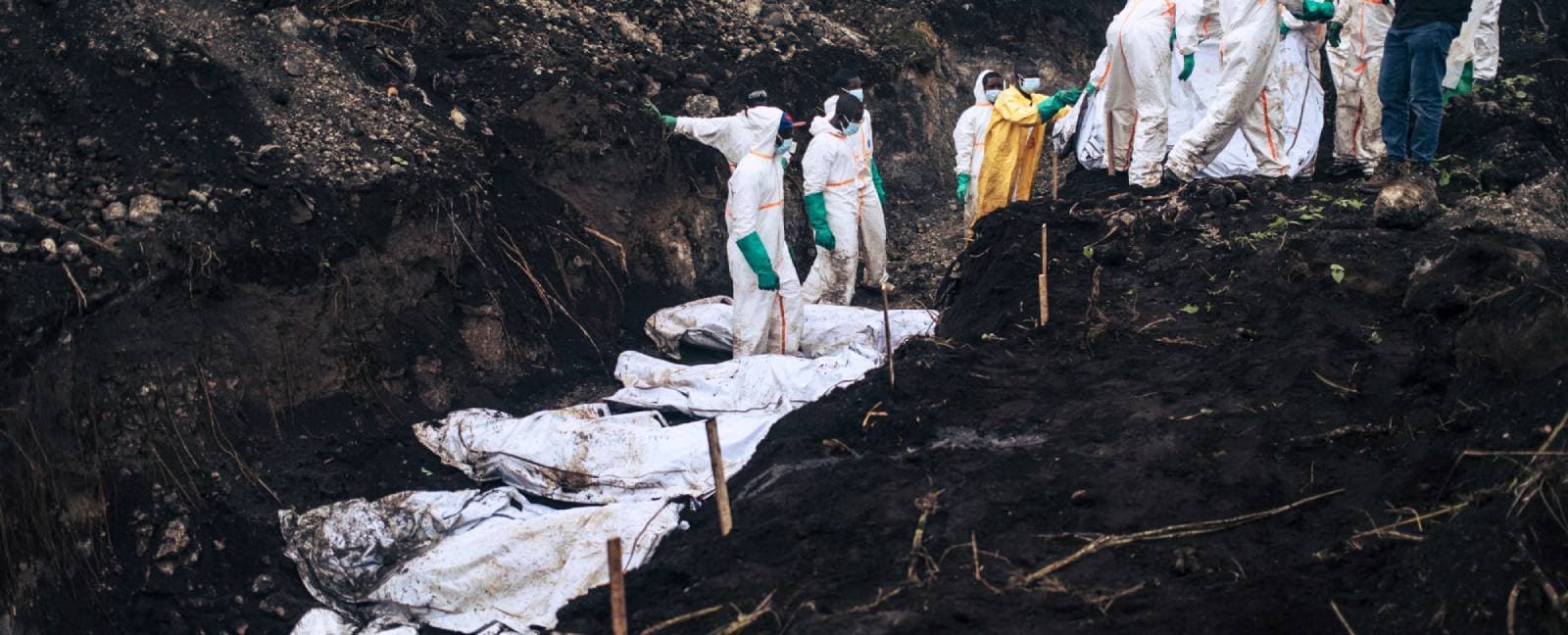
Let us start with the number that should keep every African leader awake tonight: at least 2,900 people killed when the city of Goma fell in January 2025. Mothers were among the dead. So were children, shopkeepers, nurses, and men who had run out of places to hide. More than 500,000 people fled their homes in the same weeks, carrying what they could on their heads and walking south into a province already on fire. Hospitals ran out of beds. Heavy shells landed in neighborhoods full of families. Peacekeepers from the Southern African Development Community, wearing blue helmets because the world asked them to protect Congolese lives, were among those killed.
So let us say it plainly, as Africans who refuse to be lied to about our own continent. This is not a rebellion. It is a war of aggression waged by Rwanda against a sovereign neighbor, and M23 is the mask it wears.
The evidence is not hidden. It sits in UN Group of Experts reports, including S/2025/446 and S/2026/466, which document Rwandan Defence Force units operating inside Congolese territory, not as advisers, but as the operational core of the offensive. UN investigators estimate that Rwanda has deployed somewhere between 14,000 and 18,000 troops, a force equal to roughly 40 to 50 percent of the Rwandan army. Those are not guerrillas living off the land. They are conventional soldiers with artillery, air defence, and armored vehicles. The Group of Experts has also documented Turkish-made TB2 drones operating from Rwandan territory at Kamembe, and GPS-guided mortars of the kind that have been used in precision strikes across the world. A ragtag militia does not fly drones. A government does.
Consider the other half of this war, the one that happens inside M23's ranks. The group grew from roughly 3,000 fighters to more than 30,000 by pressing tens of thousands of Congolese civilians and captured soldiers into uniform. Young men are seized from their villages, handed rifles, and sent to die at the front. Some of them are prisoners of war, Congolese soldiers who surrendered and were then forced to fight for the army that captured them. The UN calls this forced recruitment. Those of us who know our history have another word for it. It is slavery, wearing camouflage.
And then there is the cemetery. Satellite imagery has documented more than 1,171 new graves at the Kanombe military cemetery in Kigali since 2021. Rwanda is a small country, and its government is famously careful about its image. Yet it buries its dead in quiet rows and calls the men lost in Congo "missing" or simply says nothing at all. Why hide the dead unless you know exactly what their deaths prove?
Think about the hypocrisy for a moment. Kigali hosts international conferences, markets gorilla trekking to luxury travelers, and invests heavily in sporting events and glossy branding campaigns. The message is that Rwanda is a clean, orderly, forward-looking nation. Meanwhile its soldiers are shelling Goma, and its proxies are executing civilians in Masisi and Rutshuru. You cannot sell the world a country of peace while exporting war across a border. Sportswashing is the right name for it, and we should call it that every single time.
The economics explain much of the rest. Eastern Congo sits on coltan, cobalt, tantalum, and lithium, the minerals that power our phones, laptops, electric vehicles, and the batteries that the world's energy transition depends upon. The market value of these resources is estimated at more than one billion dollars, and UN investigators have repeatedly alleged that Rwanda facilitates the smuggling of these minerals out of Congo. Armed groups control the mines, the mines pay the armies, and the armies keep the mines running. This is a machine, and it runs on the blood of Congolese miners who dig by hand in conditions no human being should endure.
Context matters, because this is not the first time. The Congo Wars of the late 1990s and early 2000s drew seven African militaries into Congolese soil and left an estimated 5.4 million people dead. Rwanda, a country with roughly a tenth of Congo's population, has spent decades behaving as though its security requires a dominant hand over its far larger neighbor. Its historical grievances are real and deserve serious answers. But grievances do not justify occupying another country, looting its minerals, or drafting its children into armies. Every African who lived through those wars should reject the logic that a neighbor's trauma entitles it to a neighbor's territory.
We must also confront our own failures. Some African governments have been quietly comfortable with Kigali's influence because it brings stability in some places, investment in others, and peacekeeping contributions that burnish the continent's image. Uganda has been accused by UN investigators of supporting M23 as well, and the regional bloc that was supposed to stabilize eastern Congo was asked to leave within a year. The African Union has issued statements. The African Union has held meetings. What it has not done is name the aggressor with the clarity this moment demands, and impose costs on the men giving the orders.
So what must happen now? First, the African Union Peace and Security Council must formally identify Rwanda as the party conducting an invasion of the DRC, and demand the withdrawal of RDF forces on a fixed timeline, with verification by independent monitors. Second, the UN Security Council must impose targeted sanctions and travel bans on Rwandan and M23 commanders implicated in the offensive, and it must extend and strengthen the arms embargo to cover every actor, including the states supplying drones, missiles, and mortars. Third, the Nairobi and Luanda processes, led by Kenya and Angola, must move from talks about talks to binding commitments with enforcement. Ceasefires without consequences have failed before. They will fail again unless someone pays a price.
Fourth, the minerals must be traced from mine to market. Any cobalt, coltan, or tantalum that cannot prove a clean supply chain should be refused at ports, refineries, and factories, including by the companies that build the devices in our pockets. Africa's wealth should build African futures, not finance militias. Fifth, Congo's own institutions must be strengthened: an independent judiciary that prosecutes war crimes regardless of rank, a transparent mining sector that pays taxes to the public treasury, and a professional army whose recruitment is voluntary and accountable to civilian law. Botswana built its diamond wealth into schools and roads through disciplined public management. Mauritius turned a tiny island into a democratic, rules-based economy. Senegal has shown that peaceful transfers of power are possible even under pressure. Congo can learn from them. Rwanda, for all its economic achievements, has shown the world that a development model built on a closed political system and a militarized foreign policy eventually turns its neighbors into battlefields.
And what should we, the citizens, demand? We should demand that our governments stop treating the death of Congolese civilians as a diplomatic inconvenience. We should demand that our parliaments ask hard questions about any trade in minerals that may be tainted with blood. We should demand that our journalists keep reporting from Goma, Masisi, and Bukavu, because silence is the aggressor's best weapon. And we should demand that our leaders stop choosing sides based on who pays for their conferences or who holds their loans.
Ask yourself this. If 2,900 people had been killed in a European capital by an army sent from a neighboring state, would the world need weeks to find the right adjective? Would the word "rebel" survive a single news cycle? Congolese lives are not cheaper than anyone else's. Stop letting anyone tell you otherwise.
Goma is still burning in the memory of its people. The graves are still being dug. The question is whether Africa will name the invader, enforce the law, and protect its citizens, or whether we will file this atrocity away with all the others and wait for the next one. We have seen where silence leads. Now is the time to speak, loudly, in the names of the dead and the living alike.
Based on reporting by ACSS