security
Hemedti's RSF Drove 700,000 Darfuris Into Camps With No Medicine
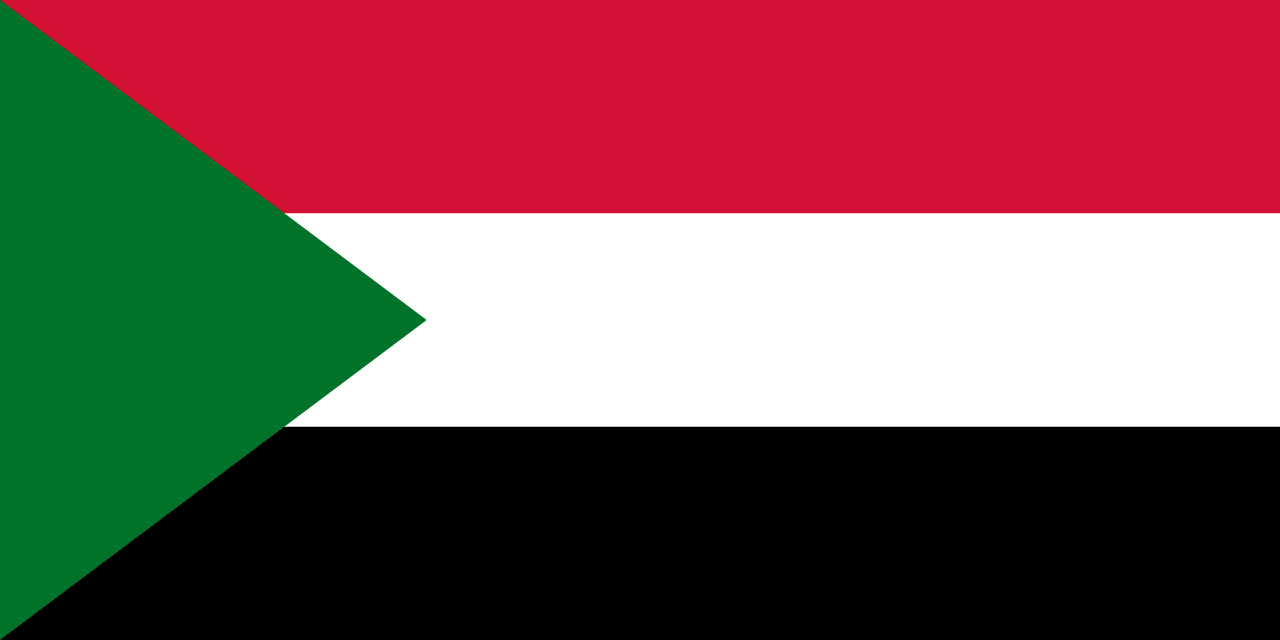
Seven hundred thousand people. That is more than the population of Mauritius, crowded into one town in Darfur, and the World Health Organization says they are running out of everything that keeps a human being alive. Clean water. Food. Medicine. Protection from the men with guns who chased them from their homes. Every one of those people had a name, a field, a goat, a kitchen, and a child who wanted to go to school. Now they sleep under plastic sheeting in Tawila, waiting for aid that is not coming fast enough.
So ask yourself the question the Sudanese people have been asking for three years: who did this, and why is it still happening?
The answer is not complicated. The Rapid Support Forces, the paramilitary organization led by Mohamed Hamdan Dagalo, known as Hemedti, has spent the war hunting civilians across Darfur. When the RSF overran El Fasher in late October 2025, the atrocities that followed were documented by UN investigators, human rights groups, and survivors who walked out with nothing but their children. Killings based on ethnicity. Sexual violence used as a weapon. Villages emptied, then looted, then burned. The displacement that followed did not happen by accident. It was the strategy.
Tawila now shelters hundreds of thousands who fled that violence, and it is buckling. The WHO has warned that the health system cannot keep pace with the need, that disease is spreading in overcrowded sites, and that the humanitarian appeals are badly underfunded. In a region where cholera has already struck and malnutrition has been confirmed at famine levels in parts of Darfur and Kordofan, a shortage of clinics is not an inconvenience. It is a death sentence delivered slowly enough that the cameras move on before the bodies are counted.
Consider what the numbers actually describe. Sudan's war has displaced more than 12 million people, the largest displacement crisis on Earth. Tens of thousands are estimated to have been killed, though the true toll is unknowable because the bodies are never counted. Families who fled Khartoum, El Geneina, and El Fasher have been pushed into the same few towns, competing for the same few wells and the same few tents. A mother in Tawila does not care whose army is responsible for her child's diarrhea. She cares that there is no oral rehydration salt at the clinic.
And the weapons keep flowing. UN panels of experts have repeatedly documented the arms and money reaching the RSF and the Sudanese Armed Forces, along with gold smuggled out through networks that link Sudan to the United Arab Emirates and beyond. The UAE denies arming the RSF. Yet the pattern is consistent enough to demand answers. Russia has spent years trying to secure a naval base on the Red Sea, and Wagner-linked companies have been tied to gold extraction in Sudan. Turkish and Iranian drones have been used by the army. Egypt has its own interests. Every outside power with a stake in Sudan's gold, ports, and geography has found a way to profit from a war that the Sudanese people are paying for in blood.
Let us be clear about the other side of this war too. General Abdel Fattah al-Burhan's army is not a clean institution. Burhan seized power in the 2021 coup that destroyed Sudan's fragile transition, and he helped create the RSF in the first place. The army has bombed markets, hospitals, and neighborhoods. Both generals have treated Sudan as a prize to be carved up rather than a country to be governed. Anyone who tells you this is a simple story of good soldiers versus bad militias is either lying or has never listened to a Darfuri mother describe what happened to her village.
The context matters because Sudan is not an isolated tragedy. It is the latest chapter in a pattern that every African should recognize. Darfur was the first conflict the International Criminal Court was asked to investigate, after the Security Council referred the situation in 2005. Twenty years later, the same militias, the same impunity, and the same outside money are still at work. The Security Council's Sudan sanctions regime, which has just been extended, includes an arms embargo on Darfur. An embargo that is routinely violated is not a policy. It is a press release.
Who benefits from this? The generals in Port Sudan and Nyala. The foreign investors who want gold without questions. The arms dealers who never have to visit a refugee camp. And the diplomats who issue statements of "deep concern" and then go to lunch. Who bleeds? The 700,000 in Tawila. The girls who will never return to school. The farmers whose land will be unplanted for a generation. The young Sudanese men pressed into militias, because the alternative is starvation.
There is a better path, and Africa has already shown it. Botswana built one of the continent's most prosperous economies on diamonds, not by handing its mines to warlords, but by insisting on transparent contracts, independent audits, and a judiciary that answers to the law. Mauritius turned a sugar island into an economy built on financial services and rule of law. Ghana proved that a country can change governments through the ballot box and hand over power peacefully. Senegal, in 2024, showed that an election can still beat a ruler who tried to cling to power. These are not perfect countries, but they share a principle: institutions must bind the powerful, or the powerful will eat the weak.
So what should happen now? First, the AU Peace and Security Council must stop treating Sudan as someone else's crisis. The AU suspended Sudan after the 2021 coup, but suspension without consequences is theater. The AU should back independent monitoring of the arms embargo, press for unhindered humanitarian access through every crossing, and support a civilian-led transition that puts Sudanese voters, not generals, in charge. Second, the Security Council must enforce its own sanctions, which means naming and freezing the assets of commanders and financiers, including those tied to gold and arms networks, and it means publishing the evidence. Third, the ICC prosecutor must act on the El Fasher atrocities with the same urgency applied to lesser-resourced cases. Impunity is the oxygen this war breathes.
Fourth, donors must fund the humanitarian plan in full and stop rationing aid like it is a favor. Cash transfers through local markets, mobile clinics that can reach remote camps, and cholera vaccination campaigns are cheap compared to the cost of letting a town of 700,000 starve. Fifth, the Sudanese diaspora, civil society, and African businesses should demand that any company profiting from Sudanese gold carry full supply chain audits. Trade is not a moral vacuum. If the gold came from a massacre site, the buyer owns part of that massacre.
And you, reading this on your phone, have a role too. Share the names of the displaced and the organizations feeding them. Write to your MP, your parliament, your foreign ministry, and ask one question: what are you doing to enforce the embargo and protect civilians in Tawila? Demand that your government stop selling weapons and laundering gold for parties in this war. Pressure the companies in your country that trade with the UAE, Russia, and Turkey to disclose what they know. Silence is a choice, and it is being made for you every time a headline like this scrolls past.
We are the generation that inherits Sudan's catastrophe, or the generation that finally refuses to let it stand. Seven hundred thousand people in Tawila are waiting to find out which one we will be. Do not let them wait in vain.
Based on reporting by UN-NEWS