think-tank
BRICS Is Selling Africa a Seat at a Table Built by Autocrats
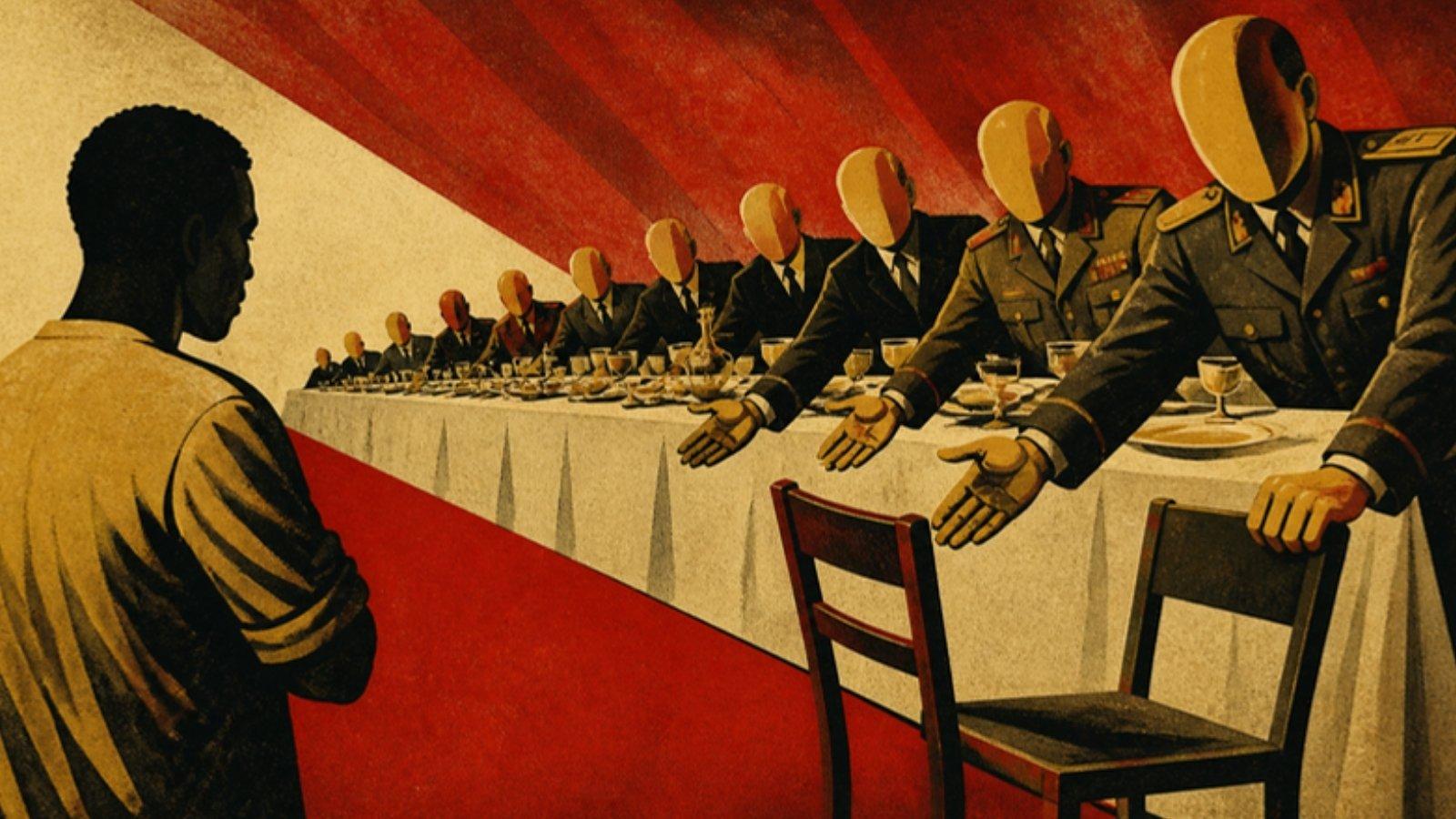
Ask who is sitting at the table before you ask what is on the menu.
This year, India hosts the 18th BRICS Summit in New Delhi, and the invitations have gone out with the same polished language the bloc has used since it was a clever acronym in a 2001 investment note. Multipolarity. Reform of global governance. A fairer world. Those words sound good in a conference hall. Our job is to ask whether they mean anything for a Nigerian farmer, a Kenyan teacher, or a young woman in Cape Town whose vote is worth less every election cycle.
Africa's involvement in BRICS has a short history and a loud one. South Africa joined in 2010 and is the only African founding-era member. In January 2024 the bloc expanded to include Egypt and Ethiopia, along with Iran and the United Arab Emirates. Indonesia followed in 2025. Saudi Arabia was invited but has never formally confirmed its membership. By any measure, this is a club whose center of gravity has shifted toward governments that answer to their own security services rather than their own voters. Freedom House rates six of the ten current full members, including China, Russia, Iran, Egypt, Ethiopia and the UAE, as "Not Free." When an organization is expanding by inviting more of its own kind, its claim to speak for the Global South deserves a harder look.
Now consider the continent's record with the powers that dominate these forums. The New Development Bank, BRICS's flagship lender, was created to finance infrastructure in member states and developing economies. Its promise was to offer an alternative to Washington and Brussels. Yet the same governments that preach sovereignty have spent two decades perfecting the export of debt to African states, often through opaque contracts, secret collateral arrangements and Chinese-financed projects that were never subject to public tender. Zambia's debt crisis, which left it in default for years before a painful restructuring, did not happen because African voters demanded it. It happened because loan terms were negotiated in rooms where citizens had no seat.
Look at the security footprint too. Russia's Wagner Group, which has since been folded into the Kremlin's Africa Corps in Mali, has been accused by UN experts and independent researchers of abuses against civilians in the Central African Republic, Mali and Libya, and of trading security for gold and mining concessions. Russia's contract is not a development partnership. It is a protection racket dressed in a flag, selling regime survival to juntas that have already overthrown elected governments. When a BRICS member props up a coup-installed leader, the bloc's rhetoric about non-interference becomes an accessory to the crime.
Here is what the New Scramble for Africa looks like in 2026. It does not come with European flags and colonial governors. It comes with Chinese loan agreements, Emirati port concessions, Russian mercenaries, Indian pharmaceutical and telecom deals, and Brazilian and South African investment that is sometimes genuine and sometimes not. The actors have changed. The extractive logic has not. A resource is identified, a government is cultivated, a contract is signed that the public never reads, and the bill arrives decades later. We have been through this before. We cannot pretend we are too wise to be fooled twice.
And let us be honest about the democratic deficit inside our own region. Egypt's parliament and judiciary have been hollowed out by an executive that jails journalists and civil society leaders. Ethiopia's government has been accused by rights groups of abuses across the Tigray and Amhara conflicts, and its federal system has struggled with the consequences of ethnic violence and elections that critics call far from competitive. When these governments are welcomed into a bloc as equals, the message to African citizens is clear. Your rights are negotiable. Your government's accountability is optional. Trade and prestige come first.
This is the moment to say what our governments are too timid to say. Membership in an international club is not a prize for surviving the last election. It is a responsibility. Africa's leaders should not stand beside autocrats in New Delhi and nod along to the language of multipolarity while their own citizens wait for basic services and free courts. If BRICS is serious about reform, it should accept a binding commitment to transparency in lending, public disclosure of major contracts, and respect for independent judiciaries and free elections as conditions of membership. Anything less is a club for regimes that want protection from scrutiny.
There is a better path, and Africa already has the proof. Botswana has built one of the most stable democracies on the continent by protecting property rights, managing its diamond wealth through transparent institutions, and holding regular, credible elections for decades. Mauritius has become an investment and financial services hub by enforcing rule of law, keeping its courts independent and competing on governance rather than on the willingness to look away. Senegal's peaceful transfers of power in 2000 and again in 2024 showed that citizens, not generals, decide who governs. These are not perfect countries. They are proof that strong institutions produce growth, and that growth built on trust outlasts growth built on secrecy.
So here is what Africa should demand, starting now. Our governments should table a clear set of governance benchmarks before committing to any expanded BRICS engagement, covering public disclosure of loan terms, competitive procurement, and independent audit of any deal involving natural resources. The African Union should insist that its members speak with one voice on democratic standards, and that no African government accept a security partnership that bypasses parliament. Civil society groups, business associations and journalists should publish every major BRICS-linked contract they can obtain, so that the public can see who is profiting and who is paying. Ask your MPs in Johannesburg, Cairo and Addis Ababa one question: what did you agree to in our name, and when will we read it?
BRICS will hold its summit in New Delhi and produce a communique full of noble words. Words are cheap, and autocrats have never run short of them. The question is whether Africa will keep accepting promises from governments that would not survive a fair vote, or whether our citizens will finally insist that every partnership be measured by one standard: does it strengthen the people, or only the people in power? Demand that answer before you celebrate the next seat at the table.
Based on reporting by SAIIA