think-tank
BRICS Looked Away While Rwanda Invaded Congo
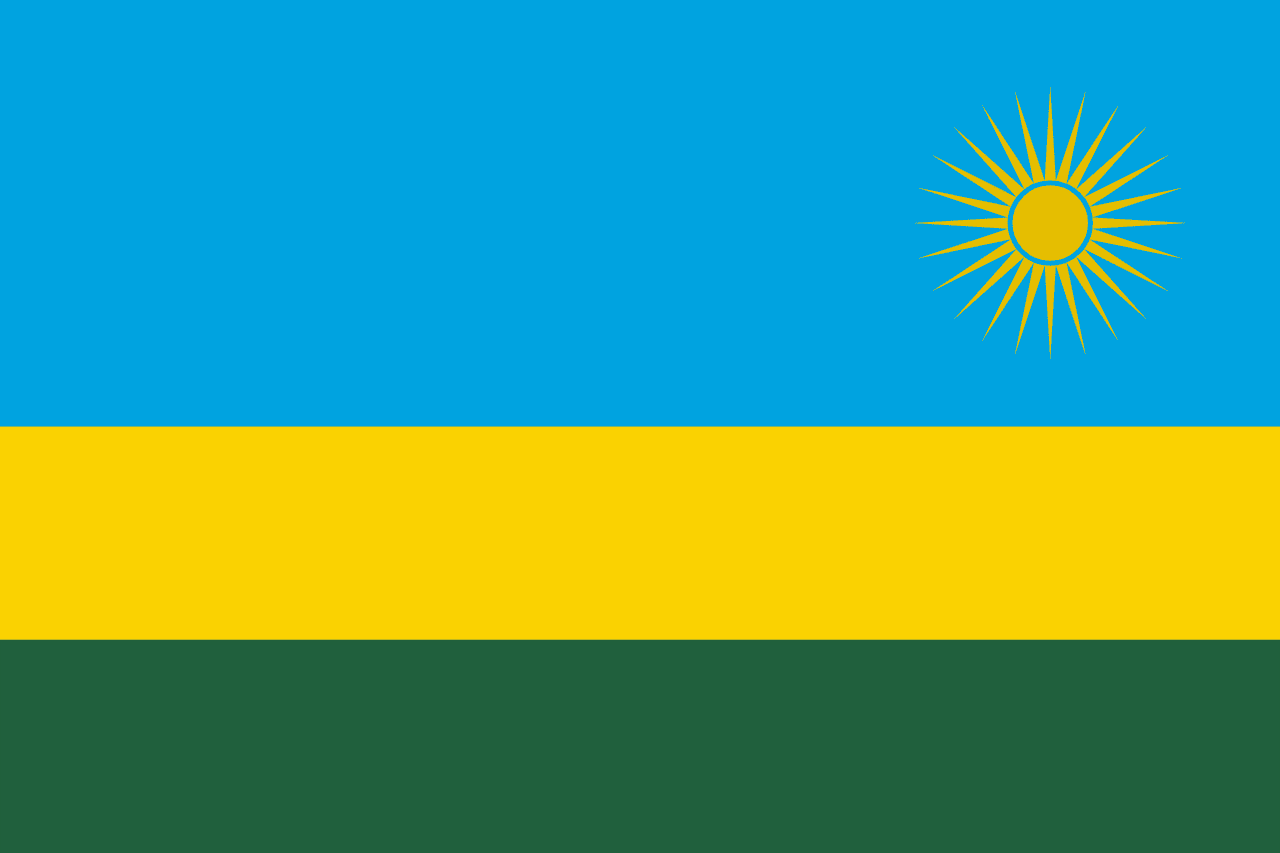
Five nations gathered in New Delhi to talk about the future of the world. Their communiqués will be parsed in capitals from Brasília to Pretoria. Meanwhile, in eastern Congo, mothers are still burying children killed by weapons that never should have reached the battlefield.
Here is the question the BRICS summit did not want to answer: how many times did the Democratic Republic of Congo appear in its declarations? Read the documents yourself. Count the lines. Then ask why a bloc that claims to speak for the Global South found the words to discuss many distant disputes but not a war that has displaced millions of Africans on African soil.
Analysts at the South African Institute of International Affairs say the bloc is divided and struggles for consensus. That is true, and it is not an excuse. Consensus is the price of membership, not a licence for silence. When a summit's members include a permanent member of the UN Security Council and a country with a battlefield record in eastern Congo, silence is itself a political choice.
Let us be precise about what is happening in the east of the DRC, because the precision matters. The UN Group of Experts has documented, in reports including S/2025/446 and S/2026/466, the presence of Rwanda Defence Force units operating inside Congolese territory. These are not ghost soldiers or wandering volunteers. The experts describe integrated combat formations, command structures, artillery, and air assets. The M23 movement provides the mass manpower and the political cover. The RDF provides the officers, the planning, and the firepower. This is the same architecture Moscow used in Donetsk and Luhansk. If the world called Russia's campaign an invasion when its soldiers crossed into Ukraine, the same word applies here. Rwanda is not hosting a rebellion. It is conducting a war of aggression through a proxy force, and it is occupying land that belongs to another sovereign state.
The numbers tell you how deep this runs. Estimates of RDF involvement place somewhere between 14,000 and 18,000 troops in the field, a substantial share of Rwanda's army, sent to kill, occupy, and loot a neighbour. Meanwhile, M23 swelled from roughly 3,000 fighters to more than 30,000, not through volunteers but through forced conscription. Congolese civilians have been press-ganged from villages and detention centres and handed rifles. Prisoners of war have been pressed into the same ranks. This is slavery wearing a military uniform, and it is happening in the twenty-first century while the world's diplomats speak of partnership.
Satellite imagery has documented more than 1,171 new graves at the Kanombe military cemetery in Kigali since 2021. Rwanda hides its dead because admitting them means admitting the war. Yet this is the same government that markets itself abroad as a clean, orderly model of development, hosting international conferences and promoting gorilla tourism while its soldiers massacre Congolese civilians. Sportswashing and image management have become a diplomatic strategy. The hypocrisy is obscene, and we should say so every time.
And the weapons? Rwanda's forces have used Turkish Bayraktar TB2 drones launched from Kamembe, FPV drones, and Israeli-made GPS-guided mortars. Who sold them, who supplied the components, and who looked away are questions every government that claims to uphold international law must answer. Arms do not fall from the sky. They arrive through contracts, transit routes, and licences. Each one carries a serial number and a signature.
Now consider the context. Congo sits on cobalt, coltan, copper, and gold that power the phones in our pockets and the batteries in our electric vehicles. Foreign capital from the West, China, the Gulf states, and Russia is racing for access to these minerals. The new scramble for Africa has different actors than the one that carved our continent into colonies in 1884, but the logic is the same: extract the wealth, tolerate the bloodshed, and call it partnership. When a bloc of rising powers finds the courage to discuss anything except the war draining a neighbour's future, we should ask who benefits from that silence. The answer is never the child in Goma who has no school, no clinic, and no reason to believe the government in Kinshasa can protect her.
South Africa is the African voice at this table. It is the country whose soldiers served under the Southern African Development Community's mission in eastern Congo, and some of them died there. Pretoria cannot claim to have no stake. Its own troops bled in that conflict, and its own foreign policy rests on the principle that borders drawn by colonisers should not be redrawn by force. Ramaphosa's government has been bold on Gaza, taking Israel to the International Court of Justice on genocide charges. Principle is admirable when applied consistently. Why is the same principle muted when the victims are Congolese?
What should happen? First, the African Union's Peace and Security Council must name the aggression for what it is, demand the withdrawal of all foreign forces from Congolese territory, and back that demand with real consequences. Targeted sanctions on RDF and M23 commanders, asset freezes, and travel bans should follow, along with enforced arms embargoes and inspections on transit routes. Second, the UN Security Council should act on the Group of Experts' findings rather than burying them in committee. Third, mineral supply chains need traceability and due diligence rules that stop conflict minerals from being laundered into global markets. Companies that buy coltan and cobalt must prove where it came from, or they must stop buying it.
Africa already has proof that a better path exists. Botswana built one of the continent's most stable economies on diamonds by insisting on transparent governance and strong institutions. Mauritius turned a small island into a financial and services hub by protecting property rights and respecting the rule of law. Senegal demonstrated that a democratic transfer of power, even after tense elections, strengthens a nation rather than weakening it. Rwanda's economic model is often praised, but no economic growth chart can justify the bodies in Kanombe or the forced recruits in Masisi. Prosperity built on invasion is not development. It is theft with better branding.
So here is what we demand. South Africa must use every platform it holds, from BRICS to the AU to the UN, to name the RDF's role in Congo and insist that the bloc's communiqués mention the war by name. Our leaders must stop treating human rights as a convenient slogan and start treating them as a standard they apply to friends and enemies alike. The African Union must stop hiding behind diplomatic euphemisms. Civil society in Kinshasa, Johannesburg, Lagos, and Nairobi must keep the names of the dead in the public eye, because governments respond to pressure they cannot ignore. And every citizen who buys a phone, a laptop, or an electric car should ask the company that sold it a simple question: where did the cobalt come from, and who died to dig it?
The children of eastern Congo did not choose this war. They did not invite the drones, the mortars, or the conscription gangs. They are waiting for someone with power to care enough to act. BRICS had a chance in New Delhi to say something worthy of the name it has chosen. It said less. South Africa must say more, and we must make it. Our silence is the only thing Kigali, Moscow, and every other profiteer on this continent has ever truly counted on.
Based on reporting by SAIIA