think-tank
600 Million Africans Live in Darkness Atop the World's Green Wealth
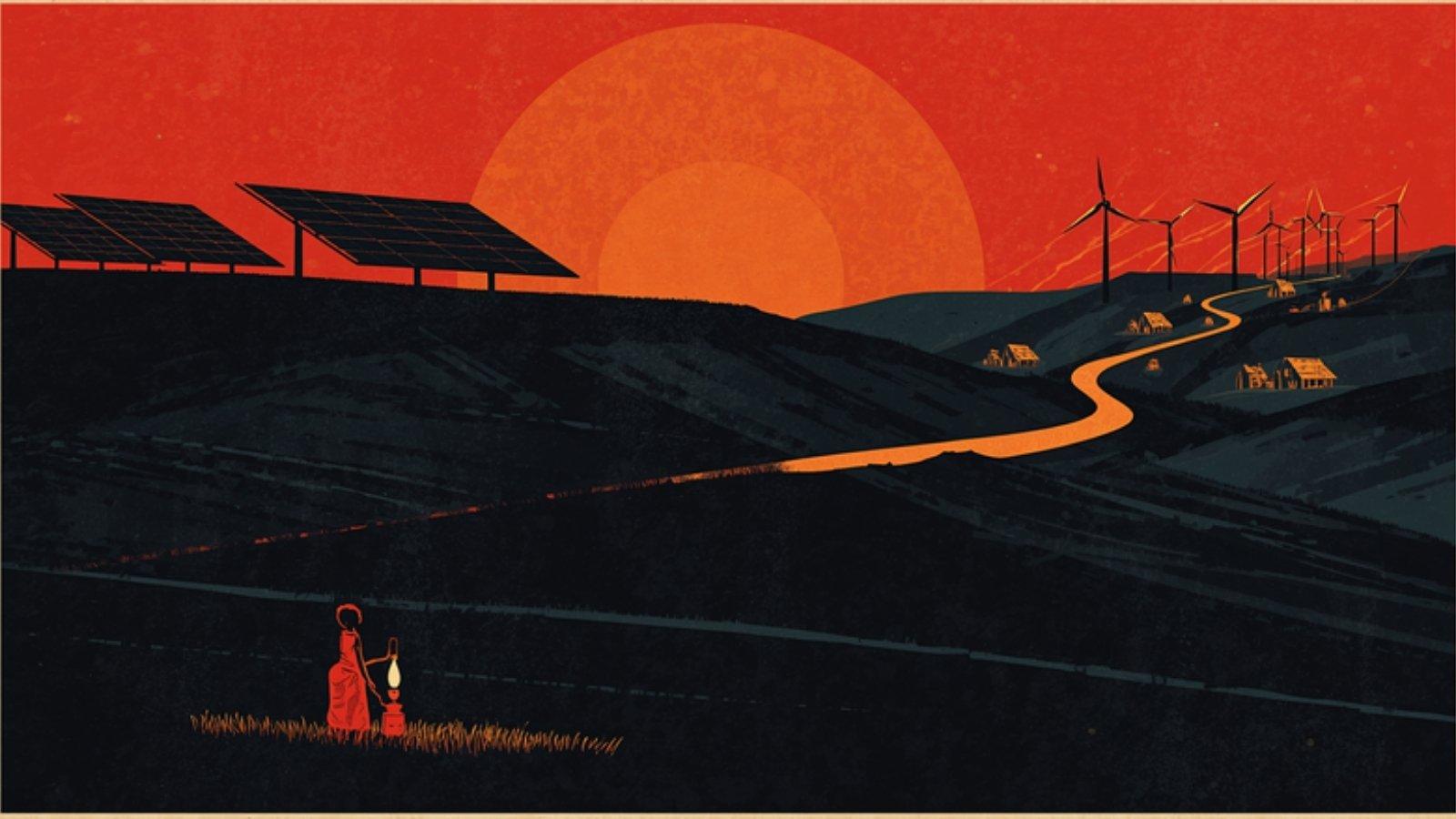
Six hundred million people. That is nearly half of Africa, living without dependable power. Mothers cook over smoke-filled fires. Children do homework by the light of a phone that has to be charged at a kiosk two villages away. Clinics deliver babies in the dark. And all the while, the rest of the world is racing to build a green future, using the very resources that lie under our soil and above our heads.
Think about that contradiction. The Sahara receives some of the strongest sunlight on the planet. The Great Rift Valley sits on geothermal heat. Our coastlines and highlands offer wind. The DRC, Zambia, Zimbabwe, and Guinea hold vast reserves of cobalt, lithium, copper, bauxite, and graphite, the materials that go into batteries, solar panels, and electric vehicles. We have everything the energy transition needs, and we still cannot switch on a light in a rural school.
So we have to ask the uncomfortable question. If Africa is the richest continent in green resources and the poorest in green electricity, who is the system working for?
The answer is not hard to find, and it is not pretty. Most of the value chain stops at our borders. Raw cobalt leaves the Democratic Republic of Congo, which produces roughly two-thirds or more of the world's supply, and is refined and manufactured elsewhere. The added value, the jobs, and the industrial know-how go to Shanghai, Seoul, and Western capitals. Here at home, Amnesty International and Afrewatch documented children working in artisanal cobalt mines in Lualaba province, digging for a metal that ends up in phones sold in London and New York. We are supplying the batteries of the future with the bodies of our children.
The same extractive logic applies to the solar panel supply chain. China dominates more than 80 percent of global solar manufacturing at nearly every stage, from polysilicon to finished modules. Africa imports most of its solar hardware. We buy back the technology that could have been built here, at prices our households and governments struggle to afford. Meanwhile, the Grand Inga hydropower project on the Congo River, which could generate more electricity than any dam on Earth, has been discussed, promised, and stalled for decades. Plans come and go. Electricity does not.
Look at the mineral frontier in the east of the DRC, where coltan and tin trade through the territories held by M23. UN Group of Experts reports have repeatedly traced how minerals from areas under the control of Rwanda-backed forces move into regional and global supply chains. The very materials that could electrify a continent are being used to finance a war of aggression against a sovereign neighbour. Congolese miners are killed or forced to dig. Rwandan military and commercial interests profit. And the phones and cars that run on those minerals are sold to consumers in Europe and America who believe they are buying a clean future.
This is the new scramble for Africa. The actors have changed since the 1880s Berlin Conference. The methods have not. China builds the roads and ports and takes the loans. The Gulf states buy up ports and farmland. Turkey sells drones and builds bases. Russia's Wagner network and its successors trade guns and security for gold and concessions. Western governments lecture us on democracy and human rights, then sign mineral deals with whichever regime will sign them fastest. Each of them talks about partnership. Each of them talks about investment. None of them, in the end, is building the power grid that gives a farmer in Kaduna or a fisherman in Mozambique his first reliable light.
Our own governments carry a heavy share of the blame. Too many elites have treated mineral wealth as a personal inheritance rather than a public trust. Too many contracts are signed in secret, with terms no citizen has ever seen. Too many utilities are run as patronage machines, where tariffs go unpaid, grids decay, and the connection fee is a bribe. Ask yourself honestly: how many national power utilities in our continent can say, with a straight face, that they are transparent, well-run, and accountable to the people who pay their bills?
But the solutions are not mysterious. Some African countries are already showing the way.
South Africa's Renewable Energy Independent Power Producer Procurement Programme, launched in 2011, opened the door to private investors to build wind and solar capacity under competitive bidding. It was not perfect, and its rollout was slowed by political interference and a struggling state utility. Yet it proved a basic truth: when rules are transparent and contracts are competitive, private capital will come. Kenya's geothermal expansion at Olkaria shows what happens when a country invests in its own natural endowment and builds the skills to run it. Morocco's Noor Ouarzazate complex, one of the largest concentrated solar power sites in the world, shows what a long-term energy strategy looks like when it is backed by a serious state and serious partners.
Botswana and Mauritius have demonstrated for decades that stable institutions, respect for property rights, and disciplined public finance attract investment and lift living standards. Rwanda's economic model deserves credit for its reforms and its planning, even as we condemn its military adventures in Congo in the strongest possible terms. Good governance is not a luxury for later. It is the foundation on which green industry is built.
So here is what we demand. Our governments must publish every mining, energy, and infrastructure contract in full, with beneficial ownership disclosed and tenders open to competition. They must require processing and manufacturing of minerals on African soil, creating jobs in our towns rather than shipping raw ore abroad. Independent regulators must be protected from political capture, and power utilities must be audited and held to performance targets. The African Union must turn the vision of Agenda 2063 into enforceable regional power pools and grid interconnections, so that surplus hydropower from one country can light the next. The AfCFTA must be used to build continental supply chains for batteries, panels, and turbines, not just to export raw materials faster.
And the UN Security Council must stop treating the minerals war in eastern Congo as a footnote. Sanctions must follow the money, including the mineral routes that finance armed groups and foreign-backed occupations. Any company that buys tainted cobalt, coltan, or tin should face consequences in the courts where it does business.
Citizens have a role too. Demand to see the contracts. Ask your MP which mines and power projects were approved and who benefits. Support the journalists, researchers, and civil society groups that expose corruption. Refuse the lie that corruption is simply how things are done here. It is a choice made by people who can be voted out, sued, and shamed.
Six hundred million people are waiting for a light that should have been switched on a generation ago. We are sitting on the sunlight, the wind, and the metals of the future. The only question left is whether we will be the ones who build that future, or whether we will keep watching others sell it back to us.
Based on reporting by SAIIA