think-tank
Brazil's Voters Crushed a Coup Attempt. Africa's Strongmen Still Plot Theirs.
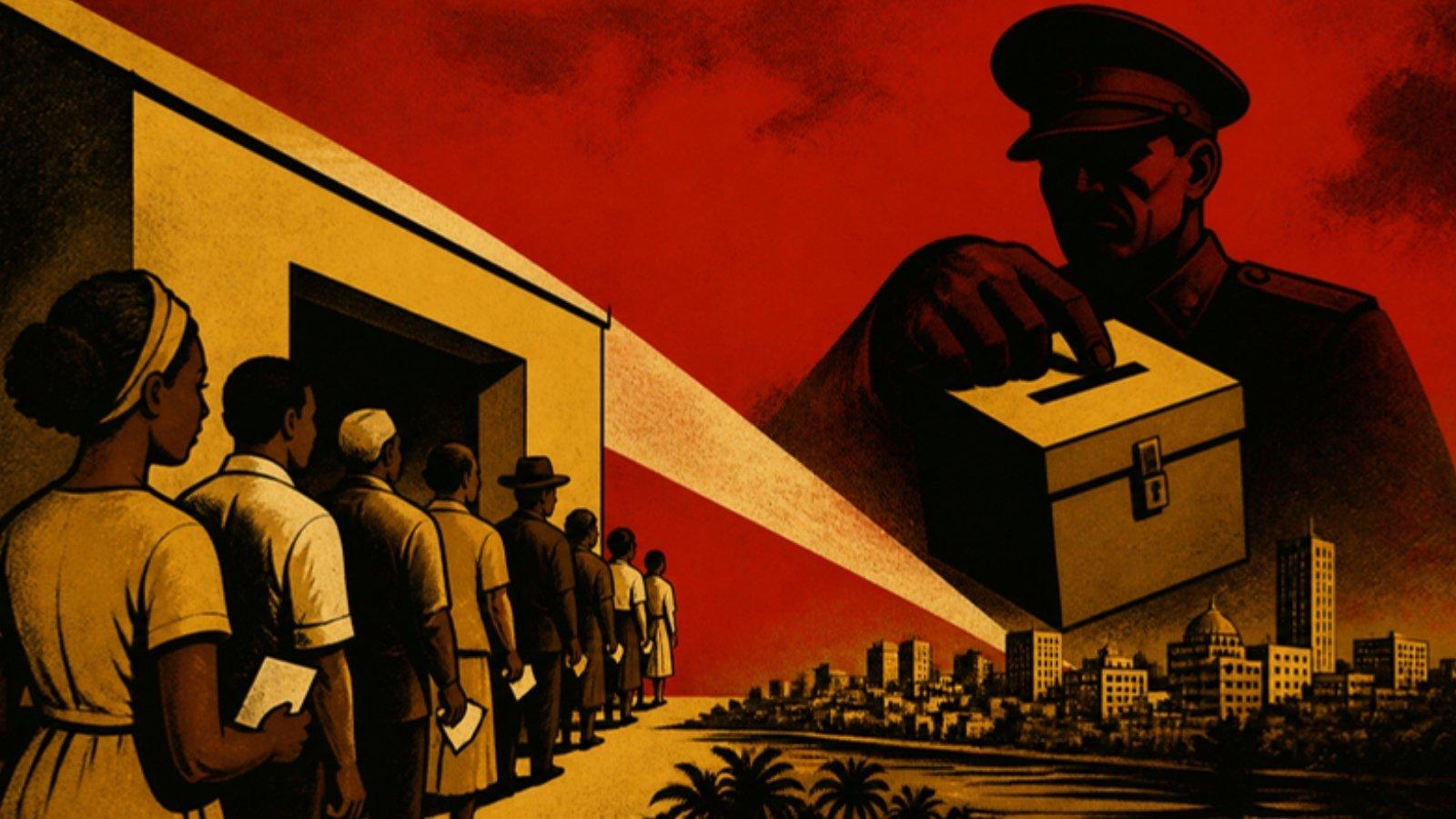
Ask yourself a simple question. When was the last time an African election ended with the loser picking up the phone to concede, and the army staying in its barracks? For too many of us, the honest answer is never, or not in living memory. So when Brazil, a country of more than 200 million people, holds a contested presidential election and sends its incumbent back for a third term with a result the world accepts, we should pay attention. This is not a story about a foreign capital. It is a mirror.
Gustavo de Carvalho, acting head of the African Governance and Diplomacy Programme at the South African Institute of International Affairs, spoke about the outcome on Talk Radio 702. His analysis focused on what shaped the result and, above all, on voter mobilisation and turnout. Those two words deserve more attention than they usually get, because they are where democracy either lives or dies. A ballot that nobody bothers to cast is just paper. A turnout that collapses is a signal that citizens have decided the system is not theirs.
Brazil's situation is worth understanding precisely. Voting there is compulsory for literate citizens between 18 and 70, which is one reason its turnout has historically been high. Its electronic voting system, run by the Superior Electoral Court, has been in use since 2000 and has been audited and attacked, yet it has largely survived scrutiny. But compulsory voting alone does not explain Brazil's resilience. What explains it is that the courts, the electoral authority and the security services were tested after the 2022 vote and did not bend. On 8 January 2023, thousands of supporters of Jair Bolsonaro stormed the presidential palace, the Congress and the Supreme Court in Brasília. Their goal was to overturn a democratic result. Brazil's Supreme Federal Court moved against those responsible, and the process that followed showed that a democracy can hold its own bad actors to account.
Now compare that to what we see at home. In the past few years, Mali, Burkina Faso, Niger, Guinea and Gabon have all experienced military seizures of power. Each time, the men in uniform promised a short transition, a return to civilian rule and a restoration of order. Each time, the transition stretched, the constitutions were rewritten, and the soldiers found reasons to stay. Who benefits from this? Not the nurse in Bamako whose salary is unpaid, not the farmer in the Sahel whose road to market has been cut by insurgents the juntas could not defeat. The generals benefit. Their families benefit. Their foreign partners, who sell them weapons and buy their mineral concessions, benefit. Everyone except the citizen benefits.
We must also be honest about the outside powers circling this moment. The contest for Africa is no longer a 19th-century carve-up with a single imperial lead. Russia, through Wagner and its successor structures, has offered regime security in exchange for gold and influence. China lends on terms that bind governments to its contractors and its timetables. Turkey sells drones and builds bases. The UAE buys ports and farmland. Qatar and Saudi Arabia fund media and religious institutions that shape public opinion. The West, which lectures us about democracy, has at times shrugged when its allies overthrew elected governments because those allies were useful against terrorism or migration. Every one of these actors has a stake in African outcomes. Very few of them have a stake in African voters being able to remove the people who serve them.
That is the real test. Democracy is not measured by whether a country holds elections; plenty of autocrats hold elections they always win. It is measured by whether the people can change their rulers without bloodshed, and whether the rulers fear the people more than they fear the army next door. Brazil passed that test in a hard, polarised year. Several African countries have passed it too, and we should say so loudly.
Botswana has held regular elections since independence in 1966 and built one of the most stable economies on the continent around transparent management of diamond revenues. Mauritius has kept a peaceful democratic order for decades and built a services economy that its neighbours envy. Ghana carried out peaceful transfers of power in 2008, 2012 and 2016, and its 2024 election again saw an opposition win accepted. In Senegal, in early 2024, President Macky Sall attempted to postpone the presidential vote. Citizens filled the streets, the Constitutional Council overturned the postponement, and Bassirou Diomaye Faye won the presidency in a peaceful handover. Those examples are not perfect, and none of those countries is free of corruption or inequality. But they prove that better is possible here, on our soil, with our people.
So what must be done? The African Union must stop treating coups as an administrative problem and enforce its own rules. Suspension should mean suspension, with clear timelines, and any junta that refuses a credible civilian transition should face targeted sanctions on its leaders' assets, travel and foreign accounts, not on the ordinary citizens who already pay the price. Regional blocs such as ECOWAS and SADC must act before tanks reach the presidential palace, not after. Electoral commissions across the continent need genuine independence, funded by law rather than by the incumbent's discretion, and staffed through open competition. Term limits should be defended, not rewritten by parliaments that happen to be packed with the president's allies.
Civil society has a role that goes beyond marching on election day. Voter education, independent election observation and rapid public tabulation of results are how citizens protect their votes from being stolen. Private businesses, which need predictable rules to invest, should be the loudest voices demanding independent courts and transparent public procurement, because nothing kills a market faster than a regime that can seize a company on a Tuesday. And we, the citizens, must demand that our leaders explain every extension of their mandate, every delayed election, every new security decree, and vote out those who cannot.
Brazil's voters went to the polls and showed the world that a democracy under pressure can still choose its future. Our turn is coming, in dozens of countries, in the next few years. Will we turn out in our millions to defend the ballot, or will we sit at home and let generals and their foreign patrons decide for us? Register to vote. Check the voter roll in your constituency. Show up with your neighbours and watch the count. Demand that your electoral commission publish results at the polling station. Ask your MP, in writing, where they stand on term limits and judicial independence. Refuse to accept any ruler who says the people's decision is a foreign plot. Democracy was never a gift from abroad, and it will not be saved by abroad. It will be saved by us.
Based on reporting by SAIIA