general
Hichilema's Government Is Jailing Opposition Leaders on Treason Charges
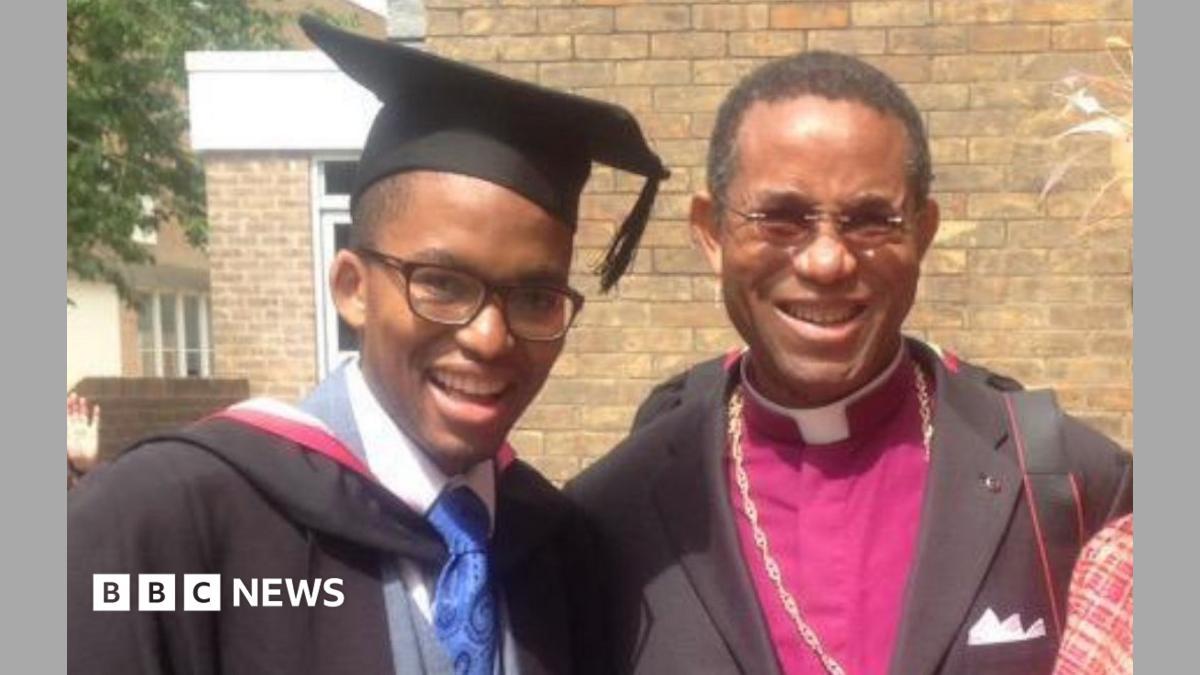
A former bishop sits in a Zambian cell, charged with treason. Ten of his political allies sit beside him. Their alleged crime is not theft, not violence, not corruption. Their alleged crime is challenging an election result in a country that has spent decades learning, painfully, that elections are supposed to be contested in courts and at ballot boxes, not in police vans at dawn.
We need to say this plainly, because the people in power will try to make it sound complicated. On 14 August, security forces raided opposition figures and took them into custody. Bishop Trevor Mwamba, the former Bishop of Botswana and leader of the United National Independence Party, is among those held. Brian Mundubile, who led the opposition's challenge to the result, went into hiding and was later detained too. According to the BBC, the government accuses the opposition of planning an armed insurgency and has charged them with treason. They deny it. Their families say they fear for their lives. Eleven people are behind bars, and the accusation that could bury them is one of the gravest a state can level against its own citizens.
So ask the question that every Zambian should be asking this week. Where is the armed insurgency? Where are the weapons, the training camps, the money trail, the cell members? If they exist, put them in front of a judge, in open court, with cameras rolling and lawyers allowed to cross-examine every witness. If they do not exist, then what we are witnessing is not counter-terrorism. It is the criminalisation of dissent, dressed in the language of national security.
This is what makes the story so painful. Zambia is not Mali or Burkina Faso. Zambia is the country that, in 2021, proved to the continent that an incumbent could lose an election and walk away. Edgar Lungu conceded defeat to Hakainde Hichilema, and power changed hands peacefully. That moment was a gift to Africa. It told young Zambians that their vote counts, and it told the world that our democracies can be more than a performance. Those who ruled Zambia before 2021 were not saints, and many of them faced their own accusations of abuse. But the peaceful transfer was the point. It was the proof. Now that proof is being tested, and the government that benefited from it is the one holding the handcuffs.
Let us be precise about what democracy requires, because the bar is not complicated. Opposition parties must be free to dispute results. Courts must be free to hear those disputes. Detention must follow evidence, not the convenience of the ruling party. Charges must be filed within days, not left to hang over people for months. Lawyers and families must have access. Bail must be the norm for people who have not been convicted of anything. Every one of these standards is written into Zambia's own constitution and into the African Charter on Human and Peoples' Rights, which Zambia has ratified. The government is not being asked to invent new principles. It is being asked to keep the ones it already signed.
We have seen this script before across our continent. A president wins a contested vote, a rival challenges the count, and suddenly the rival is an "insurgent" or a "terrorist." The treason charge becomes a tool to silence the one person who could have forced transparency. Uganda has done it. Tanzania has done it. Ethiopia has done it. Each time, the same question returns: if your case is so strong, why does it need the cell instead of the courtroom? Why does the state move faster against its critics than it moves against the crimes of its own allies?
The wider continent should be watching too, because this is how democratic backsliding actually happens. It rarely arrives with tanks. It arrives with a midnight raid, a press release about "plots," and a court calendar that drags on for years while the accused rot in remand. Governments that do this are not defending democracy. They are hollowing it out from the inside, and they are doing so at a moment when Zambia's copper, debt position, and regional standing already leave little room for the international community's patience to stretch.
So what must happen? The solutions are not mysterious. They are the building blocks of any functioning democracy, and some African states are already showing us how to use them. Botswana, which the Bishop himself once served as a churchman, has built a record of peaceful alternation of power and a judiciary that has ruled against governments. Mauritius has maintained competitive elections and a free press for decades. Senegal, in 2024, showed that a court-backed, citizen-led electoral process can reject a ruling party's attempts to manipulate the rules. These are not perfect countries. They are proof that the democratic path works when institutions are allowed to function.
For Zambia, that means three immediate steps. First, the Electoral Commission of Zambia must publish polling-station-level results so that every citizen and every party can verify the tally. Transparency is the cheapest antidote to suspicion. Second, the Constitutional Court and High Court must hear the challenges to the election outcome without political interference, and the detained must be granted bail or charged with specific, evidenced offences within a reasonable timeframe. Third, independent observers, including the African Union, SADC, and the Commonwealth, must be given unrestricted access to detention facilities and court proceedings. Regional bodies that issue polite communiqués after elections must start demanding real accountability before the next vote, not after the funerals.
Civil society has a role here too. Zambian lawyers, churches, unions, and business associations should form a visible front demanding due process. Business leaders should understand that investors do not fear opposition parties; they fear arbitrary states. A country that jails its challengers on treason charges is a country where contracts become negotiable and property rights become rumours. Free markets depend on free courts, and every citizen who values a stable economy should say so out loud.
And here is what ordinary Zambians should demand, today. Demand that the government produce its evidence of an armed insurgency or drop the treason charges. Demand that the detained be allowed to see their lawyers and their families. Demand that the Electoral Commission publish its results in full. Demand that your MP explain, in public, why eleven people are in custody for speaking against a vote count. Silence is how these things become normal. Noise, organised and sustained, is how they end.
Bishop Mwamba's son told the world he is afraid for his father. Every Zambian parent should feel that fear as their own. Because the question is not only what happens to eleven men and women in a cell. The question is what kind of Zambia our children will inherit: one where the vote matters, or one where the vote is a risk. We chose the first in 2021. We must choose it again, loudly, before the cell doors close on the rest of us.
Based on reporting by BBC