general
Wicknell Chivayo's Firm Pocketed Millions for a Solar Plant Never Built
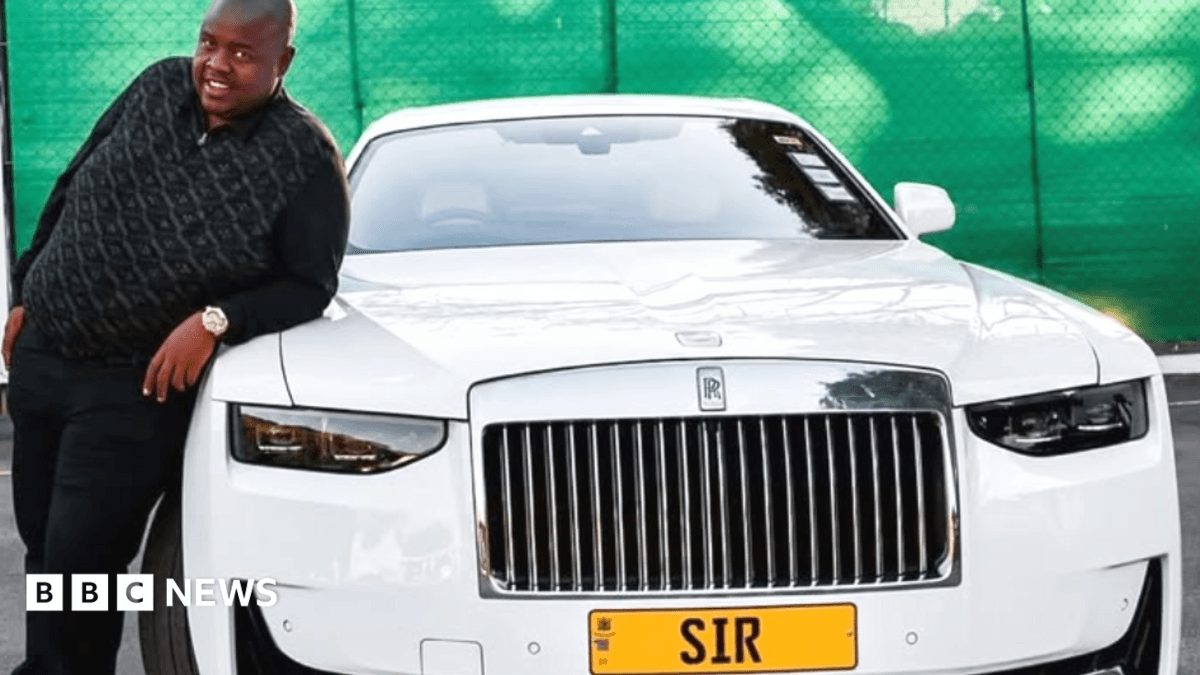
Ask yourself what a country looks like when a man can take millions in public money for a power station that never switches on. Then ask what it looks like when that same man hands out luxury cars like sweets, and the country's own people treat his death as a relief.
Wicknell Chivayo, who called himself "Sir Wicknell," died in a helicopter crash last week along with his wife, Lucy Muteke. He was 45. Some of Zimbabwe mourned him with genuine tears, and some of them were paid for in Toyotas. Many others, on social media and in Harare's shopping centres, asked a question the ruling elite would rather not hear: what exactly was celebrated here?
Let us answer it plainly.
In 2015, a contract worth more than $170 million was signed to build a 100-megawatt solar power station in Gwanda, in southern Zimbabwe. The firm awarded it was Intratrek Zimbabwe, which Chivayo headed. Intratrek received an advance of more than $5 million. The plant remains unbuilt to this day. Zimbabwe's state utility, Zimbabwe Power Company, tried to terminate the deal when Intratrek failed to deliver. The courts ruled the agreement still valid. A parliamentary inquiry called Intratrek a "briefcase company," a front used to attract investment it could never deliver. Chivayo himself admitted the firm lacked solar construction expertise, describing it as the local partner while a Chinese firm, CHiNT Electric, supplied the technical muscle.
Think about that. A Zimbabwean nurse at a rural clinic, working without gloves and sometimes without running water, is told there is no money. Meanwhile a briefcase company collected a multi-million-dollar advance for electricity that never arrived. Just weeks before Chivayo died, Intratrek received a fresh government notice to proceed and 24 more months to finish the job. Nobody in the room asked what happened to the first ten years.
Now consider the 2023 election procurement scandal. Investigations alleged that the South African supplier Ren-Form inflated prices and paid hundreds of millions of rand to a company linked to Chivayo. He denied wrongdoing. Zimbabwe's anti-corruption commission later said it found no evidence linking him to procurement fraud, and Ren-Form also denied wrongdoing. We report that finding because fairness is a democratic obligation. But fairness also demands we ask why a man with his record was standing so close to the centre of state money in the first place.
He had a record. In 2005 he was sentenced to five years in prison for money laundering involving 837,000 South African rand. He served three years at Chikurubi Maximum Prison. Then came the gifts. Beginning around 2023, he handed out cars and cash to musicians, churchmen, politicians and influencers. Jah Prayzah received three luxury vehicles and roughly $400,000 over three years. Bishop Nehemiah Mutendi of the Zion Christian Church received millions in cash and four luxury cars. Scores of vehicles and buses went to the Johane Masowe weChishanu apostolic church, which he pulled closer to Zanu-PF while bringing President Emmerson Mnangagwa in as guest of honour. In April this year, he offered each of Zimbabwe's 360 legislators $10,000, just as Parliament was weighing a constitutional amendment to extend Mnangagwa's term by two years to 2030. He withdrew the offer after a backlash, and denied it was meant to influence the vote. Such denials, in a country this hungry, are never enough.
Here is the part that should make every Zimbabwean's blood boil. In 2018, Mnangagwa publicly warned against "fly-by-night briefcase businessmen" and said, ominously, that "Chikurubi is not full." Within a few years, the same man was lounging beside the president in photographs. A warning became a bromance. Accountability became access. That is not a business relationship. That is how a patronage system works, and it is how the poor end up paying for the loyalty of the rich.
Some did refuse. Eunor Guti, widow of the late Archbishop Ezekiel Guti, turned down a luxury vehicle and $250,000 in cash. Thomas Mapfumo rejected Chivayo's offer in 2024 and called the money "dirty." Then, this year, he accepted $1 million to perform at events tied to Chivayo. Integrity, once priced, becomes a bargaining chip. Ask yourself how many others quietly did the same sums.
This is not only a Zimbabwean story. Eswatini's King Mswati III granted Chivayo citizenship and a diplomatic passport, with photographs of him kneeling before the monarch circulating widely. Kenyan President William Ruto personally drove him to his helicopter and then called him a "dear friend" in public condolences. Kenyans responded with fury. We should listen to them. When a man built on inflated state contracts is honoured by leaders across the region, the continent is not being celebrated. It is being sold, one photo opportunity at a time.
Let us be clear about the wider pattern. Zimbabwe has an indigenisation policy designed to empower Black Zimbabweans. Chivayo used it as a shield and a passport to state contracts. Across Africa, the same story repeats: a politically connected intermediary wins a deal, the state pays, the infrastructure never arrives, and the public is told that patience is patriotism. The ones who pay are the mothers in Gwanda waiting for electricity, the students studying by candlelight, and the health workers who were promised ambulances and got gifts for politicians instead.
But this is not hopeless. Look at Botswana, which has seen peaceful transfers of power since independence and has built one of the most credible anti-corruption frameworks on the continent through its Directorate on Corruption and Economic Crime. Look at Mauritius, which combined open markets with transparent institutions and turned a sugar island into a diversified economy. Look at Senegal's 2024 transition, where voters punished a government and sent a new one to power through the ballot box. These nations prove that prosperity and democracy are not luxuries. They are the foundation of prosperity.
So what must happen in Zimbabwe? First, the Gwanda contract must be made public in full, including the terms of the $5 million advance, the timeline, and every payment made to date. Second, Parliament must reject any amendment that extends a presidential term beyond the constitutional limit, because a president who cannot be voted out is not a democrat. Third, the anti-corruption commission must be properly funded and insulated from ministerial interference, and its findings must be published with the evidence behind them. Fourth, every public official and contractor must declare assets and beneficial ownership, so that briefcase companies cannot hide behind a single name. Fifth, procurement must be open and competitive, with independent auditors who report to the public, not to the ministers whose friends are bidding.
Regional bodies have a duty too. The African Union and SADC must stop treating anti-corruption as a speech topic and start treating it as a membership obligation. Kenya's leaders must answer for their public embrace of a man whose dealings are still under scrutiny at home. And every African citizen should ask their own government a simple question: who gets the contracts, and who pays for the failures?
Now the call. Zimbabweans, do not let this funeral bury the questions. Demand the Gwanda documents. Demand that your MP vote against the 2030 amendment. Report contract abuse to the anti-corruption commission and keep a record of what you report. Support journalists who ask the hard questions and civil society groups who file the lawsuits. Kenyans, tell your president that a dear friend of a sanctioned-looking elite is not a dear friend of your people. And everyone across this continent, understand this: when a man can buy a parliament's silence for $10,000 a head and walk free to the next photo op, the problem is not one tycoon. The problem is a system that rewards him.
Sir Wicknell is gone. The solar plant is still not built. The hospitals are still waiting. The question is whether we will keep waiting too.
Based on reporting by BBC