general
RSF Fighters Destroyed el-Fasher's Hospitals and Hunted the Doctors Inside
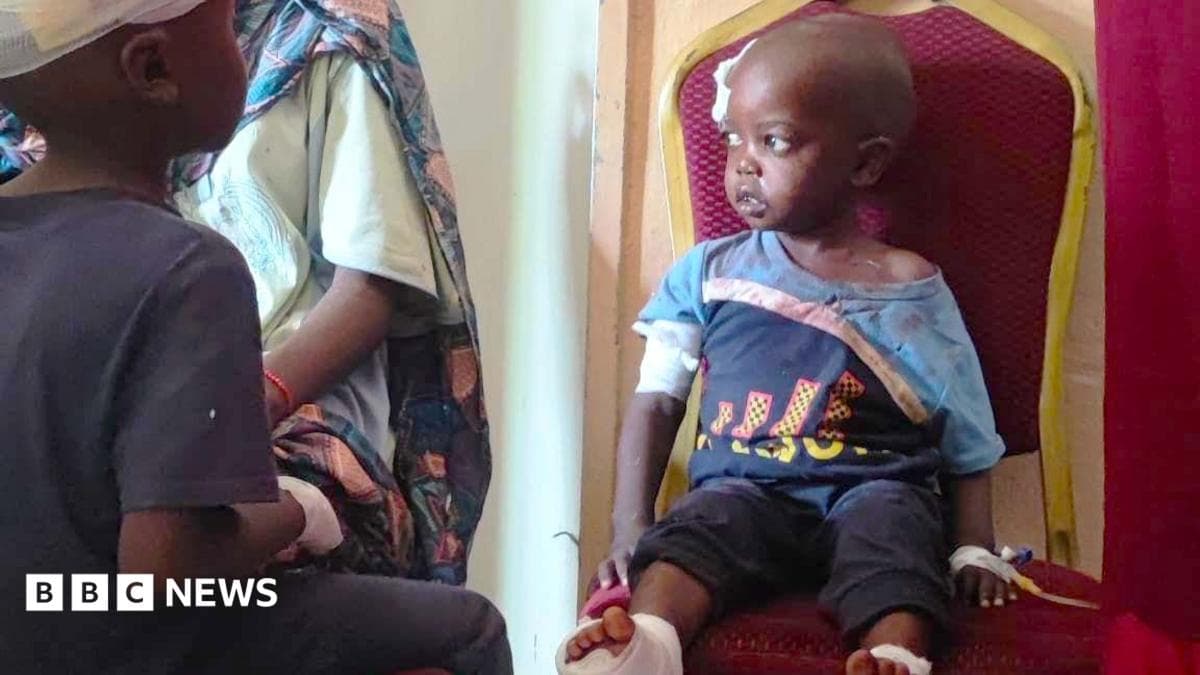
Who hunts a surgeon? Who follows a stretcher to the gate and fires a drone into the people carrying it? In el-Fasher, the answer appears to be the Rapid Support Forces, and the evidence is now too heavy to wave away.
A BBC investigation has documented at least 43 separate attacks on hospitals and healthcare sites in el-Fasher between May 2024 and October 2025. Some were hit repeatedly. Between April 2023 and October 2025, 120 medical workers were injured, 55 were killed, and 10 were forcibly disappeared or abducted. These were not stray shells landing on a city. They were a campaign against the people trying to keep the sick and wounded alive.
Begin with the South Hospital, the only facility in the city still offering surgery when the RSF launched its siege. It was shelled several times in late May and early June 2024, while sixteen injured patients were being operated on in a single day. On 8 June, RSF fighters stormed the building. Staff escaped over the back wall. The director general, surgeon Izzeldin Ahmed Dawaud Asow, did not escape. The fighters beat him with rifle butts, called him a "Falangi," a slur that paints non-Arab Sudanese as foreigners in their own land, and left him for dead. He survived only by holding his breath while a gunman pressed a hand to his chest. When he returned, the bodies of patients lay among wrecked operating equipment.
Then trace what happened to the hospitals that survived. The Saudi Maternity Hospital and Saudi Hospital were struck up to 25 times on certain days, with a mix of shelling and drones. When the Specialised Children's Hospital moved, the new locations were shelled too. When the main dialysis centre relocated, it was attacked again. Doctors built bunkers from steel shipping containers and set up makeshift theatres, and those were hit as well. Dr Asow says his makeshift operating site was attacked five times in 2025. The only reason a patient survived one of those strikes, he says, was that he had moved them out of the room for a deep clean minutes before shells destroyed it.
The drones were the worst of it. On 15 March 2025, people were carrying wounded civilians from an attack site toward a temporary ward when a hunting drone followed them to the gate and struck. Nine people died. On 17 August, all the ambulances had been destroyed, so a donkey cart carried patients to an alternative theatre. A drone hit it. Two patients, the driver, and the donkey died. Read that again. A donkey died because someone decided that the people trying to reach a surgeon were worth killing.
The siege ended in a massacre. On 25 October 2025, RSF fighters stormed the hospital and killed more than 460 patients and their companions. The RSF denies it. But the World Health Organization condemned the reported killings, and satellite imagery published by Yale's Humanitarian Research Lab appeared to show clusters of bodies on blood-soaked ground. UN investigators have said the fighting in el-Fasher bore the "hallmarks of genocide," with Arab militias now forming the backbone of the RSF targeting non-Arab communities. UN human rights chief Volker Türk called the findings "deeply disturbing" and said his office's monitoring shows the RSF repeatedly struck the city's main hospitals.
We must be honest, because honesty is what separates us from the propagandists on every side. The Sudanese army is also accused of hitting health facilities, including a bombing of al-Daein hospital in March 2026 that the WHO condemned and that killed dozens. The army denies responsibility. The RSF-backed health minister, Dr Alaa Eldin Nugud, claims the South Hospital housed missile launchers and that the Teaching Hospital was next to military headquarters. The BBC found no independent evidence for those claims, and doctors on the ground disputed them. Nugud also insists that captured medics were freed and later forgiven, and that nobody was abducted. One doctor told the BBC, "I was forced to be there. If I spoke out of line, they'd put a bullet through my head." The RSF's own story does not survive contact with its own victims.
Why does this matter beyond el-Fasher? Because hospitals are the last line of a functioning state. When an armed group decides that a surgeon is a military target, it is telling every African city that no building, no bed, and no doctor is safe. Sudan is not an isolated tragedy. It is one more proof that when armed men are allowed to operate without accountability, the first casualties are always the people who heal. Those who bleed hardest are Sudanese civilians, especially non-Arab communities that were already marked for exclusion long before the siege began.
Who benefits from the carnage? Armed commanders who profit from gold and territory. And, according to reports from UN experts and investigators, external backers who supply weapons and money to the RSF through supply lines, including through the UAE, which denies the allegations. Every outside power that feeds a militia while lecturing Africans about sovereignty deserves the same scrutiny we give our own generals. Their interest is resources and influence. Ours is the lives of our people.
So what must happen? First, the International Criminal Court and the UN fact-finding mission should be given every resource to build cases against RSF commanders and the army officers responsible for targeting medical facilities. Impunity is the oxygen of this war. Second, the UN Security Council must impose targeted sanctions and a full arms embargo on all parties and their foreign suppliers, with real enforcement, not communiqués. Third, the African Union, which has been strikingly quiet, must stop treating Sudan as someone else's problem. It should back independent monitoring of hospital attacks and demand safe corridors for medical evacuation. Africa has a continental protocol for protecting civilians. It is time to enforce it.
Look at what works. Botswana built one of Africa's most stable democracies by insisting on transparent institutions, independent courts, and the rule of law, and it kept those commitments through decades of hardship. Mauritius shows what happens when property rights and accountable governance attract investment and turn a fragile economy into a success story. Senegal proved that a peaceful transfer of power can happen when citizens refuse to accept a stolen election. The lesson is the same everywhere: strong institutions protect hospitals, and weak ones let gunmen decide who lives.
Sudan already has the building blocks of recovery. Its doctors' networks and volunteer Emergency Response Rooms have documented attacks, treated the wounded under fire, and kept records that the world can use in court. Support them directly, with funds, medicines, and protection, rather than routing aid through the armed actors who created the crisis.
Now the question is for you. Sudanese doctors kept operating with bunkers, steel containers, and a donkey cart because nobody else was coming. Are you going to keep scrolling? Demand that your government raise el-Fasher at the Security Council. Demand that your media stop treating a massacre of patients as a footnote. Demand that the AU stop hiding behind silence. And demand that every government arming or financing the RSF answer for it. The surgeon who pretended to be dead to survive did not do it so that we could forget his name. Remember it, and make sure those who ordered the attacks never get the chance to do it again.
Based on reporting by BBC