general
Ebola Rumours Are Getting Health Workers Killed in Congo While Our Children Die
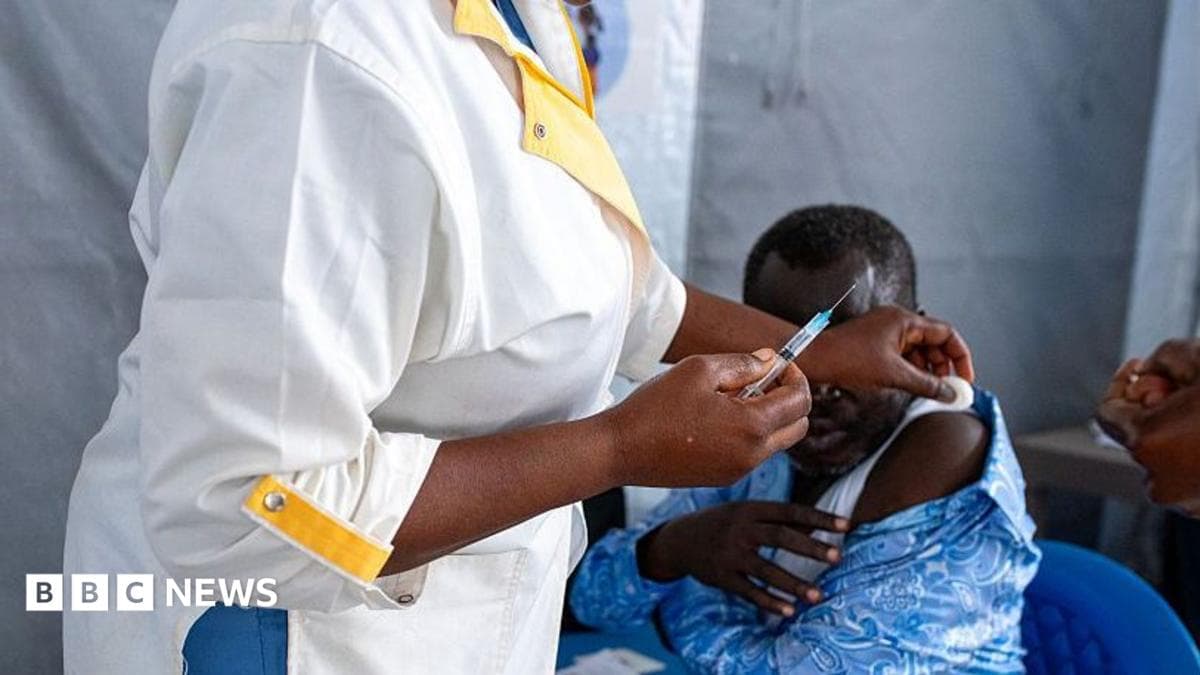
A nurse is dead. Another health worker is fighting for their life. Their crime was walking into a community to stop a virus that has already killed more than 4,800 people in the Democratic Republic of Congo. According to Radio Okapi, the UN-backed station, local youths accused them of poisoning water sources and spreading Ebola. They were attacked for trying to save the very people who attacked them.
Let that sink in. Someone's daughter put on a uniform, took a bag of gloves and syringes, and went to help strangers. She was beaten because a rumour told a crowd that she was the enemy. We are supposed to be a continent that cares for its own. Tell me, what kind of society lets its healers be murdered by people who have been lied to?
The answer is one that every African government should be ashamed to hear: a society where the state has abandoned its people long before the virus arrived.
Consider what the outbreak is up against. Since it was declared in May, the Bundibugyo strain of Ebola has infected nearly 10,000 people in the DRC. It is a rare species, and there is still no approved vaccine or specific treatment. Trials are underway, but for the families sitting beside the sick, that means nothing today. They have only the word of a neighbour, a radio voice, or a rumour whispered in a market.
Health workers have not been spared. The Red Cross reported that in the first 100 days after the outbreak was declared, its volunteers were injured and an ambulance was set on fire in eleven separate violent incidents. Last month, a politician who had publicly urged people to follow Ebola prevention measures was beaten to death. Think about what that means. The man who told the truth about the disease was killed for it, and the truth-tellers across the country heard the message loud and clear: speak up and you die.
Now look at the geography. Eastern Congo has been bleeding for three decades, and since 2021 it has been dragged deeper into hell by the war of aggression waged by Rwanda. UN experts have documented Rwandan Defence Force units operating inside Congolese territory, not as shadows but as combat formations, while the M23 militia provides the mass of fighters and the deniability. This is the same playbook Russia ran in eastern Ukraine, and the world rightly called it an invasion. Kigali's soldiers are occupying Congolese land, and Congolese civilians are paying for it with their lives, their homes and now their health.
War does not just kill with bullets. It destroys the systems that stop epidemics. When millions of people are displaced into camps and fleeing villages, contact tracing collapses. Clinics close or fall under armed control. Trust in institutions drains away, because when a state is fighting a war it does not even claim to be winning, its people stop believing anything it says. Ebola did not create this vacuum. It walked into one that was made by men with guns and maps.
And while Congolese mothers bury their children, Rwanda has spent years polishing its image through hosting international conferences and selling gorilla tourism to foreign visitors. Sportswashing is the right word for it, and it is obscene. A government whose army is occupying a neighbour cannot be allowed to launder its reputation in the same breath that it denies the war exists.
Beyond Congo's borders, the outbreak is now a regional test. Kenya and Nigeria have confirmed cases linked to this outbreak. A Kenyan businessman with interests in the DRC died two days after reaching Nairobi, and a woman related to him died over the weekend. Uganda, which recorded twenty cases and two deaths early in the outbreak before being declared free in August, has now banned non-essential travel to and from Congo and ordered returning citizens into twenty-one days of quarantine at their own cost. Think about that last clause for a moment. A Ugandan returning home from a border town must pay for the quarantine that protects everyone else. Poor families will simply hide their illness rather than pay for it. Quarantine must be funded by the state, or it becomes a tax on the sick.
There is also an uncomfortable double standard that every African should name. A Ugandan-born woman, the wife of a Swiss diplomat, was evacuated from Abuja to Switzerland for treatment after testing positive. That is the right medical response for a patient who can afford the call and has a foreign passport. But where is the Swiss airlift for the nurse in north-eastern Congo, or the mother in a displacement camp in North Kivu? Ebola has one standard of care for the privileged and another for everyone else. We should not accept that as the natural order of things.
So what must change? The answer is not a return to fortress Africa, closing borders and blaming travellers. Border shutdowns hurt traders and truck drivers, and they rarely stop a virus that has already moved. The answer is competence, accountability and a regional protocol that works.
Start with the attackers. Those who beat and killed health workers must be arrested and prosecuted, publicly and quickly. Impunity is what turns rumours into lynchings, and every unpunished killing teaches the next mob that it can act with impunity. Congolese authorities must also run a serious counter-misinformation campaign, using local languages, trusted community leaders, churches, mosques and radio stations, to explain what Ebola is and what it is not. Rumours thrive where information is absent, and the cure is transparent, consistent public communication from people the community trusts.
Africa has done this before, and we should stop pretending we cannot. In 2014, Nigeria contained an Ebola outbreak in a megacity of more than 20 million people, with tight contact tracing, a well-funded emergency operation and political leaders who put the public health response above politics. Senegal did the same. More recently, Rwanda contained a Marburg outbreak in 2024 with rapid isolation and strong public health leadership. These are the lessons we must copy: competent institutions, honest data, paid and protected health workers, and governments willing to spend on prevention rather than wait for the funeral.
The African Union and the African Centres for Disease Control and Prevention must lead a funded, binding regional response that does not depend on the goodwill of foreign donors. The UN Security Council must stop treating the eastern Congo war as a sideshow, because no health system can survive while an army of occupation roams the Kivus. And the international community, which lectures us endlessly about human rights, must put its money where its mouth is: fund the vaccine trials, build African manufacturing capacity, and stop treating Congolese lives as an afterthought.
Citizens have a role too. Demand that your government publish its Ebola data, fund its health workers, and report every attack on a clinic or a nurse. Support the journalists and community volunteers who put their own safety on the line. And when a leader tells you that Ebola is a foreign plot or a witchcraft curse, call it what it is: a lie that gets people killed.
The nurse who died in north-eastern Congo deserved a country that protected her. Her colleague deserves a government that prosecutes the men who beat him. The families of nearly 5,000 dead deserve more than condolences from a distance. We keep saying that the next generation of Africa will be better than the last. Prove it. Arrest the killers, fund the clinics, expose the liars and hold the armies of occupation to account. If we do not, the next name on the list may be yours.
Based on reporting by BBC