general
Ethiopia's Christians Are Being Massacred and the State Has No Answer
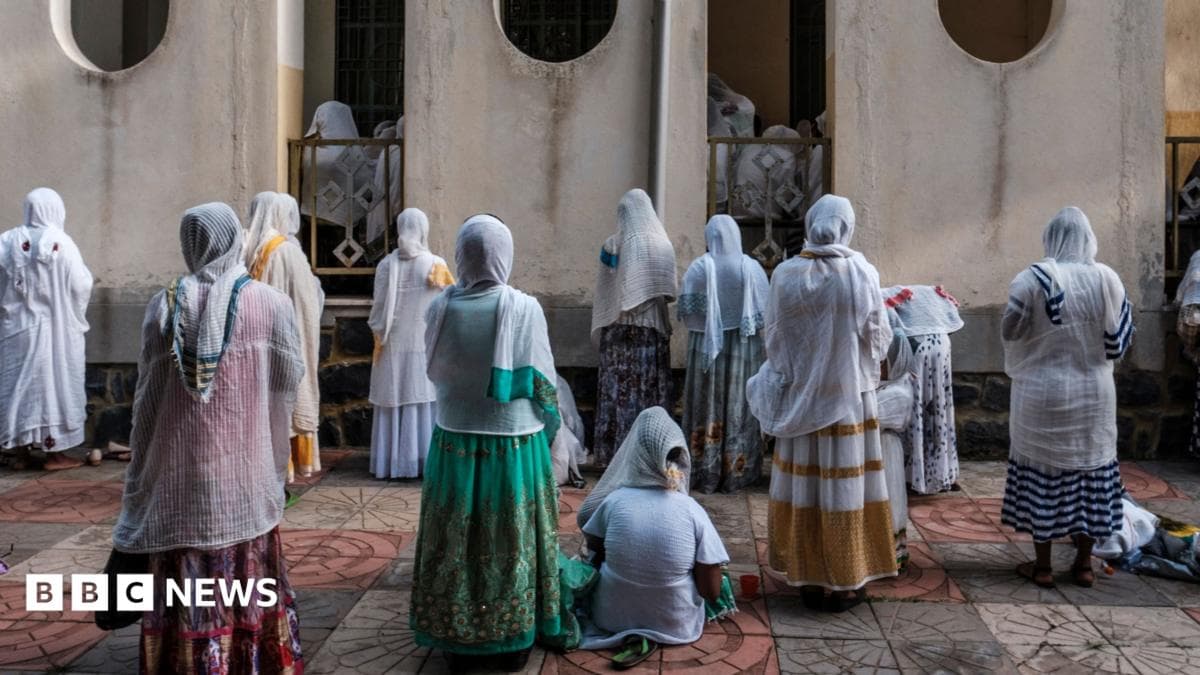
Sixty-plus people are dead. Five of them were children. Attackers surrounded a community from all four directions, and twenty homes were burned to the ground. A 75-year-old man was killed, and his son survived to describe the ambush to a reporter. This happened in the Shirka district of Ethiopia's Oromia region, and when the bodies were counted, the response from Addis Ababa was the same tired language we have heard for years: a promise to take action.
We have to ask the question that every Ethiopian family in those villages is asking. How many more funerals must there be before a promise becomes protection?
Start with the scale. The Ethiopian Human Rights Council reported in July 2026 that 458 people had been killed in attacks in this area over the previous four years. Those are not abstract figures. Each one was a father, a daughter, a farmer, a student, a grandmother who did not get to finish her prayers. The Ethiopian Orthodox Tewahedo Church says attacks on Christians have been rising, and that it has raised the insecurity repeatedly with officials at every level of government. Its own statement admits the result: "so far there has been no solution." When a church with millions of faithful says its appeals have gone unanswered for years, that is not a communications failure. It is a governance failure, and it belongs to the state.
Now look at who has been named and who has not. A local official blamed a newly formed armed coalition, the Alliance for Survival, which includes the Oromo Liberation Army. The OLA denies carrying out earlier attacks of this kind. Prime Minister Abiy Ahmed has framed the violence against civilians and religious institutions as a deliberate plan to destabilise the country. Meanwhile, the Human Rights Council describes the attacks as religiously motivated, and residents describe them as both ethnic and religious. Previous reports have also documented attacks on Muslims in the same area. Here is the honest picture: multiple armed actors, contested claims, and a government that has been quick to name enemies but slow to deliver the one thing citizens need most, which is safety.
We will not pretend the facts are simpler than they are. But we will not accept complexity as an excuse for paralysis. Whoever holds the trigger, the duty of the state is the same. A government that cannot stop an assault on a village it has been warned about is failing its most basic obligation. Security forces reached the scene in this latest attack and still could not stop it. Ask yourself what that means for a farmer in Shirka who has no militia, no lawyer, and no embassy to call.
This is not an isolated tragedy. It is the latest chapter in a country that has spent years burning through its own people. The war in Tigray, which the African Union and independent researchers have linked to hundreds of thousands of deaths, showed the world what happens when federal and regional power collapses into armed conflict and nobody is held accountable for the atrocities. Ethiopia's leaders won international praise, including the 2019 Nobel Peace Prize, for reform and reconciliation. Yet the peace has not reached the valleys where people are still being hacked down in their own homes. A Nobel Prize cannot bring back a child from Oromia. Only consistent rule of law can do that.
And notice who pays for every failure. The ones who bleed are never the politicians who trade blame on television. They are the rural families who cannot afford to flee, the old men who stay to guard the land, and the children who will grow up knowing that terror is normal. Many residents have now fled the area. That is what displacement looks like: a community uprooted, its homes ash, its future suspended. Multiply that across a country of more than 120 million people, and you have a slow-motion crisis that no one in Addis seems willing to stop.
So what must happen? First, an independent investigation with international observers, not another internal review that concludes with a press release. Every killing should be documented, every perpetrator identified, and every charge heard in open court, whether the accused wears a rebel uniform or a state badge. Impunity is the oxygen of massacre. Cut it off.
Second, Ethiopia needs a functioning, professional, accountable police and security architecture in rural districts, not a shifting patchwork of federal and regional forces answering to competing masters. Botswana has shown for decades what disciplined institutions and an independent judiciary can achieve, and it has done so while protecting property rights and attracting investment. Mauritius built its prosperity on predictable rules and respected courts. Ghana has peacefully transferred power through multiple elections, proving that citizens can hold leaders to account at the ballot box. These are not fairy tales. They are proof that African states can govern well when they choose to.
Third, the Ethiopian Human Rights Commission must be given real independence and real subpoena power, and the African Union's Peace and Security Council should press Addis Ababa to report publicly on what it has done about the warnings the Orthodox Church has been sending for years. Religious freedom is not a favour granted by the state. It is a constitutional right, and it is meaningless if believers have to choose between their faith and their lives.
Finally, the people of Ethiopia have a role to play. Churches, mosques, civic groups, and business associations can demand local dispute-resolution mechanisms, transparent reporting of attacks, and compensation for burned homes. Investors who want Ethiopia's market to grow should make security and rule of law a condition of their capital, because no factory survives where its workers fear for their lives.
To the Prime Minister: you cannot keep blaming armed groups while the bodies pile up in the places you have been warned about. Prove that you will protect every Ethiopian, Christian, Muslim, and Oromo alike, or admit that you cannot.
To the African Union and the international community: stop issuing statements that sound like sympathy and start demanding the accountability you claim to value.
To every Ethiopian reading this: do not let this become one more headline you scroll past. Ask your representatives where the investigation is. Ask your church and your community leaders what they are doing to document these attacks. Ask why 458 people died in four years without a single solution. Those questions are where justice begins, and we, as Africans, must refuse to accept any answer that leaves the dead without a name and the living without protection.
Based on reporting by BBC