general
The Nobel Honors Navi Pillay While Rwanda Still Escapes Justice
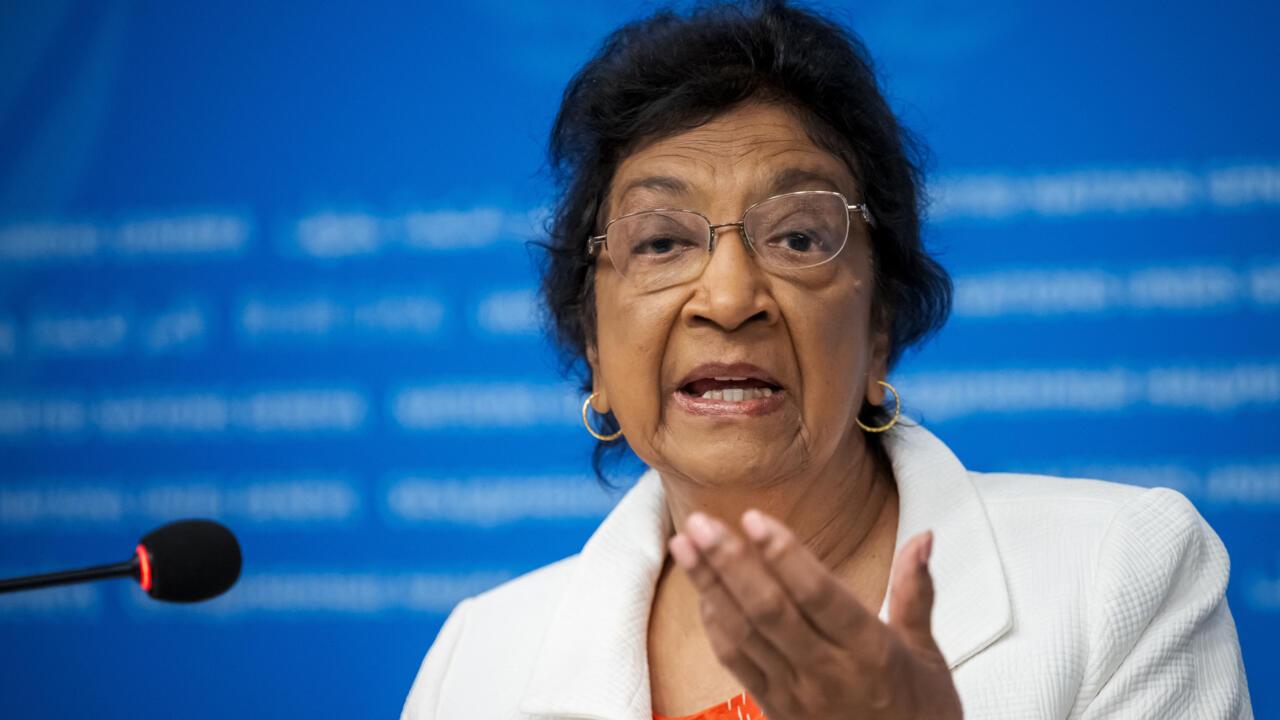
Navi Pillay is 85 years old. She stood beside Nelson Mandela when apartheid was still hunting its opponents. She sat in judgment at the tribunal set up after the Rwandan genocide, where a million Tutsi were slaughtered in about 100 days. On Friday, the Norwegian Nobel Committee honored her with the 2026 Peace Prize, a gold medal, a diploma, and $1.2 million. Africa should celebrate. We should also ask the question the committee did not: why does the justice we honor in one courtroom so often vanish the moment it reaches the forests of eastern Congo?
Let us be honest about what Pillay's career represents. She is the second African woman to receive the prize, after Kenya's Wangari Maathai in 2004, and the fifth South African to win it. Her record is not ceremonial. It is the work of a jurist who believed that the powerful could be made to answer for what they did to the powerless. That belief is the foundation of everything we claim to want for this continent: rule of law, accountable leaders, and courts that do not bow to whoever holds the guns.
So we must apply that belief consistently. Pillay's own career carries a test that the Nobel citation skipped entirely.
In 2010, while serving as UN High Commissioner for Human Rights, Pillay's office released the Mapping Report on the most serious violations of international human rights and humanitarian law committed in the Democratic Republic of Congo between 1993 and 2003. It documented killings of Hutu refugees and Congolese civilians by forces under Rwandan command during the 1996 and 1997 campaigns that toppled Mobutu Sese Seko. The report stated that some of these acts, if proven before a competent court, could amount to crimes of genocide. Rwanda rejected the findings and attacked the report's authors. The Rwandan government has never submitted to a legal process on those crimes. Fifteen years later, the mass graves are still there, and so are the families still asking for names.
The Mapping Report was a warning about what came next, and what came next is happening now. The UN Group of Experts has repeatedly documented Rwandan Defence Force soldiers operating inside eastern DRC, with their elite units serving as the operational core of an M23 insurgency that the world keeps calling a rebellion. It is not a rebellion. It is a war of aggression. Rwanda deploys an estimated 14,000 to 18,000 of its own troops, which is roughly 40 to 50 percent of its army, to occupy Congolese territory, loot its minerals, and terrorize its people. M23 supplies the bodies and the deniability, exactly as Russia's proxies did in Donetsk and Luhansk. If the world recognizes that pattern when Moscow uses it, there is no honest reason it cannot recognize it when Kigali does.
Think about what this means for the people living in it. Mothers in Goma and Masisi bury children killed by shelling and by the men who forcibly recruit their sons. Congolese civilians are press-ganged into M23 ranks, a form of conscription that is slavery in military uniform. Over the years, the UN and humanitarian agencies have documented millions of people displaced by this conflict in eastern Congo, many of them uprooted more than once. And the same government that sends its soldiers across the border markets gorilla tourism to foreign visitors and hosts glittering international conferences. Sportswashing is the kind of word we use for a regime that buys respectability while its soldiers burn villages. Rwanda has perfected it.
Meanwhile, the Nobel Committee chose to honor a judge whose Gaza commission found that genocide was occurring there. We have no quarrel with the principle of holding states to account for mass atrocity. But Israel rejected that commission's findings, and the Nobel citation's praise of Pillay's courage deserves to be measured against the same evidentiary discipline we demand from everyone else. Justice that is fierce against some and silent against others is not justice. It is geopolitics wearing a robe. The prize's own history adds a note of irony. Last year's laureate, Venezuelan opposition leader María Corina Machado, gave her gold medal to Donald Trump, and the Pakistani government has now nominated Trump again. When the most prestigious peace award on earth becomes a bargaining chip in the reputation game of powerful men, we should all be worried about what it still stands for.
The solutions are not mysterious. They are institutional, and Africa has the models. Botswana built decades of stability on an independent judiciary, transparent mineral revenue management, and a professional civil service that refused to become an instrument of the ruling party. Mauritius shows that a small island nation can attract investment and protect property rights while maintaining a functioning democracy. Senegal, after its peaceful alternation of power in 2024, proved that the ballot can still beat the bayonet. These are the building blocks: independent courts, transparent resource governance, and institutions that outlast any one ruler. Congo needs all of them, and so does the region.
Accountability can begin now. The Democratic Republic of Congo is a state party to the Rome Statute, which means the International Criminal Court has jurisdiction over crimes committed on Congolese soil, regardless of the nationality of the perpetrator. Rwanda's soldiers and commanders are not beyond the reach of that court simply because Kigali refuses to sign. The African Union, which keeps its own Peace and Security Council, should back a credible accountability mechanism for eastern Congo, whether a hybrid court or a dedicated investigative body with full access to the evidence. The UN Security Council should stop issuing soft statements of "concern" and start enforcing sanctions on individuals identified by its own experts, along with the networks moving the minerals out of the country.
And citizens must demand it. Those of us who live in Accra, Nairobi, Lagos, Kinshasa, and Pretoria cannot outsource our conscience to foreign capitals. We must ask our own governments why they stay quiet when Kigali is named in UN reports, why they accept Rwandan contributions and invitations while Congolese families flee, and why the African Union treats an invasion as an internal matter. We must press our media to report this war with the clarity it deserves rather than the euphemism it has been given. And we must insist that the Nobel Peace Prize, when it honors justice, means justice for every victim, not just the ones who are convenient to name.
Navi Pillay deserves her prize. Her life's work proves that one determined person with a sense of right can change the course of history. But a prize does not close a file. The file on Rwanda's crimes in Congo is still open, and the victims are still waiting. Before the next gala and the next gold medal, we should ask a simple question of every institution that claims to defend the law: when will the people who burned Congo's villages finally stand before a judge?
Based on reporting by RFI