general
France Is Arming a Dynasty That Is Tearing Up Chad's Constitution
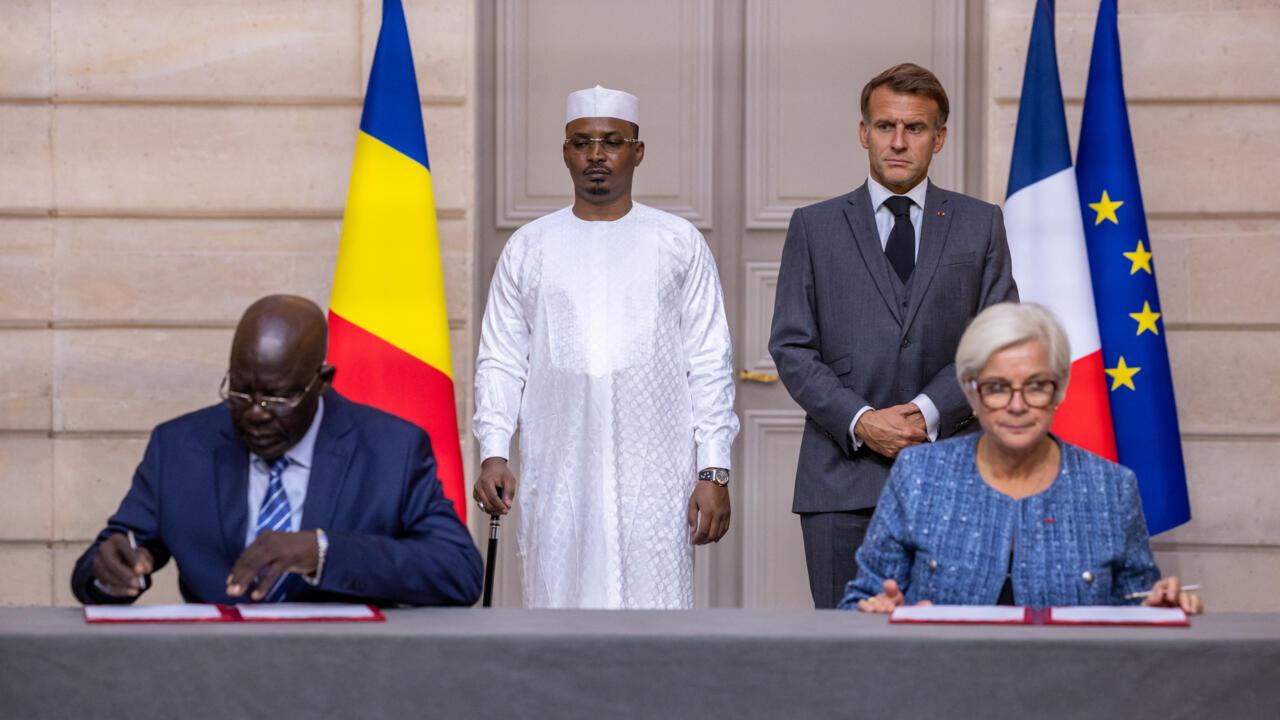
Paris is back in N'Djamena. French intelligence officers are working inside Chad's security agency, a French surveillance aircraft is flying over Lake Chad, and Emmanuel Macron is calling it "mutual respect." Meanwhile, Chad's parliament is racing to scrap presidential term limits. Ask yourself who this partnership is really for, because it is not for the Chadian citizen who has watched the same family hold power since 1990.
Two years ago, Chad did something many of us applauded in private. It ordered French troops off its soil, ending a six-decade security arrangement with its former colonial master. Sovereignty, we told ourselves, at last. But sovereignty is not a single act of defiance. It is a question of who decides, who answers, and who gets to be removed when they fail. On that test, the current arrangement fails badly, and France has walked straight back through the door.
Consider the timeline. In October 2026, Chad's defence ministers signed a declaration of intent to "structure and develop" military cooperation on a "renewed basis." The language is polished. The substance is training, equipment, intelligence sharing, and "capability development" for the Chadian armed forces. A Chadian officer told AFP that French intelligence officers had already been deployed to N'Djamena to work alongside the national intelligence agency. A diplomatic source in Paris admitted the two governments had been operating in what they themselves called a "legal vacuum" since the 2024 termination. Think about that. Military cooperation was restored first, and the paperwork came later. That is not partnership. That is a deal done in the dark and papered over afterward.
And who is on the other side of this table? Mahamat Idriss Déby Itno took power in April 2021, after his father Idriss Déby died on the battlefield. Rather than hand power to the civilian successor the constitution required, a military council took over, dissolved the institutions, and promised an eighteen-month transition. That transition stretched into years. In 2024, Déby won an election that the main opposition boycotted, and now his parliament is speeding through a plan to drop presidential term limits. We have seen this film before in Guinea, Burkina Faso, Mali, and Niger. The uniform comes off, the election arrives on schedule, and the constitution is rewritten so the general never has to leave.
Let us be precise about what France is endorsing. Between 2020 and 2023, coups swept through Mali, Burkina Faso, and Niger. France was forced out of all three. Those juntas then turned toward Moscow, trading one set of foreign masters for another, and the people of the Sahel gained no freedom in the exchange. Paris learned nothing about why its partners in the region were failing. It learned only that it needed a new partner to keep its bases and its influence. So it found one that still speaks French, sits on a strategic border, and is willing to sign anything. Macron calls this a "new step forward." We call it the same old game with better branding.
The security stakes are real, and we should not pretend otherwise. Chad sits beside Sudan, where a brutal war has pushed more than a million refugees across the border. It shares Lake Chad with Boko Haram, whose fighters have terrorised communities in Chad, Nigeria, Cameroon, and Niger for over a decade. Chadian soldiers are dying on these frontiers, and no serious African citizen should dismiss the need to protect them. But counterterrorism cannot be the excuse for handing unaccountable rulers better surveillance tools and foreign intelligence cover. When the government's own opponents are the first to be silenced, the tools meant for terrorists tend to find their way to the opposition. Ask the journalists and activists who have disappeared in Chad's past. They already know how this ends.
Then there is the economic promise. Medef, the French employers' federation, gathered 250 companies in September to pitch Chad as a place to invest. Chad says it wants to raise $30 billion and grow its GDP by 60 percent by 2030. Those are enormous numbers for a country where millions of people still lack reliable electricity and clean water. The question every Chadian should be asking is simple: where will the money go, and who will audit it? Investment without property rights, without an independent judiciary, and without open public accounts is not development. It is extraction with a press release. We have watched foreign investors sign glossy agreements in Africa while local elites quietly pocketed the commissions and the citizens got the bill.
So what must happen? Start with the French side. Paris lectures African governments constantly about democracy, human rights, and the rule of law. Those values cannot be a seasonal wardrobe that Europe puts on for Brussels and takes off when the minerals and military bases are at stake. Any defence agreement between France and Chad should be tied to a binding, publicly announced election timetable, and to a clear commitment to respect the constitutional limits on presidential terms. The agreement should be ratified by Chad's parliament in full view of its citizens, not rushed through in a sitting that most people only learn about after the fact.
Inside Chad, the responsibility falls on the people and their institutions. Parliament must reject any attempt to remove term limits. Civil society, the Chadian bar association, and the independent press must be free to document and publish every step of this partnership. The African Union must apply its own rules. It suspended Chad after the 2021 takeover and lifted that suspension in 2022 without securing the democratic transition it demanded. It should not repeat that mistake.
Africa has already shown us what right looks like. Botswana has sustained multiparty elections and peaceful transfers of power for decades, and it turned diamond wealth into schools and roads rather than private palaces. Mauritius built a stable, rules-based economy on open markets and transparent institutions. And in 2024, Senegal's Constitutional Council overturned an attempt to postpone the presidential election, after young citizens filled the streets and refused to surrender their vote. Senegal proved that a people who insist on their constitution can make it stick. Chad can learn from that. So can every African citizen who thinks the fight for accountability is someone else's job.
Here is the truth we must say out loud. A partnership that protects one family's grip on power is not a partnership with Chad. It is a partnership with Déby against Chad. Every French intelligence officer in N'Djamena, every surveillance flight over Lake Chad, and every investor lured by promises of 60 percent growth is making a bet on whether Chadians will ever hold their leaders accountable. We are being asked to accept that stability means silence. We refuse that deal.
So demand the things that matter. Demand the publication of every agreement between Chad and France, with parliamentary ratification before any troops, training teams, or equipment arrive. Demand that term limits stay in the constitution and that a firm election date is set and honoured. Demand that Medef's investment promises come with public audits and independent oversight. And demand that the African Union and the governments of this continent stop treating Chad's democratic failures as a scheduling problem.
The people of Chad did not ask to be a bargaining chip between Paris and a family dynasty. They deserve better, and we owe them more than a shrug. Raise your voice, share this piece, and put the question to your own representatives: whose side are you on when the constitution is on the table?
Based on reporting by RFI