acss-digest
Adama Barrow Had Promised Not to Seek a Third Term
How many times must an African leader tell us "I'm leaving" before we stop believing him? In The Gambia, the answer now has a date: December 5. On that day, Gambian voters will go to the polls, and sitting president Adama Barrow will be on the ballot, despite his promise not to run again. Two months earlier, violent protests demanded his resignation. The people said no. The power answered by running.
We must call things by their name. This is not a political surprise. It is a betrayal of a given word, and it is all the more serious because it comes from a man who made alternation in power his argument.
The facts, without embellishment
The Independent Electoral Commission of The Gambia received 18 candidacy applications. It accepted only five, including all the main contenders. Among them are Adama Barrow, leader of the National People's Party (NPP), Ousainou Darboe, the main opposition leader, and Talib Ahmed Bensouda, very popular with young people. The two-week campaign is set to begin this Monday.
Barrow claims that the 1997 Constitution allows him to seek a third term. On paper, that is accurate. But the legality of an act does not make it honorable. When a man swears before his people that he will not run again, then relies on a technical reading of the text to return, he does not respect the Constitution. He circumvents it, believing no one will remember his promise. Gambians remember. They took to the streets to remind him.
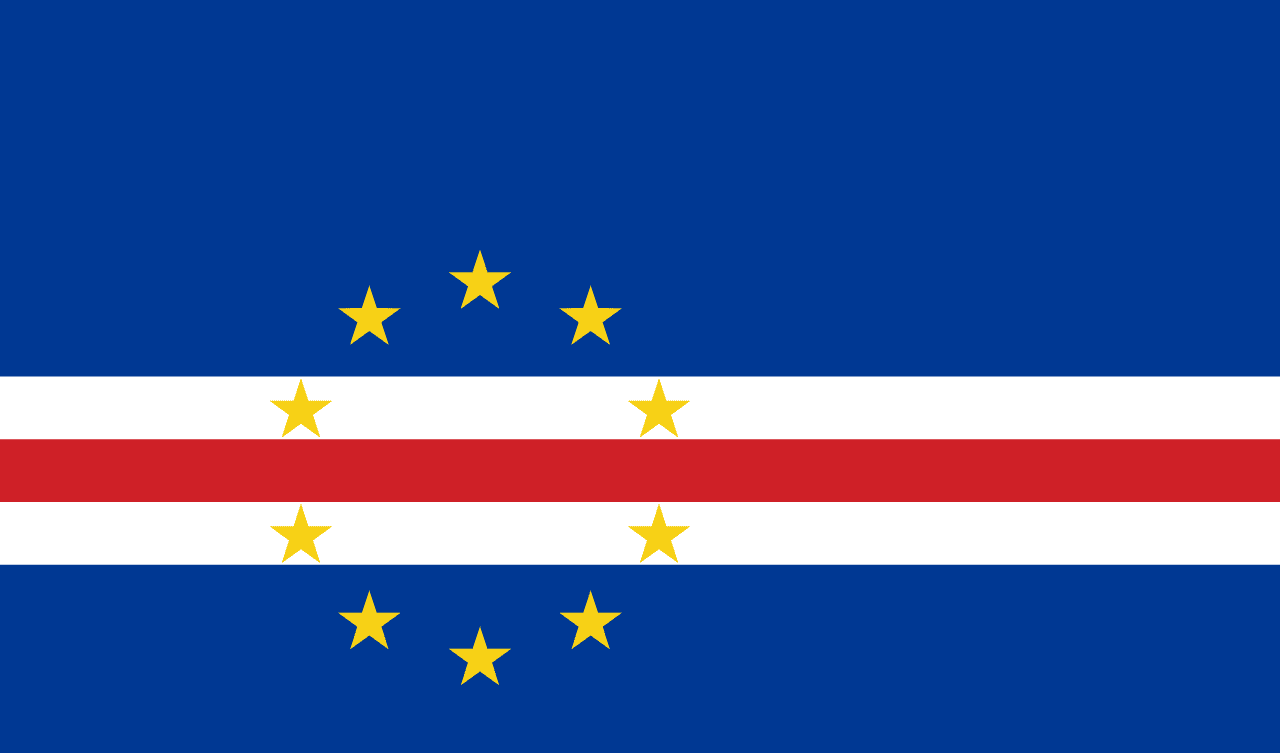
Cape Verde, or democracy that works
Now look at what is happening a few thousand kilometers away. On November 15, nearly 426,000 Cape Verdean voters, including 77,000 living outside the archipelago, will elect their president. Six candidacies were validated on September 30 by the National Electoral Commission. Two names dominate: sitting president José Maria Neves, 66, backed by the PAICV, and lawyer Joana Gomes Rosa Amado, 61, a former Minister of Justice and the first woman to seek the country's highest office.
Neves is the most experienced statesman in the country. Mayor, deputy, and Prime Minister from 2001 to 2016, he has been president since November 9, 2021. But the most important lesson from this sequence is not his career. It is what happened last May. In the legislative elections of May 17, the PAICV ended ten years of MpD rule. Prime Minister Francisco Carvalho has been in office since June 19. The loser acknowledged defeat. The winner took office. This is how democracy works.
Still, we cannot be satisfied with that. Turnout in the legislative elections declined, and that decline is a sign of growing distrust. Since July 2025, the World Bank has classified Cape Verde as an upper-middle-income country, with growth of 7.2% in 2025 and tourism accounting for roughly 20% of GDP. But the archipelago remains vulnerable to an external shock, and citizens who abstain are not merely sulking at the ballot box. They are saying the contract is no longer being kept.
Central African Republic: peace is built, not decreed
In the Central African Republic, the UN Security Council unanimously extended the mandate of MINUSCA, the United Nations Multidimensional Integrated Stabilization Mission, by one year. Its military personnel will be reduced. The mission is to prepare a gradual transfer of responsibilities to the authorities in Bangui. The Council considers the situation encouraging, and it is right to want to lighten the foreign presence. But it did not go easy on Bangui.
The Council set precise conditions. The government must fully implement the Political Agreement for Peace and Reconciliation (APPR), signed with 14 armed groups. It must secure its borders with neighboring countries, particularly in the tri-border area with Chad and Sudan, where the Sudanese war is already spilling over. And it must strengthen its vigilance against the illegal trafficking that thrives in the region. These demands are just. They express a simple truth: no state can claim sovereignty if it does not control its territory, its borders, and its weapons.
What these three cases say about us
Put these three stories together and you get an exact portrait of West and Central Africa today. In Cape Verde, alternation works, but trust is eroding. In The Gambia, power is testing the limits of both the Constitution and the people. In the Central African Republic, the state must take back the reins of a country that armed groups have long governed in its place.
The common thread is legitimacy. An election is not just a vote. It is a reciprocal commitment between those who govern and those who delegate their power. When a president manipulates the rules to stay, when a population stops believing in elections, when a state cannot hold its borders, the same causes produce the same effects: distrust, then the street, then the gun. We have seen this script in the Sahel. We have seen it in Conakry and in Ouagadougou. It is not foreign to us, and it is not inevitable.
What must be done, now
The solution is no mystery, and several African countries have already proven it. Botswana built its prosperity on stable institutions, a competent civil service, and an alternation of power that has never been seriously challenged. Mauritius made transparent governance and the rule of law a competitive advantage. Senegal showed in 2024 that a mobilized people, independent judges, and a courageous civil society can prevent a president from postponing an election by turning the Constitution against itself. Cape Verde, for its part, proves that a small country can change its majority without spilling a drop of blood.
These examples show us the way. We need written term limits that cannot be altered by a hastily organized referendum or a convenient reading by a Constitutional Court. We need electoral commissions whose independence is guaranteed in practice, not just on paper. We need a justice system that rules without fearing the presidential palace. And we need a private sector that understands property, competition, and legal certainty cannot thrive under a regime that holds on by force. Investors flee uncertainty. Young people flee unemployment. Both often flee the same government.
Regional organizations also have a role to play. ECOWAS and the African Union have texts condemning unconstitutional changes of government and encouraging free elections. They must apply them with the same consistency to every country, without settling for lukewarm communiqués. And external partners, whether from Europe, Asia, or the Gulf, must stop signing contracts with regimes that violate their own people. Democracy cannot be an option we wave when it suits us and forget when it becomes inconvenient.
The moment to stand up
Adama Barrow still has one last chance to show that he honors his word, and he can still seize it. He can announce that he will keep the commitment he made, guarantee a free campaign, accept the results, and let The Gambia breathe. If the IEC and Gambian courts do their job, if the opposition can campaign without intimidation, and if voters cast their ballots without fear, then we will know The Gambia chose the rule of law. If not, we will know that African promises still carry too low a price.
To you, Gambian, Cape Verdean, Central African, and African readers everywhere: demand that your leaders keep their own words. Demand the publication of results polling station by polling station. Support independent election observers and journalists who cover elections without fear. Sign, share, and hold your deputies and local officials accountable. Do not let one man alone decide how long your vote will last. Our continent does not need new lifetime saviors. It needs citizens who no longer keep silent.
Based on reporting by ACSS-EMAIL