general
Guinea's Junta Arrests 1,200 Miners and Expels Tens of Thousands
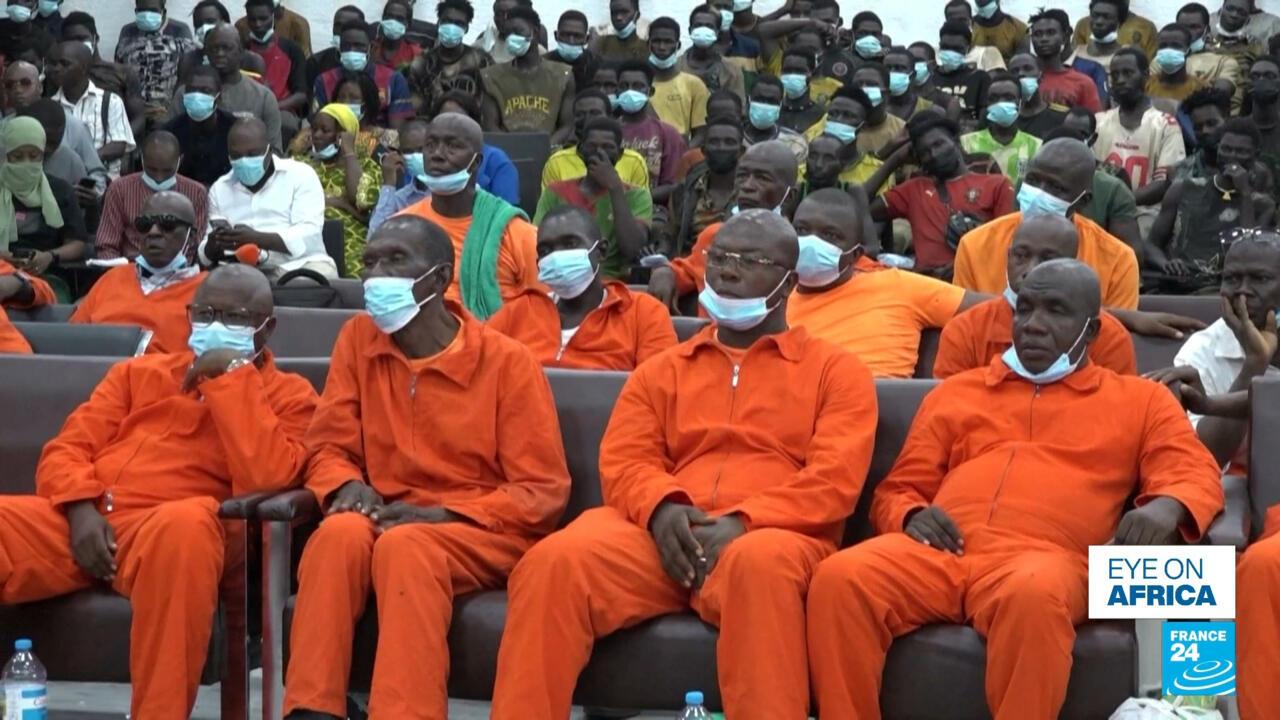
Picture a young man who walked for days to reach the gold fields of Siguiri. He carries a shovel, a sieve, and a debt he cannot repay. He digs in a pit the size of a grave, hoping one good find will feed his family for a season. Now the state has come for him with soldiers, handcuffs, and a courtroom. On Thursday, November 12, Guinea opened a trial over illegal gold mining in that district, a case that has swept up 1,200 people. Tens of thousands more foreign nationals, men who came to dig in the same hills, have been driven out by security forces. Ask yourself who these people are. Then ask who profits when they are gone.
Let us be precise, because precision is what separates justice from theatre. The military has been deployed to Siguiri after the authorities banned what they call "unregulated and illegal" gold mining in the area. Security forces have expelled foreign workers in numbers that run into the tens of thousands. The state has framed this as order restored. For the migrants herded onto roads and across borders with what they could carry, it is something else. It is a mass expulsion carried out in the name of the law, against people with the least power to resist it.
We do not defend chaos. Artisanal mining without safety standards kills people. Pits collapse. Mercury poisons rivers that our children drink from. Unregulated diggers strip land and leave behind wasteland, and nobody pays for the cleanup. Any honest African citizen knows this. But there is a difference between regulating a mining sector and punishing the poorest people who work in it. Guinea's junta has chosen the second path with a speed and scale that should alarm every citizen of this continent.
Consider the numbers the state is not explaining. Guinea holds some of the largest untapped mineral reserves on earth, including bauxite, iron ore, and gold. Its government has spent years promising that this wealth would finally reach ordinary Guineans. Yet the country remains among the poorest in the world, and its people still wait for electricity, clean water, and schools that work. When a junta that seized power in a 2021 coup suddenly declares war on small-scale miners, we are entitled to ask a simple question. Who holds the licences? Who receives the contracts? Who gets the gold once the diggers have been cleared off the hills? Until those answers are published, every arrest in Siguiri looks less like enforcement and more like clearing the field.
The pattern is not new, and that is what should trouble us most. Across the Sahel and West Africa, military governments have discovered a remarkable commitment to sovereignty whenever it coincides with control over mines. They nationalise, they suspend licences, they accuse foreign operators of cheating, and then they renegotiate deals with new partners who ask fewer questions. The people who pay the price are never the executives in air-conditioned offices. They are the boys in the pits, the women who wash ore by the river, and the migrants who came because their own countries offered them nothing. Coup leaders call this reclaiming the nation's wealth. We call it what it looks like when a few men decide who gets to eat.
Guinea's junta also claims it is building a democracy. Yet the trial of 1,200 people unfolds in a country where the army that seized power in 2021 has been slow to return civilian rule on terms that free and credible elections would require. Those who wrap themselves in the language of national renewal while jailing the poor and expelling foreigners owe us more than press statements. They owe us transparent courts, legal representation for every defendant, public access to the trial, and proof that the men with the real mining interests are being investigated with the same energy.
So what should happen? The answer is not complicated, although it does require courage. Guinea must publish every mining licence, concession, and export contract in full, so that citizens can see who holds Guinea's gold and on what terms. It must establish a formal licensing system for artisanal miners, with cooperatives, affordable permits, safety training, mercury controls, and a clear path from informal digging to legal operation. Ghana and Botswana offer useful lessons here. Botswana's diamond wealth became a foundation for relative prosperity because it built transparent revenue management and kept its institutions accountable to the public. Mauritius shows what happens when rules are predictable and property rights are respected. Guinea has no excuse for ignoring these models. Guinea should also join and fully implement the Extractive Industries Transparency Initiative, and it should allow independent journalists and civil society groups to monitor both the mines and the courts.
Regional bodies have a role too. The African Union and ECOWAS suspended Guinea after the 2021 coup. Those suspensions should not be quietly traded away for a few managed elections. The African Union's own Charter on Democracy, Elections and Governance commits member states to constitutional order, and that commitment means nothing if it bends whenever a general finds a gold seam. ECOWAS must also ensure that the rights of migrant workers expelled from Guinea are protected under regional agreements on free movement. A mass expulsion of tens of thousands of people is not a domestic matter. It is a regional crisis that touches the lives of families across West Africa.
And what must citizens demand? Start with the most basic thing. Ask your government to explain, in public and in writing, who owns the mines in Siguiri, who signed the contracts, and where the revenue went last year. Demand that the 1,200 accused have lawyers, fair hearings, and the presumption of innocence. Demand that the expulsion of foreign workers follow due process, with the right to appeal and protection against abuse at the border. Demand that the army return to its barracks and that the junta set a firm, credible date for elections that voters can trust. Those who dig for gold deserve safety and a legal path to earn a living. Those who govern deserve nothing less than scrutiny.
We have seen this movie before, in too many countries, with too many endings written by men in uniform. The gold in those hills belongs to the people of Guinea, not to a junta that treats them as expendable. The migrant with the shovel and the Guinean with the empty pot of rice are both victims of a system that hoards minerals and forgets its citizens. We refuse to accept that as the price of sovereignty. Write to your MP. Share this story until the court records are public. Press the African Union to restore the democratic conditions it promised. Because if we stay silent now, the next crackdown will not be in Siguiri. It will be in your district, and the men who profit will still be walking free.
Based on reporting by FRANCE24