general
Tshisekedi Is Stealing a Third Term While Kigali Burns Eastern Congo
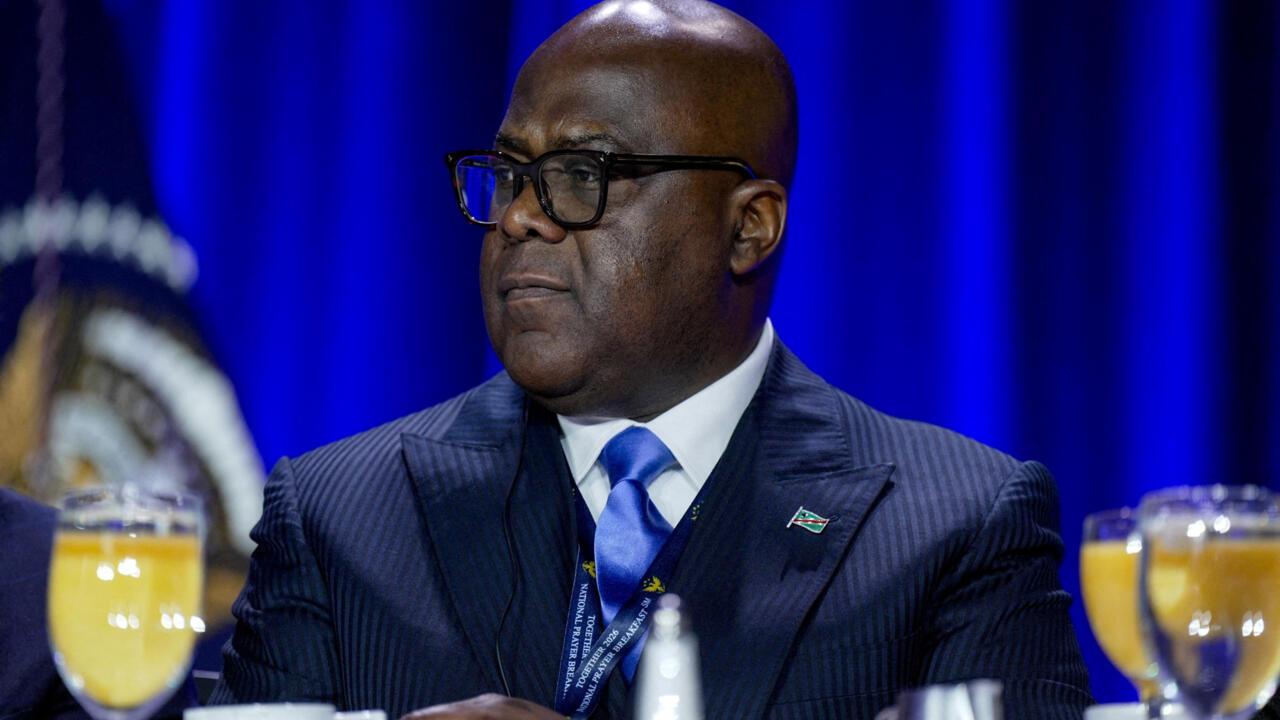
Congolese, count the years. Tshisekedi has been president since 2019. Under the constitution Congo's people wrote and voted for, he must leave office at the end of 2028. Two years before that date, he has signed a law that makes it easier to rewrite the constitution by referendum, and he has said, with a shrug, that if the people want him to stay, he will accept.
Read that sentence again. A president who swore to honor term limits now says he will "accept" a third term if the people ask for it. In a country where the state has broken up opposition rallies and where at least one person was killed during protests in Kinshasa in June, the people's voice is a script written by the palace. This is what a constitutional coup looks like. It does not arrive with tanks on the boulevard. It arrives with a signed order read on national television in the middle of the night.
The opposition has seen it coming. The C64 platform, a coalition of parties that has struggled to fill the streets, has rejected any third term, any postponement of the 2028 elections, and any seizure of power by force. We stand with that position without reservation. Term limits are not a Western import. They are the shield that stops one man from becoming a permanent fixture of the state, and every African who has watched a president cling to power knows exactly what that costs.
But Tshisekedi is not the only man threatening Congo's future, and the other one is the most dangerous of all.
Joseph Kabila, who ruled from 2001 to 2019, has been sentenced to death in absentia for treason over allegations that he colluded with M23. He is under US sanctions for financial and political support to the armed group. Last month he took command of the eastern movement, now renamed the Front for the Refoundation of the Nation, or FRN, the same force once called AFC/M23. He has pledged to "put an end to tyranny by any means, including force." A former president who ran the country for eighteen years is now promising war to replace a president who has been in office for seven. Kabila's grievances may be real. His method is a gun, and his army is paid for by a foreign government.
That foreign government is Rwanda. Let us not hide behind the word "rebels," because that word is a lie that has killed millions of Congolese. M23 is the auxiliary force of the Rwanda Defence Force, and the evidence is no longer a matter of speculation. UN Group of Experts reports, including S/2025/446 and the more recent S/2026/466, document the presence of full RDF combat units inside Congo, with estimates of 14,000 to 18,000 Rwandan troops, a substantial share of Kigali's army. Those soldiers do the fighting, the shelling, and the occupying. M23 supplies the mass manpower and the deniability. This is precisely the playbook Moscow used in Donetsk and Luhansk. If the world calls Russia's war on Ukraine an invasion, then Kagame's war in Congo is an invasion too. Call it what it is.
Consider what that war has produced. M23 went from roughly 3,000 fighters to more than 30,000, and it did so by press-ganging tens of thousands of Congolese civilians and captured prisoners into uniform, forcing young men to fight their own neighbors under threat of death. That is slavery with a rifle. In early 2025, M23 seized Goma and Bukavu, the capitals of North and South Kivu, and the front has been relatively stable since, not because peace arrived but because the territory has been taken and is being held. Satellite imagery of the Kanombe military cemetery in Kigali shows more than 1,171 new graves since 2021. Rwanda is hiding its dead because admitting them would admit the war.
And this is the same Rwanda that hosts international conferences, markets gorilla tourism, and polishes its image abroad as a clean, orderly miracle. Think about the obscenity of it. A government whose soldiers are in another country's forests, sustaining a war that has displaced millions, is spending its energy on glossy brochures and sporting events. The gorillas are not the ones who need protecting. Mothers in Masisi and Rutshuru are burying children, and the world keeps buying the brochure.
Behind the soldiers stand the minerals. Eastern Congo holds cobalt, coltan, gold, and tin that global industry cannot do without. The new scramble for Africa has many players: the United States, France, Britain, China, Russia, Turkey, the UAE, Qatar, and Saudi Arabia, each competing for access, contracts, and influence. The old colonial powers still lecture us about democracy while doing business with the men who dismantle it. Beijing signs infrastructure loans that come with mining rights attached. Gulf states buy ports and farmland. Every one of them treats Congo as an asset to be secured rather than a nation to be served. Kinshasa's rulers, meanwhile, have too often traded their people's future for quick deals and personal survival. The betrayal is bipartisan, and it is domestic as well as foreign.
So what must happen? The first demand is simple: no third term. The 2028 elections must take place on schedule, under a constitution that has not been bent to fit one man. The African Union's Lomé Declaration of 2000 rejects unconstitutional changes of government. The AU must enforce it, which means suspending Congo's membership if constitutional manipulation proceeds, and it must apply the same rule to every member state, not only the ones that are politically inconvenient. Silence is complicity.
Second, the UN Security Council must stop treating Rwandan troop deployments as an inconvenient detail. Sanctions must target the officers directing RDF operations, the financiers of M23, and the mineral networks that launder the proceeds. Congo's own institutions need to be strengthened, with an independent judiciary, audited mining revenues, and accountable security forces that answer to the constitution rather than to a president or a warlord.
Third, the path to stability runs through the strongest African examples we have. Botswana has built one of the continent's most durable records of stability by respecting its constitution and handing power over at the ballot box. Mauritius shows what transparent institutions and open markets can do for a nation's prosperity. Senegal, in 2024, saw citizens and courts force a president back from an election postponement, and power passed peacefully to a new government. These nations prove that the choice is not between strongman and chaos. It is between institutions and impunity.
Congolese citizens, here is what you can do. Demand that your MPs and civil society leaders publicly reject any constitutional change that extends Tshisekedi's rule. Support independent journalists and human rights monitors documenting the war and the forced conscription. Hold the foreign companies and governments that buy your minerals to the standards they claim to uphold. Pressure your regional bodies to stop speaking in soft language about invasion. And refuse, absolutely, to accept a leader who says he will "accept" power if people ask for it. Power is not a gift. It is a loan from the constitution, and it comes due.
We are told that Africa's problems are too complicated to solve. Mothers in Goma and Bukavu know better. They know exactly who is shelling their neighborhoods, who is conscripting their sons, and who is signing papers in Kinshasa to make the next election disappear. The question is not whether Congo can be saved. The question is whether we, as Africans, will keep watching while it burns. Our answer must be loud, principled, and relentless. Term limits now. Invaders out now. Congo's future belongs to Congolese.
Based on reporting by RFI