drc-conflict
Kagame's War Is Letting Ebola Tear Through Congolese Children
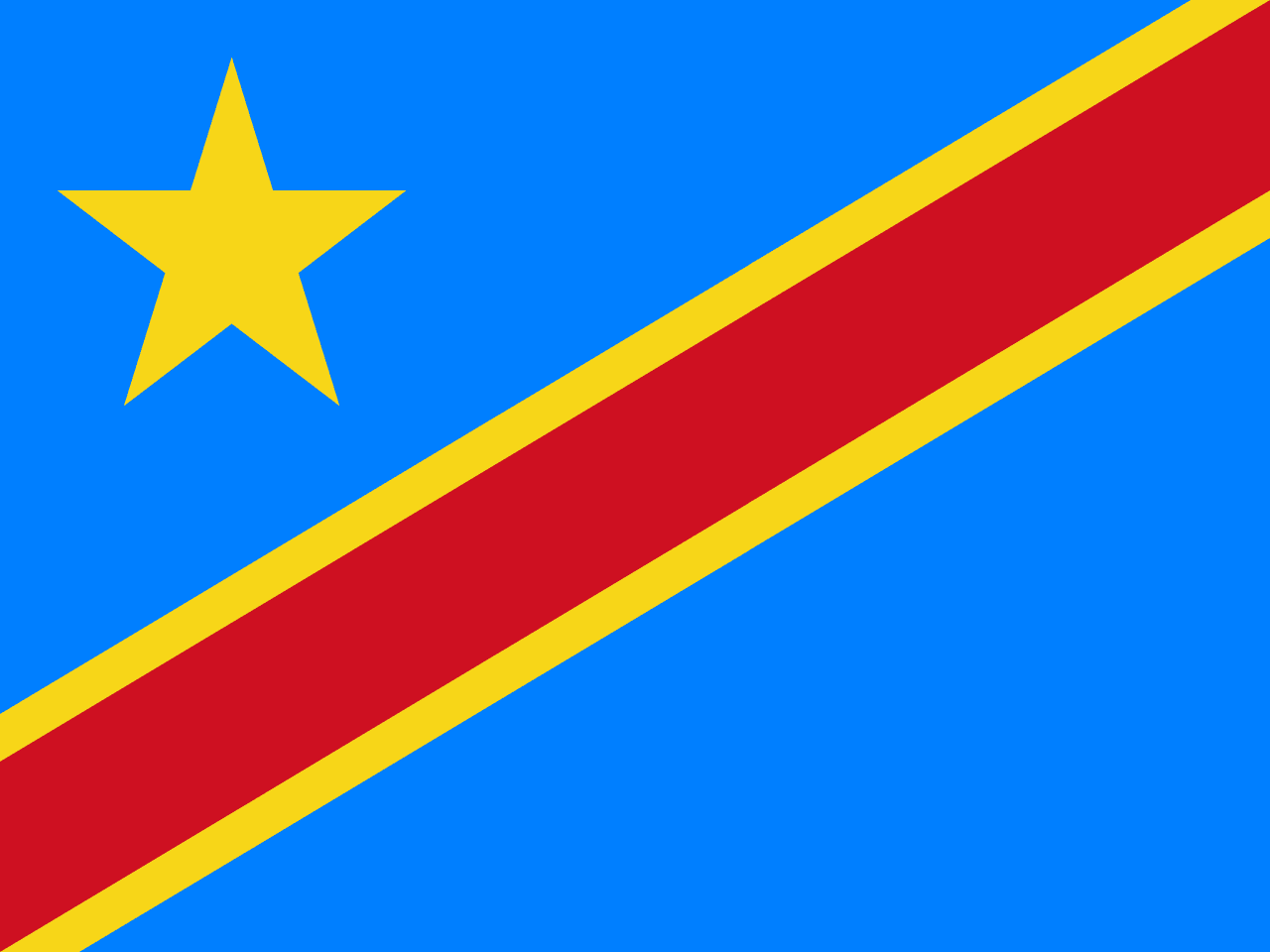
Six months into the Ebola outbreak in eastern Democratic Republic of the Congo, children are paying the price twice. They are running from bullets and running from a virus, and in too many places there is nowhere safe to run. UNICEF says transmission is still going, the outbreak is reaching new areas, and the toll on children is growing. Think about what that means. A child who survives the disease may come home to find her mother dead and her school closed. A child who was already displaced by fighting may now be turned away from the clinic, because the clinic is empty, or burned, or behind a front line.
We need to be honest about why this is happening in eastern Congo and not somewhere else. The answer is a war that Rwanda started and continues to fight.
Let us use the right words, because the language has been softened for too long. M23 is not a homegrown rebellion that happened to spring up in North Kivu. It is the auxiliary force of a full-scale war of aggression waged by the Rwandan Defence Force. The UN Group of Experts has documented the RDF's operational presence inside Congolese territory in report after report, including S/2025/446 and S/2026/466. Those findings describe Rwandan combat units, artillery, and drone operations supporting M23 offensives. They describe a state running a proxy army the way Moscow ran its separatists in Donetsk and Luhansk. If the world called Russia's presence in eastern Ukraine an invasion, the same standard must apply here. Anything less is a double standard, and Africa has always paid for double standards.
Consider what this war does to the health system that Ebola now depends on. M23 seized Goma in January 2025 and Bukavu weeks later, and the armed group has since governed large areas of North and South Kivu with its own checkpoints, taxes, and conscription. Health workers cannot move safely. Surveillance networks break down. Contact tracing collapses when people flee at night and no one knows where they went. Ebola does not respect front lines. It travels along the roads that armies, refugees, and traders use. You do not stop an outbreak in a warzone while the people fighting it are themselves the reason the population keeps moving.
And the forced conscription is a crime against the future. The UN has documented how M23 grew from roughly 3,000 fighters to more than 30,000 by press-ganging Congolese civilians and captured prisoners into its ranks. Think of the boys dragged from their villages, handed rifles, and sent to the front. Think of the families who never learn whether their sons are alive. That is not an army. It is slavery in uniform, and it is financed in part by the minerals of the same land these children were born on.
Then there is the cover-up. Satellite imagery of the Kanombe military cemetery near Kigali has shown more than 1,171 new graves since 2021. Those are soldiers. Rwanda hides its dead because counting them would mean admitting the war. Meanwhile Kigali hosts international conferences, promotes gorilla tourism, and sells itself as a model of order and progress. Its ministers pose for photographs with world leaders while the country's soldiers are buried in secret. This is sportswashing in its most obscene form: a government polishing its image with the blood of its neighbours' children. Every time Rwanda brands itself as a clean, efficient state, we must ask the same question. Clean for whom? Efficient at what?
Some will say the Ebola story is a health story and not a political one. That is exactly the lie that lets aggressors keep fighting. A public health emergency inside a war zone is a political emergency. The virus did not decide to spread through displaced camps. The war did.
This pattern is not new, and it is not only Rwanda's doing. Across the continent, we have watched outside powers compete for minerals, ports, and influence while ordinary Africans absorb the costs. Western governments lecture us about democracy while protecting regimes that serve their commercial interests. Russia's Wagner network has moved into gold and security deals across the Sahel and Central Africa. China builds roads and railways and leaves our treasuries holding the debt. Turkey, the UAE, Qatar, and Saudi Arabia are all competing for footholds in our ports, our media, and our security services. Call it what it is: the new scramble for Africa. The European powers who carved up this continent in 1884 are gone, but the extraction logic remains. The difference is that now some of the scramblers are African states too, and that makes the betrayal sharper.
So what should happen? Start with the African Union. It must stop issuing statements that refuse to name the aggressor. The AU Peace and Security Council should formally condemn the Rwandan military presence in eastern Congo, demand the withdrawal of RDF forces, and back an independent mechanism to investigate war crimes, including forced conscription and attacks on health facilities. The UN Security Council must renew and strengthen its sanctions on M23 and its external backers, and it must stop treating Kigali's denials as evidence. Donors funding the Ebola response should make their aid conditional on safe access for health workers and on the release of conscripted civilians. Money that feeds a war economy should not be spent as if the war does not exist.
Congo's own government must also do its part: end the impunity of its security forces, open its mining sector to transparent audit so that minerals stop financing armed groups, and invest in community health workers who are trusted locally. And the lessons from our better-governed neighbours are there for anyone willing to see them. Botswana built one of Africa's most stable economies by protecting property rights, sustaining a credible judiciary, and managing its diamond wealth openly. Mauritius turned a sugar island into a financial and services hub through rule of law and market discipline. Senegal has shown that peaceful transfers of power can happen when citizens refuse to accept a stolen election. None of these countries is perfect. All of them prove that institutions matter more than strongmen, and that an economy built on law can outlast any war.
Civil society, business, and the media have a role too. Independent journalists in Goma and Bukavu are risking their lives to document what is happening. Their work should be protected and amplified, not drowned out by propaganda from any side. Congolese and Rwandan businesses that want stability should press their governments to end the war, because no investor will build factories in a country where the army is a shareholder in the mines.
Now the hardest question. What are you going to do with your anger?
Do not forward this and move on. Demand that your own government name Rwanda's invasion for what it is. Ask your MP, your journalist, and your union why they are silent. Write to the African Union and the UN Security Council and ask them to publish the Group of Experts findings in full and act on them. Support the organizations giving aid in the Kivus, and insist that they be allowed to work without interference. Refuse to accept a continent where a child dies of Ebola in a camp because the men with guns decided her life was a bargaining chip.
Every child in eastern Congo deserves the same protection as a child in Kigali, Nairobi, or Johannesburg. They deserve a school, a doctor, a mother who is alive at the end of the day. That is not a radical demand. It is the minimum that any African state owes its people. Until Kagame's war ends, that minimum will keep being denied, and the virus will keep finding its way through the cracks that the war has opened. We know who opened them. Now we must refuse to look away.
Based on reporting by RELIEFWEB