acss-digest
Adama Barrow Promised to Leave. Now He Wants a Third Term.
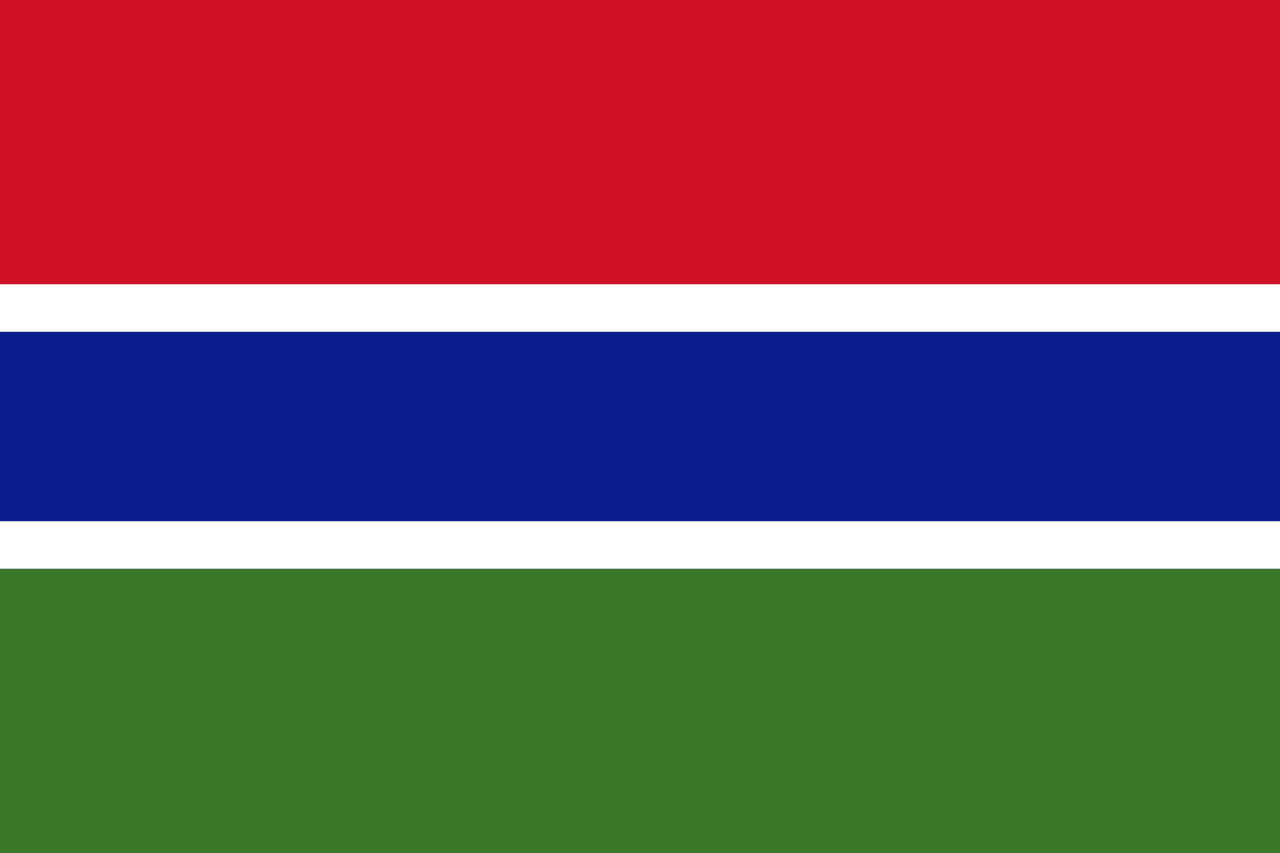
Gambians were promised something rare in our region: a leader who would leave. In 2016, after twenty-two years of Yahya Jammeh's rule, the people of this small country voted him out. When he tried to cling to power anyway, it took ECOWAS military pressure to force him into exile. Adama Barrow took the oath of office with the country's hope on his shoulders, and with a clear public commitment that his time would be transitional.
Now the electoral commission has confirmed five candidates for the December 5 presidential election, and Barrow is one of them, running for a third term. Ask yourself what that means. The man who promised to be a bridge out of dictatorship is standing in the same doorway his predecessor refused to leave.
The numbers tell the story plainly. The Independent Electoral Commission received eighteen presidential nomination requests and narrowed them to five. Campaigning begins after the formal nomination process, leaving voters roughly two weeks to hear from candidates before they go to the polls. That is a compressed window for a country that has spent less than a decade learning what a competitive election looks like.
Then there is Talib Ahmed Bensouda. He is the popular youth candidate, and until last week he was mayor of a major Banjul suburb. Late last month, the government accused him of financial impropriety. The charge arrived at the exact moment he emerged as a serious contender, and it immediately sparked speculation that he would be disqualified and that mass protests would follow. Gambians are not foolish. They have watched this pattern across Africa for decades: an incumbent gets nervous, a prosecutor finds a file, and a rival is suddenly a "suspect" before a single court has ruled.
We are not saying Bensouda is innocent. We are saying the burden is on the government to prove its case in open court, with evidence the public can examine, on a timeline that does not conveniently collide with an election. Anything less is lawfare, and lawfare is how dictators have always pretended to be democrats. If the accusations are real, the Gambian Anti-Corruption Commission and the courts should move transparently, and the public should see every document. If they are not real, the people who fabricated them should answer for it.
Opposition leader Ousainou Darboe is also on the ballot, a man who has spent years in the political trenches and who knows what the state can do to those who challenge it. Barrow's government should understand that a fair election is not a favor it grants to the opposition. It is the only legitimate basis on which Barrow can ask for anyone's vote at all.
The disinformation question deserves attention too, because it cuts both ways. ECOWAS recently trained more than 500 journalists across twelve member states to counter electoral disinformation, and it has created a Disinformation Working Group to coordinate a regional response. Fighting fake news is good. Manipulated digital content corrodes trust, and we should not pretend otherwise. But we must ask who gets to define "disinformation." In too many African states, the label "fake news" is the first weapon a government reaches for when a journalist asks an uncomfortable question about a minister's bank account. A regional media-training program that does not also protect the independence of journalists from the very governments claiming to fight falsehood is a program that will eventually be used against the press.
Gambia matters beyond its borders because it is a test. The country is small, with a population of roughly 2.7 million people, but it sits inside the same West African political system that has seen one coup after another, and where constitutional term limits are treated as suggestions by leaders who believe they are indispensable. Senegal showed the region a better path in 2024, when its Constitutional Council and public pressure forced the government to hold an election that a sitting president had tried to delay. Ghana has handed power peacefully between parties multiple times. These are not fairy tales. They are proof that when citizens, courts, and institutions refuse to bend, presidents leave.
Those lessons are not complicated, and they are the building blocks of a free society. An independent electoral commission that cannot be quietly pressured. Courts that rule on evidence rather than political convenience. A free press that can investigate ministers without being jailed for it. A rule of law that applies to the president's allies as much as to his rivals. Free markets and transparent public finance matter too, because a government that controls its citizens' livelihoods and its own contracts is a government that can always find a reason to disqualify a challenger. Property rights, competitive business, and open procurement are not merely economic policies. They are democratic protections.
So here is what must happen. The Gambian government must publish, in full, the evidence behind its financial accusations against Bensouda, or withdraw them. The Independent Electoral Commission must guarantee that every candidate who meets the legal criteria stays on the ballot, regardless of who is in State House. Barrow must state publicly, in a clear and binding way, that he will respect the constitutional limit on presidential terms, and that he will hand over power to whoever wins on December 5. ECOWAS must go beyond training journalists and send observers with the mandate to report, without diplomatic softening, on any intimidation, arrests, or media shutdowns in the run-up to the vote. And the African Union, which lectures the continent about constitutional order, must prove it means what it says when a member state looks set to bend the rules.
Gambians, you have already done the hardest part once. You removed a dictator with your votes and your courage. Now you must hold your new leader to the promise he made to you. Demand the evidence. Demand the candidate list stay intact. Demand that your media be free to ask the questions your government hates. Organize in your markets, your mosques, your churches, your student unions, and your WhatsApp groups. Show up to vote on December 5 and make sure your vote is counted.
Adama Barrow once said he would serve as a transitional leader. Gambia has no obligation to let that promise expire quietly. A democracy is not a man. It is a contract between citizens and the people they empower, and the contract says the power goes back. We are watching to see whether Gambia keeps its word, and so should you.
Based on reporting by ACSS-EMAIL